
The best grass lawn fertilizer for Scottsdale is a slow-release, nitrogen-led product applied in the right season for your grass: a high-nitrogen feed with iron for Bermuda from spring through early fall, and a light starter feed for winter ryegrass. Buying the "best" bag matters less than timing and soil. If your lawn is yellow, patchy or thin, call us at (480) 422-8388 and we will build a schedule through our lawn fertilization in Scottsdale service.
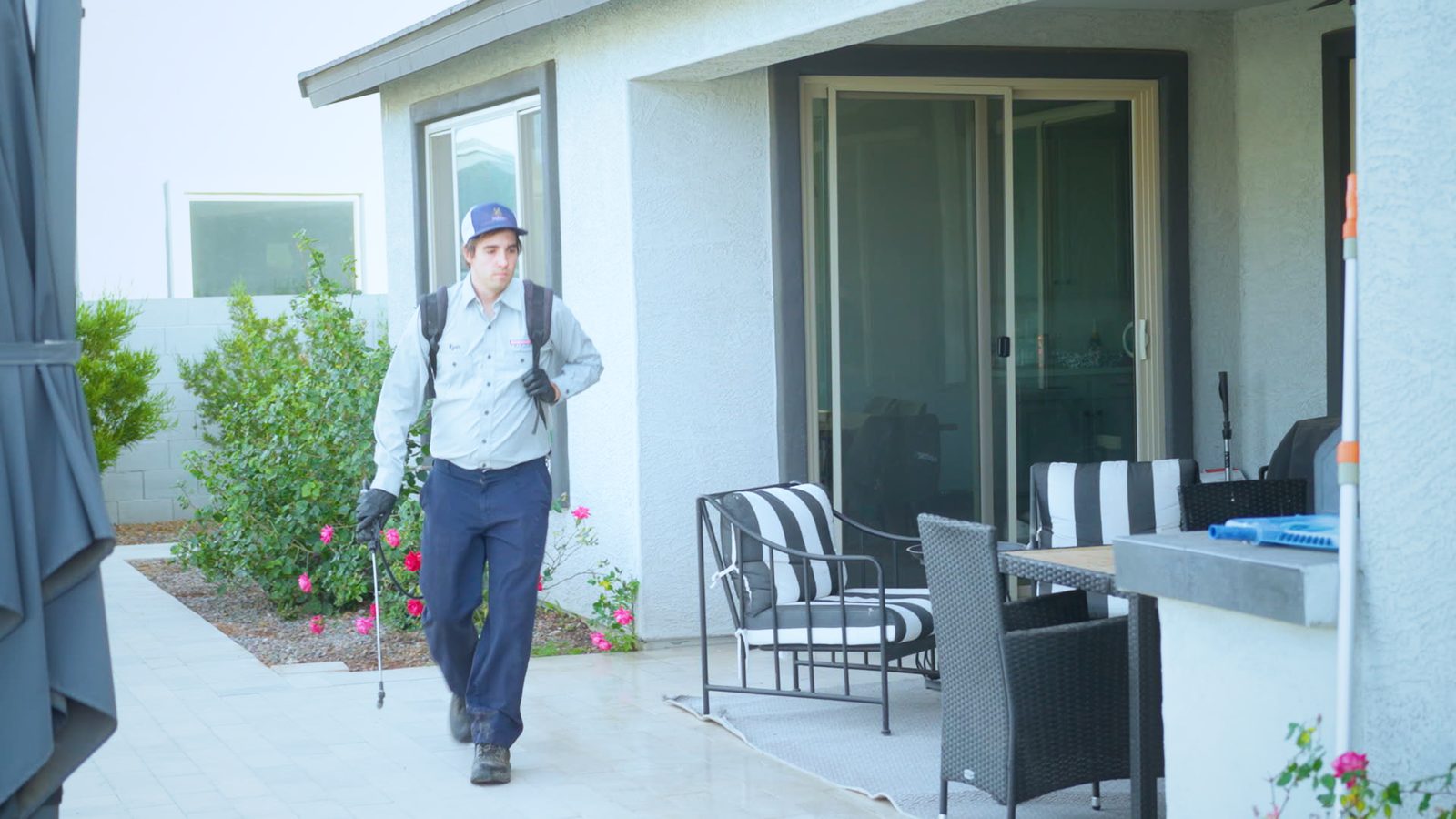
We get this question from homeowners in 85251, 85254, 85258, 85260 and 85262, and the honest answer starts with a different question: which grass do you have, and what month is it? A fertilizer that greens up a Bermuda lawn in June can do almost nothing in January, and the wrong bag at the wrong time can feed weeds instead of turf.
What Is the Best Fertilizer for a Scottsdale Lawn?
For most Scottsdale lawns, the best fertilizer is a slow-release nitrogen fertilizer with added iron, applied during the growing season. Nitrogen drives leaf growth and color, slow-release forms feed steadily instead of burning the lawn, and iron fixes the yellowing common in our alkaline desert soil.
Here is what that means in practice:
- Nitrogen leads. Nitrogen is the first number on the bag and the nutrient turf uses most.
- Slow-release beats quick-release. Slow-release pellets spread the feeding over weeks. Quick-release products give a fast flush, but they are easier to overdo in summer heat.
- Iron helps desert lawns. Our soil pH is high, which can lock up iron. A yellow lawn with green veins in the blades is a classic sign.
- Read the label for your grass. A product for cool-season lawns is not a match for Bermuda in July.
What Do the Three Numbers on a Fertilizer Bag Mean?
The three numbers are the percentage of nitrogen (N), phosphorus (P) and potassium (K) in the bag, always in that order. A 20-5-10 product, for example, is 20 percent nitrogen, 5 percent phosphorus and 10 percent potassium. Turf needs the most nitrogen, so a lawn feed usually has a high first number.
| Number | Nutrient | What it does for turf | Scottsdale note |
|---|---|---|---|
| First (N) | Nitrogen | Leaf growth and green color | The main nutrient to apply on a schedule |
| Second (P) | Phosphorus | Root development, mostly for new seed | Often already adequate in desert soil, so a soil test beats guessing |
| Third (K) | Potassium | Stress, heat and drought tolerance | Useful going into summer |
| Extra | Iron | Deeper green, fixes chlorosis | Often the simplest fix for a pale lawn in alkaline soil |
Phosphorus is the one most homeowners over-apply. Many Valley soils already hold plenty, so we recommend a soil test before you add more.
Should You Fertilize Bermuda and Winter Rye Differently?
Yes. Bermuda is a warm-season grass that grows hard from spring to early fall and goes dormant in winter, so we feed it when it is growing. Perennial ryegrass, which many Scottsdale homeowners overseed in October for green winter turf, is a cool-season grass and needs a lighter feed through the cooler months.
That split is why a single "lawn fertilizer" answer fails here. Treating dormant Bermuda like it is in July wastes product, and skipping the ryegrass feed leaves the winter lawn pale and thin.
When Should You Fertilize a Lawn in Scottsdale? A Season-by-Season Guide
Feed Bermuda from roughly April through September once it has fully greened up, and feed overseeded ryegrass lightly through the winter. Spring warmth, not the calendar date, is the real trigger: wait until Bermuda is growing, not just waking up.
| Time of year | Bermuda (summer lawn) | Winter ryegrass (overseeded) | What to watch |
|---|---|---|---|
| March to April | Wait for steady green-up, then start feeding | Ryegrass is fading in the heat | Do not fertilize while Bermuda is still dormant |
| May to August | Main feeding window, slow-release plus iron | Gone or dying back | Water deeply after feeding to avoid burn |
| September | Last feeding, easing off nitrogen | Overseed prep begins | Heat can still stress turf |
| October | Slowing down | Seed, with a starter feed | Pre-emergent can block ryegrass seed, so plan the order |
| November to February | Dormant, no feeding | Light feeding to keep color | Watch for frost on cold mornings |
If you are reading this in early November, your ryegrass should already be up. A light feeding now keeps it dark green, and we would hold off on any Bermuda feeding until spring.
Can Fertilizer and Weed Control Be Applied at the Same Time?
Sometimes, but not always. A "weed and feed" product combines fertilizer with a herbicide. A pre-emergent in that mix can stop grass seed from sprouting, so it can undo an overseeding job. Plan weed prevention and feeding as two separate steps and put each in the right season.
We lay out how we sequence these on our pre-emergent weed control in Scottsdale page. If you want a winter lawn, our guide to overseeding timing near Grayhawk explains why the order matters.
Why Is My Scottsdale Lawn Yellow Even Though I Fertilize?
A lawn that stays yellow after feeding usually has an iron or watering problem, not a nitrogen problem. High pH can keep iron out of reach, overwatering washes nutrients below the roots, and shallow, frequent watering builds up salts at the surface. More nitrogen will not fix any of those.
- Yellow with green veins: often iron chlorosis in alkaline soil.
- Pale all over in summer: usually not enough nitrogen, or nitrogen that leached out after heavy watering.
- Brown, crunchy patches after feeding: fertilizer burn from too much product or no water afterward.
- Thin lawn with weeds taking over: a feeding problem and a weed problem together, and weeds often win in thin turf.
If weeds are part of what you are seeing, our Bermuda grass guide for McCormick Ranch covers one of the most common culprits in Scottsdale yards.
How Much Fertilizer Should You Use?
Follow the bag label for your grass and your lawn size, and do not guess. A common rule of thumb for turf is about one pound of actual nitrogen per 1,000 square feet per feeding, but the label is the final word because products differ in strength. Measure the lawn, set the spreader to the label setting and water the lawn afterward.
Many Scottsdale properties have smaller turf areas next to rock and desert landscaping, so measuring matters. Spreading a full-lawn dose over a small patch is the easiest way to burn grass. Our Scottsdale lawn nutrition guide near the McDowell Sonoran Preserve goes through how we think about feeding turf next to desert edges.
DIY Fertilizer or Professional Lawn Fertilization?
DIY works well for a small, healthy lawn and a homeowner who will read labels and keep a schedule. A professional visit makes more sense when the lawn is large, the color is uneven, weeds keep returning or you are juggling overseeding and weed control together.
- We look at the lawn first. We identify the grass, check the thatch and moisture, and note any weed pressure.
- We match the product to the season. That means the right feed for Bermuda in summer and the right one for ryegrass in winter.
- We keep weed control and feeding in order. That avoids the overseeding conflict described above.
- We tell you what to change. Watering depth, mowing height and timing matter as much as the product.
Bucksworth Home Services is locally owned and has served Arizona families since 2013. Weed and lawn care is a core part of what we do, alongside pest and termite treatment. You can see everything we offer on our weed and lawn care in Scottsdale page, or request service online.
What About Lawns in Nearby Cities?
The same feeding logic applies across the Valley, with small differences in soil, elevation and landscaping. We feed lawns in Paradise Valley, Tempe, Fountain Hills, Phoenix and Mesa, and our local guides cover each area: see our Paradise Valley fertilization schedule and our Tempe desert lawn nutrition guide. If you are planning a winter lawn, our overseeding in Phoenix page is the next stop.
Frequently Asked Questions About Lawn Fertilizer in Scottsdale
What is the best fertilizer for a Bermuda lawn in Arizona?
A slow-release, nitrogen-led fertilizer with iron, applied during the growing season, is the usual best fit. Follow the label rate and water it in. Check the label to confirm it is meant for warm-season turf.
When is the best time to fertilize a lawn in Scottsdale?
Feed Bermuda from spring green-up through early fall, and feed overseeded ryegrass lightly through winter. Do not feed dormant Bermuda in winter.
Is slow-release fertilizer better than quick-release?
For most Scottsdale lawns, yes. Slow-release spreads the nutrients over weeks and is easier on turf in summer heat. Quick-release is easier to over-apply.
Why is my grass yellow in Scottsdale even after fertilizing?
Often it is iron chlorosis from alkaline soil, overwatering or shallow watering, not a lack of nitrogen. A soil test and a look at your irrigation will tell you more than another bag of fertilizer.
Can I use weed and feed on my lawn before overseeding?
Usually not. A pre-emergent in a weed and feed product can stop grass seed from sprouting. Separate the steps and apply each in its own season.
Do you offer lawn fertilization in Scottsdale?
Yes. We serve 85251, 85254, 85255, 85258, 85260 and 85262. Call (480) 422-8388 or request service online.