
It started as a single green patch in the corner of the gravel yard — easy to ignore. Three months later, bermuda grass had sent runners across 40% of the rock surface, pushed through the landscape fabric, and invaded the drip-irrigated flower bed along the front of the house. The homeowner in Vistancia spent two weekends pulling grass by hand, filling three yard waste bags. Within two weeks, it was back — because pulling bermuda grass does not address the rhizome network 6 inches below the surface. In Peoria, bermuda grass is the most persistent, aggressive, and difficult-to-eliminate weed homeowners face. Professional herbicide treatment is the only approach that actually works.
Why Bermuda Grass Is So Hard to Kill in Peoria
Stretches from urban core to Lake Pleasant, elevation changes create diverse pest environments at every level That environment is paradise for bermuda grass — and a nightmare for homeowners in the 85345 area trying to keep it out of their yards.
Triple reproduction strategy. Bermuda grass reproduces by seed, above-ground stolons (runners), and below-ground rhizomes. Kill the above-ground growth and the rhizomes send up new shoots within days. Remove the rhizomes (nearly impossible by hand) and seeds in the soil germinate to start new plants. The only effective approach is systemic herbicide that is absorbed through the leaves, translocated through the plant, and kills the entire root network — which can extend 6 feet deep in Peoria's sandy soil.
Extreme growth rate. In Peoria's peak growing season (May–September), bermuda grass can grow 1.5–2 inches per day under ideal conditions. A stolon runner can extend 6 feet in a single growing season. In Vistancia, we have documented bermuda grass crossing an entire 8-foot gravel side yard in less than two months. This growth rate means any delay in treatment allows exponential expansion.
Heat and drought tolerance. Bermuda grass evolved for hot, arid environments. It has the deepest root system of any common grass species, allowing it to access moisture far below the surface. While your landscape plants wilt in 115°F heat, bermuda grass is growing. While other weeds die during dry May, bermuda survives on stored moisture near Peoria Sports Complex (Padres/Mariners). It is perfectly engineered for Peoria's climate.
Fragment regeneration. Bermuda grass can regenerate from any fragment of stolon or rhizome longer than approximately 1/2 inch. This means that mechanical removal — pulling, hoeing, raking — spreads viable fragments across the yard. String trimming scatters pieces into new areas. Even landscape crews inadvertently spread bermuda grass between properties on equipment blades and tires throughout the 85345 area.
Seed bank persistence. Bermuda grass seeds remain viable in soil for 2+ years. Even after successfully killing all existing plants and roots, new bermuda can germinate from the soil seed bank for multiple seasons. This is why a complete bermuda grass control program includes pre-emergent applications to prevent seed germination alongside post-emergent treatments for existing growth.
Bermuda Grass Season in Peoria: When It Grows and When to Act
Bermuda grass in Peoria follows a predictable growth cycle, and understanding that cycle is essential for effective control in Vistancia:
March–April: Bermuda grass breaks dormancy as soil temperatures consistently exceed 65°F. Green shoots appear through gravel yards, landscape beds, and along sidewalks and driveways in the 85345 area. This is the critical treatment window — bermuda grass is vulnerable during early emergence, and pre-emergent products applied in February can still be supplemented with early post-emergent treatment during this period.
May–July: Peak bermuda grass growth. Soil temperatures above 80°F drive explosive growth — bermuda can grow up to 2 inches per week during this period. Stolons (runners) spread horizontally across surfaces, rhizomes push underground into neighboring beds, and the grass establishes rapidly in any disturbed soil. In Vistancia, untreated bermuda grass can overtake a gravel yard in a single season.
August–September: Monsoon moisture supercharges bermuda growth. Already-active bermuda grass responds to rain with even more aggressive spreading. New seed germinates in monsoon-moistened soil, and established patches send runners into areas that stayed dry during the pre-monsoon period near Peoria Sports Complex (Padres/Mariners). Post-emergent spot treatment is critical during monsoon season.
October–November: Growth slows as temperatures cool. Bermuda grass enters dormancy when soil temperatures drop below 55°F, turning straw-brown. While dormant bermuda appears dead, the root system and rhizomes are alive underground, storing energy for spring regrowth. Fall is actually an excellent time for systemic herbicide application — products move into the root system during the transition to dormancy.
December–February: Bermuda is dormant and brown. This is the ideal window for pre-emergent application. Blocking spring germination of new bermuda seed prevents population expansion, while the dormant existing bermuda can be treated with selective herbicides that work on the roots during the dormancy period.
Year-round bermuda grass management in Peoria requires a combination of pre-emergent prevention and post-emergent elimination, timed to the growth cycle. One-time treatments are ineffective against this persistent, aggressive grass.
How Bucksworth Eliminates Bermuda Grass in Peoria
Our bermuda grass control program uses a systemic, year-round approach designed for Peoria's specific growing conditions:
- Property assessment — We evaluate bermuda grass coverage, growth stage, and spread patterns across your entire property. We identify entry pathways (neighbor fence lines, hardscape edges, irrigation zones), map existing bermuda coverage, and note any landscape plants that require selective treatment to avoid damage. This assessment determines the treatment plan for your Vistancia yard.
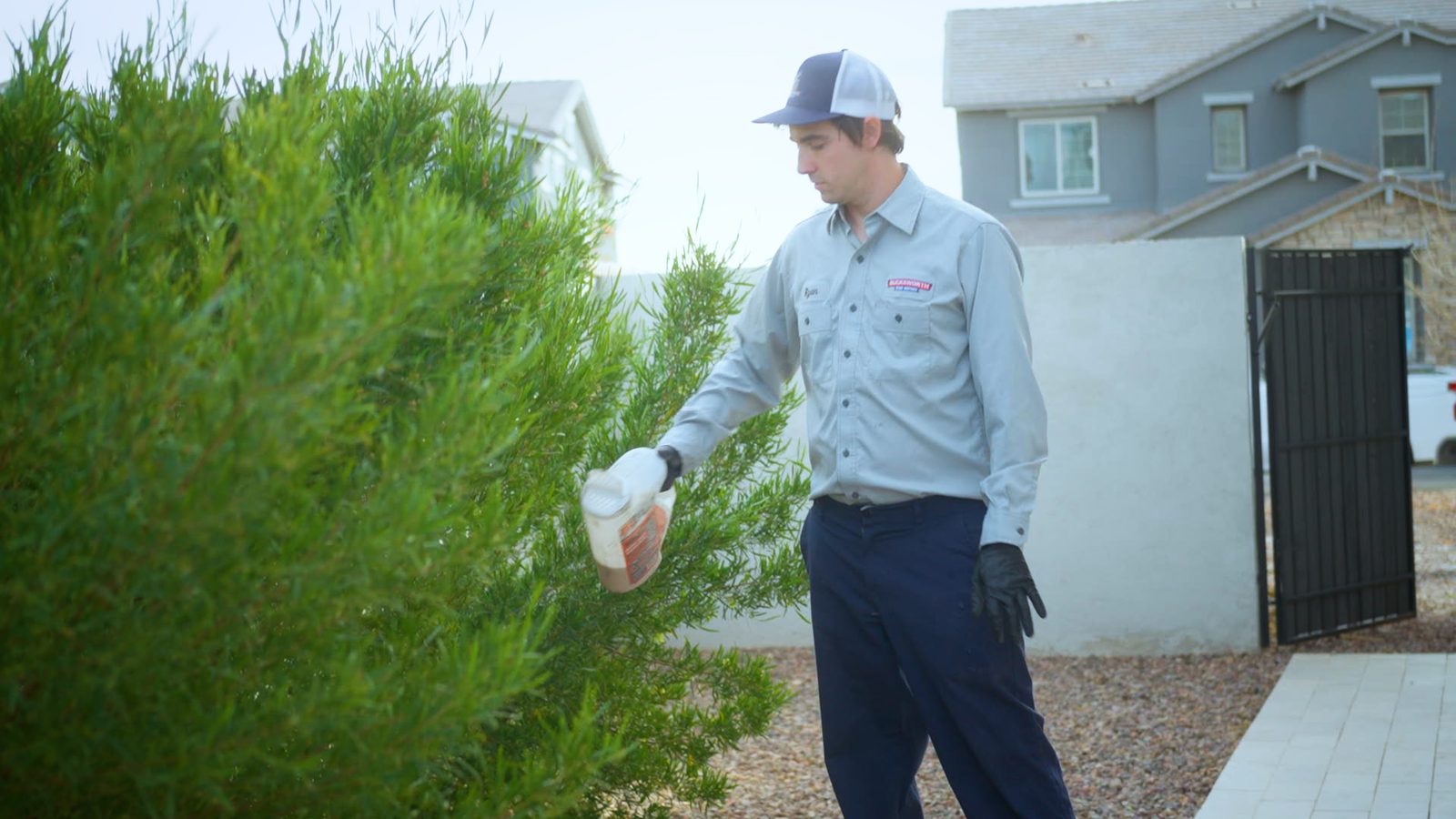
- Post-emergent systemic application — For actively growing bermuda grass, we apply professional-grade systemic herbicides that are absorbed through the leaves and translocated into the entire plant — stolons, rhizomes, and root system. These products are not available at retail. They are specifically formulated for bermuda grass and provide significantly deeper kill than consumer products available in the 85345 area.
- Pre-emergent barrier — We apply pre-emergent herbicide to prevent bermuda grass seed germination. Applied in late winter (January–February) and sometimes a second application in mid-summer, pre-emergent treatment reduces the number of new bermuda plants establishing from the soil seed bank. Combined with post-emergent treatment of existing growth, this two-pronged approach reduces bermuda populations over successive treatments near Peoria Sports Complex (Padres/Mariners).
- Border treatment — We treat along property lines, fence lines, block wall bases, and hardscape edges where bermuda grass migrates from neighboring properties or public right-of-way. Border treatment creates a barrier that intercepts stolons and rhizomes before they penetrate your yard.
- Spot treatment follow-ups — Between scheduled applications, we provide spot treatment for new bermuda emergence. This prevents small patches from establishing before the next full application. Most Vistancia properties see significant bermuda reduction after 2–3 application cycles.
Our program runs year-round because bermuda grass control is a continuous process in Peoria. Pre-emergent in winter, aggressive post-emergent through the growing season, and fall systemic application for maximum root kill.
Maintaining a Bermuda-Free Yard in Peoria Between Treatments
Professional herbicide applications are the backbone of bermuda grass control, but these practices help maintain results between visits in Vistancia:
- Do not mow or trim bermuda grass. Mowing bermuda grass does not control it — it stimulates tillering (branching) and can spread fragments that root into new plants. If bermuda grass appears between treatments in your 85345 area gravel yard, leave it for the next professional application rather than cutting it. The herbicide needs foliar contact (leaf absorption) to be effective.
- Report new growth promptly. Bermuda grass emergence between scheduled treatments is normal, especially after monsoon rain near Peoria Sports Complex (Padres/Mariners). Contact Bucksworth to report new growth — we can schedule a spot treatment that prevents new patches from establishing before the next scheduled visit.
- Maintain landscape fabric and rock depth. Properly installed landscape fabric under 3+ inches of decorative rock significantly reduces bermuda grass establishment. If your rock has thinned, fabric has deteriorated, or soil has accumulated on top of the fabric, bermuda grass will exploit those weak points. Topping off rock and replacing damaged fabric reduces the work herbicides need to do.
- Control irrigation overspray. Bermuda grass germinates wherever moisture is available. Drip irrigation overspray onto gravel areas, sprinkler systems wetting sidewalk edges, and pool splash zones all create bermuda-friendly germination sites. Adjust irrigation to water only planted areas in your Vistancia yard.
- Do not bring in contaminated soil or material. Bermuda grass rhizomes can survive in fill dirt, topsoil, and transplanted plants. When adding soil or plants to your landscape, inspect for bermuda grass contamination. One load of bermuda-infested fill dirt can seed an entire yard.
Bermuda Grass Pressure Across Peoria Neighborhoods
Bermuda grass intensity varies across Peoria based on soil type, irrigation patterns, and surrounding land use:
Vistancia — Properties here face persistent bermuda pressure, particularly in gravel yards and along hardscape edges. Established bermuda rhizome networks in this area run deep, and any interruption in treatment allows rapid regrowth. Landscape beds with drip irrigation are particularly vulnerable to bermuda invasion as stolons are attracted to the moisture.
Westwing Mountain — Bermuda grass in this area commonly invades from adjacent properties, right-of-way areas, and desert edges. Newer gravel installations may see less bermuda initially, but without pre-emergent treatment, seed germination during monsoon season establishes new populations quickly.
Across the 85345 zip code near Peoria Sports Complex (Padres/Mariners), bermuda grass is universally present. It grows in disturbed soil, cracks in concrete, gravel yards, landscape beds, and any irrigated area. No Peoria property is naturally immune to bermuda grass invasion — the seed is everywhere and the conditions are ideal for growth.
Bucksworth treats bermuda grass across all Peoria neighborhoods with the same systematic approach. Whether your Vistancia yard has light bermuda encroachment or a full invasion, our program eliminates existing growth and prevents reestablishment through consistent, year-round treatment.
Bucksworth Home Services provides year-round bermuda grass control for Peoria homes. We serve Vistancia, Westwing Mountain, and the entire 85345 area with professional-grade herbicide programs that eliminate existing bermuda and prevent regrowth. Stop fighting bermuda grass with retail products that do not work. Call (480) 422-8388 to schedule your free property assessment.
Why Peoria Homeowners Trust Bucksworth Home Services
Bucksworth Home Services was founded right here in Arizona by Jordan Moore. We are not a franchise. We are not a national chain with a call center in another state. We are a locally owned company with technicians who live in the communities they serve — including Vistancia.
When you call Bucksworth, you get:
- Local expertise — We know Peoria. We know the soil, the climate, the pest pressure, the plumbing challenges, and the HVAC demands of every neighborhood in the area.
- Honest communication — We tell you what we find, explain your options, and let you decide. No pressure, no upselling, no scare tactics.
- Licensed professionals — Every Bucksworth technician is licensed, insured, and trained for Arizona-specific conditions.
- Satisfaction guaranteed — If you are not happy with our work, we make it right. Period.
Related Services & Resources
- Weed & Lawn Care in Peoria
- All Bucksworth Services in Peoria
- Bermuda Grass Removal Near Santa Catalina Mountains: Expert Solutions for Catalina Foothills Properties
- Lawn Fertilization in Apache Junction: The Right Schedule for Meridian Hills Bermuda Grass
- The Red Rock Homeowner's Guide to Bermuda Grass Elimination — Advice for Red Rock area
- Bermuda Grass Invasion in Gold Canyon? Professional Control for Mountainbrook Village Yards
- Why Every Chandler Lawn Needs Overseeding — A South Chandler Guide
- Get a Free Instant Estimate
Call us today at (480) 422-8388 or visit our Bermuda Grass Control page for Peoria to schedule your appointment.
Frequently Asked Questions About Bermuda Grass Control in Peoria
How much does bermuda grass control cost in Peoria?
Professional bermuda grass treatment in Peoria ranges from $49–$99 per monthly application depending on yard size. Initial knockdown for heavily infested properties may require 2–3 treatments in the first month at $79–$149 each. Year-round maintenance programs (monthly through growing season, bi-monthly in winter) provide the most consistent results. Bucksworth Home Services offers free property assessments for Vistancia homes to determine the scope of treatment needed. Call (480) 422-8388 for your estimate.
How long does it take to kill bermuda grass in Peoria?
Visible yellowing begins 5–10 days after systemic herbicide application. Full kill of above-ground growth takes 2–4 weeks. However, complete bermuda grass elimination requires multiple treatment cycles because underground rhizomes regenerate new growth after the first application. Most 85345 area properties see 80–90% bermuda reduction after 3–4 months of consistent treatment. Full control typically takes 6–12 months of year-round treatment to exhaust the soil seed bank and underground reserves.
Will bermuda grass killer harm my landscape plants in Peoria?
Systemic grass-selective herbicides used for bermuda grass will also kill desired grass species (lawn, ornamental grasses). However, they are safe for most broadleaf landscape plants — shrubs, flowers, trees, and succulents. Our Bucksworth technicians carefully apply product to bermuda grass growth while shielding landscape plants in Vistancia. For bermuda grass growing directly within landscape beds, we use targeted application techniques that minimize risk to desired plants near Peoria Sports Complex (Padres/Mariners).
Can I kill bermuda grass with vinegar or boiling water in Peoria?
Vinegar and boiling water kill the above-ground bermuda grass they contact, but they do not affect the underground rhizome system — which regenerates new growth within 1–2 weeks. These methods are essentially mowing the grass without touching the roots. In Peoria's heat, bermuda grass regrows from rhizomes so quickly that surface-only treatments produce no lasting control. Professional systemic herbicides are necessary to kill the entire plant network in your 85345 area yard.
Schedule Your Bermuda Grass Control Service in Peoria Today
Do not wait for the problem to get worse. Whether you are in Vistancia, Westwing Mountain, or anywhere in the 85345 zip code, Bucksworth Home Services is ready to help. Call us at (480) 422-8388 or visit our Peoria bermuda grass control page to schedule your service today.