
There are roughly 1,200 identified bee species in Arizona — more than almost any other state. Most are solitary and harmless. But the ones building a hive inside your wall, nesting under your patio cover, or swarming your Tucson backyard? Those are almost certainly Africanized honey bees, and they are the most defensively aggressive bee in North America. A single colony can contain 30,000 to 60,000 bees, and when they feel threatened, they do not send a few scouts — they send hundreds.
Our Bucksworth technicians remove bee and wasp colonies across Oro Valley area, the 85710 area, and all of Tucson. We handle the hive, the comb, the honey, and the sealing — so they do not come back. Call (520) 284-9930 or book your removal.
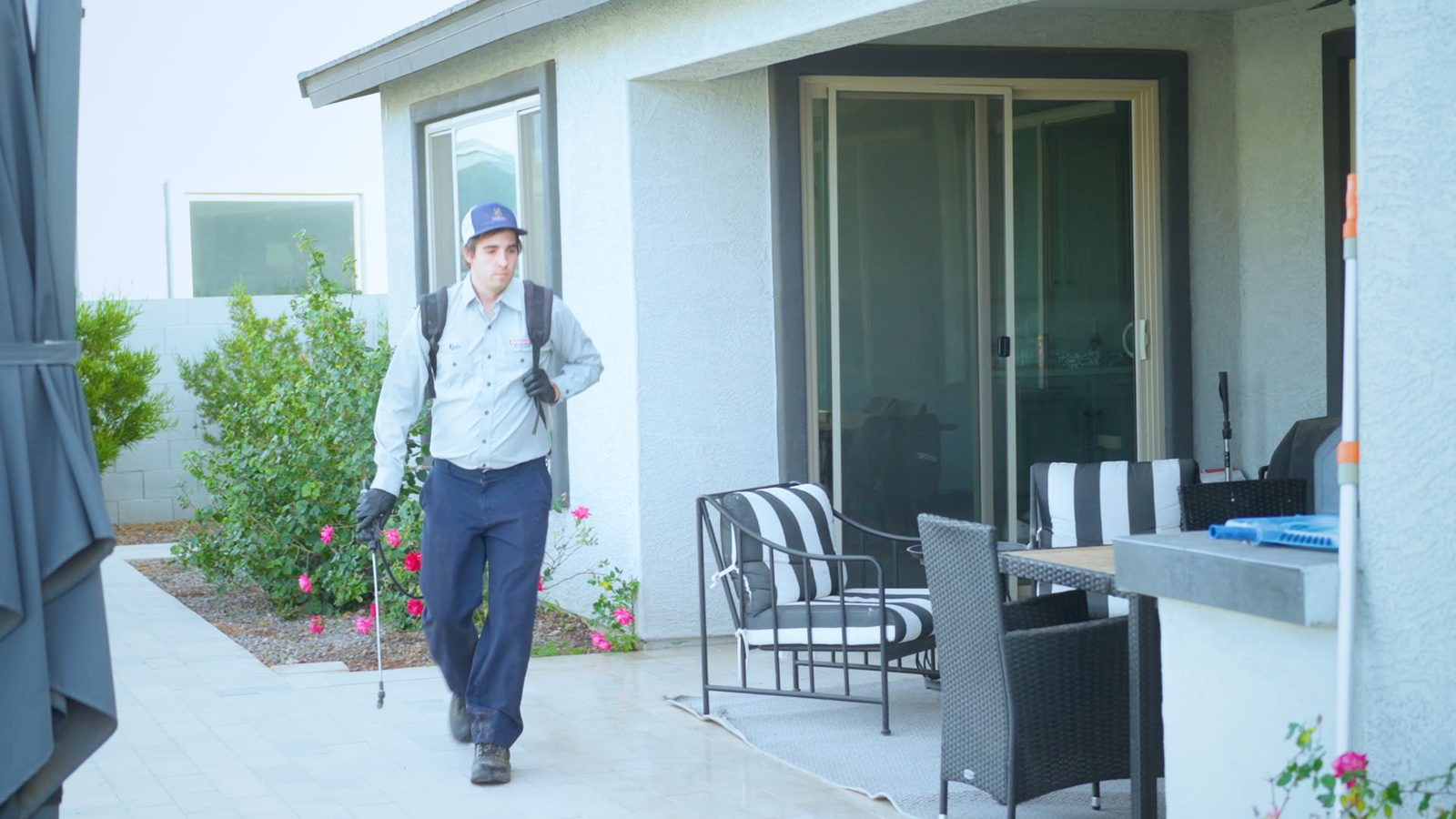
The Africanized Bee Problem in Tucson: What Makes Them Different
If you have a bee colony on your Oro Valley area property, assume it is Africanized. That is not alarmism — it is Arizona reality. The Arizona Department of Agriculture estimates that virtually all feral honey bee colonies in the southern half of the state are Africanized, and Tucson is no exception.
What makes Africanized bees more dangerous than European honey bees?
- Defensive radius: European bees defend a 10-20 foot zone around their hive. Africanized bees can pursue a perceived threat for a quarter mile or more.
- Response intensity: A European colony might send 10-20 guard bees to investigate a disturbance. An Africanized colony can deploy hundreds within seconds — sometimes thousands.
- Trigger sensitivity: Africanized bees respond to vibration, dark colors, carbon dioxide (your breath), and even the alarm pheromone from a single sting. A lawn mower running 50 feet from a colony in Oro Valley area can trigger a mass defensive response.
- Swarming frequency: Africanized colonies swarm 6-12 times per year (versus 1-2 times for European bees), which is why new colonies appear so quickly across Tucson during spring and summer.
This is not something you want to handle with a can of wasp spray from the hardware store. Call Bucksworth at (520) 284-9930 for professional removal across the 85710 area.
Bee and Wasp Season in Tucson: A Month-by-Month Guide
Arizona's stinging insect calendar runs differently from most of the country. In Tucson, bee and wasp activity is shaped by temperature extremes, blooming cycles, and monsoon moisture. Here is what our technicians encounter across Oro Valley area and the 85710 area throughout the year:
| Month | Bee/Wasp Risk | Primary Activity |
|---|---|---|
| Jan–Feb | Low | Colonies dormant or minimal activity |
| Mar–Apr | High | Swarming season — colonies split and relocate |
| May–Jun | Very High | Peak nesting; aggressive defense of established hives |
| Jul–Aug | High | Monsoon agitation; wasps hunt protein for larvae |
| Sep–Oct | Moderate–High | Wasps become aggressive scavengers before winter |
| Nov–Dec | Low | Activity drops; some colonies overwinter in walls |
March through June is prime bee swarming season in Tucson. Africanized honey bees — which make up the vast majority of feral bee colonies in Arizona — split their hives and send scout bees across Oro Valley area to locate new nesting sites. They settle in wall cavities, irrigation valve boxes, shed roofs, block fence voids, and even overturned flower pots. A swarm can establish a full colony inside your walls within 24 to 48 hours.
Paper wasps and mud daubers follow a slightly different pattern. They build new nests starting in March and reach peak population by July. Our technicians see nests under eaves, in patio covers, behind shutters, and inside gas meter boxes across the 85710 area — especially near University of Arizona where landscape irrigation and flowering plants attract foraging wasps.
How Bucksworth Removes Bee and Wasp Colonies in Tucson
Our bee and wasp removal process goes beyond what most pest companies offer in Tucson. We do not just kill the bees and leave — we perform complete colony removal, extraction, and exclusion to ensure the problem does not return to your Oro Valley area home.
Step 1: Assessment and Safety Zone
Our technician arrives and establishes a safety perimeter. For Africanized bee colonies, this means identifying the hive location, flight path, and defensive radius before any treatment begins. We ensure children, pets, and neighbors near University of Arizona are safely away from the work zone.
Step 2: Colony Elimination or Relocation
For bee colonies in accessible locations, we can sometimes perform live relocation to a beekeeper. For Africanized colonies in wall voids, soffits, and other structural locations — which is the majority of calls in the 85710 area — we apply targeted treatment to eliminate the colony. Wasp nests are treated with residual products that eliminate the colony and prevent rebuilding.
Step 3: Comb and Honey Extraction
This is the step most companies skip — and it is the most important for long-term prevention. We open the wall or soffit, physically remove all comb, honey, and dead bees, and clean the cavity. Leaving honey inside a wall in Tucson's 115°F summer heat causes it to melt, stain drywall, attract ants and roaches, and produce pheromones that draw new bee swarms to the exact same location.
Step 4: Seal and Exclude
We seal the original entry point and inspect for additional vulnerabilities around your home. This exclusion step is what prevents the next colony from moving in.
Need emergency bee removal? Call (520) 284-9930 — same-day service available across Tucson.

Preventing Bee and Wasp Nests on Your Tucson Property
After our team removes a hive or nest from your Oro Valley area home, prevention is the next step. Bees and wasps return to the same locations year after year because the pheromone residue from old nests attracts new colonies. Here is what our technicians recommend for properties in the 85710 area:
- Seal wall and roof penetrations. Africanized bees enter through gaps as small as 3/16 of an inch. Caulk around pipe penetrations, seal gaps where stucco meets trim, and close openings around AC line sets, electrical conduits, and dryer vents. This is the single most effective prevention step.
- Screen irrigation valve boxes and utility covers. Bees frequently colonize underground valve boxes across Tucson — the dark, sheltered cavity is ideal. Install fine mesh screens over openings while still allowing water access.
- Remove old nests and comb completely. If bees built comb inside a wall, the wax and honey must be physically removed after the colony is eliminated. Left inside, the honey melts in Arizona heat, attracts ants and roaches, and the wax pheromones draw new bee swarms to the exact same spot near University of Arizona.
- Trim landscape away from structure. Overgrown bushes and vines against walls create sheltered nesting sites for paper wasps and provide covered entry points for bees.
- Keep trash sealed. Yellow jackets and wasps are attracted to protein (meat scraps, pet food) and sugar (soda cans, fruit). Tight-fitting trash lids and clean recycling bins reduce attraction.
- Schedule preventive inspections. Our Tucson technicians can inspect your property quarterly and treat potential nesting sites before colonies establish. Call (520) 284-9930 to set up a prevention plan.
Bee and Wasp Hotspots Across Tucson
Our technicians know which areas of Tucson see the heaviest bee and wasp activity. Years of service calls across Oro Valley area and the broader 85710 area have given us a detailed picture of where stinging insects are most active:
Neighborhoods with mature landscaping. Older neighborhoods with established trees, citrus groves, and flowering shrubs attract more foraging bees. Properties near University of Arizona with dense vegetation and irrigation-heavy landscapes see higher bee traffic and more swarming events during spring.
Areas near desert washes and open desert. Feral bee colonies nest in rock outcroppings, saguaros, and palo verde trees. When these natural colonies split, the swarms head for the nearest residential properties — which means homes on the desert fringe of Tucson often deal with repeated colonization attempts.
HOA common areas and parks. Irrigation systems, covered ramadas, playgrounds, and utility housings in community parks provide abundant nesting sites. If you live near a park or common area in Oro Valley area, your home is more likely to see scout bees investigating your eaves and walls.
We also service the surrounding areas of {nearby_cities} — because bees do not respect city boundaries. If you have a hive or nest anywhere in the 85710 area, call (520) 284-9930.
Bucksworth Supports Tucson Families Year-Round
We are not just a pest company that shows up when bees invade your wall — Bucksworth Home Services is part of the Tucson community. Our team sponsors youth sports leagues, supports local schools in Oro Valley area, and participates in community events near University of Arizona. When you call us for bee or wasp removal, you are supporting a locally-owned company that reinvests in the neighborhoods we serve across the 85710 area.
Why Tucson Homeowners Trust Bucksworth Home Services
Bucksworth Home Services was founded right here in Arizona by Jordan Moore. We are not a franchise. We are not a national chain with a call center in another state. We are a locally owned company with technicians who live in the communities they serve — including Oro Valley area.
When you call Bucksworth, you get:
- Local expertise — We know Tucson. We know the soil, the climate, the pest pressure, the plumbing challenges, and the HVAC demands of every neighborhood in the area.
- Honest communication — We tell you what we find, explain your options, and let you decide. No pressure, no upselling, no scare tactics.
- Licensed professionals — Every Bucksworth technician is licensed, insured, and trained for Arizona-specific conditions.
- Satisfaction guaranteed — If you are not happy with our work, we make it right. Period.
Call us today at (520) 284-9930 or visit our Bee & Wasp Removal page for Tucson to schedule your appointment.
Frequently Asked Questions About Bee & Wasp Removal in Tucson
What should I do if I find a bee swarm at my Tucson home?
Stay calm and keep everyone — especially children and pets — at least 100 feet away from the swarm. Do not spray water, throw objects, or attempt to remove the swarm yourself. Call Bucksworth at (520) 284-9930 for same-day removal. A swarm is a colony in transit and may move on within 24-48 hours, but if scout bees have found a cavity in your home, the swarm will likely establish a permanent colony.
How do I know if I have bees or wasps?
Bees are fuzzy, round-bodied, and typically amber-brown. They fly in a direct line to and from a single entry point. Wasps are sleek, narrow-waisted, and often brightly patterned. Paper wasps build visible, open-comb nests. If you see insects entering a hole in your wall or fence in the 85710 area, assume it is a bee colony and call for professional inspection.
Is bee removal covered by homeowners insurance in Tucson?
Most standard homeowners insurance policies do not cover bee removal. However, if a colony causes structural damage — such as honey melting inside walls and damaging drywall, insulation, or electrical components — the resulting damage may be covered under your policy. Contact your insurance provider and Bucksworth at (520) 284-9930 to discuss your specific situation.
Can I remove a wasp nest myself?
Small, newly started paper wasp nests (fewer than 10 cells) can sometimes be knocked down with a long-reach wasp spray at dusk when wasps are less active. However, larger nests, nests in enclosed spaces, and any yellow jacket nest should be handled professionally. In Tucson, multiple stinging incidents each year result from homeowners attempting DIY removal near University of Arizona and other areas.
How do you keep bees from coming back after removal?
Complete hive extraction is the key. We remove all comb, honey, and dead bees from the cavity, treat the area with a pheromone-neutralizing agent, and seal every entry point. The pheromone residue from old hives is the primary attractant for new swarms — eliminate the pheromones and seal the gaps, and the return rate drops dramatically. Our Tucson removal service includes sealing as standard.
Schedule Your Bee & Wasp Removal Service in Tucson Today
Do not wait for the problem to get worse. Whether you are in Oro Valley area, Marana area, or anywhere in the 85710 zip code, Bucksworth Home Services is ready to help. Call us at (520) 284-9930 or visit our Tucson bee & wasp removal page to schedule your service today.