
Every homeowner in Litchfield Park has an ant story. Maybe it is the trail that appears overnight in the master bathroom, or the fire ant mound that materializes in the yard after every rain, or the mysterious pile of sawdust-like frass near the porch beam that turns out to be carpenter ants hollowing out the wood. In the 85340 area, ant pressure is constant — and the species diversity means there is no single product or approach that handles every situation. At Bucksworth Home Services, our technicians identify the species first, then deploy the targeted strategy that eliminates the specific colony invading your Village at Litchfield Park home.
Why Ant Problems in Litchfield Park Get Worse When You Wait
Ant colonies in Litchfield Park do not shrink on their own. Without professional intervention, they grow — exponentially. Here is what happens when ant problems go untreated in Village at Litchfield Park:
Colony expansion. A young fire ant colony in your Litchfield Park yard starts with a single queen producing 200 eggs per day. Within months, the colony reaches tens of thousands of workers. Within a year, it can produce winged reproductives that fly, mate, and establish satellite colonies across your 85340 area property. One mound becomes five. Five becomes twenty.
Colony budding. Many ant species — including crazy ants and Argentine ants — reproduce by "budding." When stressed by repellent sprays or environmental disturbance, a portion of the colony splits off with a queen and establishes a new nest nearby. This is why spraying visible ants in your Village at Litchfield Park kitchen often makes the problem worse. You go from one colony to multiple colonies, each foraging independently into your home.
Structural damage accumulates. Carpenter ants excavate wood continuously. A colony that has been active for two years in a porch beam near Litchfield Park downtown can hollow out a structural member to the point of failure. Unlike termites, carpenter ant damage is often in load-bearing exterior wood that is expensive to repair or replace.
Indoor trails become permanent. When foraging trails run uninterrupted for weeks, the pheromone pathways become deeply established. Even after the original food source is removed, ants continue following the trail. These "ghost trails" in your 85340 area home require treatment at the trail entry point and colony elimination to stop permanently.
The bottom line: every week you wait, the colony grows and the problem becomes more complex and expensive to resolve. Early professional treatment is always the most cost-effective approach for Litchfield Park homeowners.
Why Litchfield Park Is One of the Worst Cities in America for Ants
Litchfield Park sits at the intersection of conditions that create extraordinary ant pressure. The Sonoran Desert supports over 100 native ant species, and our irrigated neighborhoods provide the food and water that allow their populations to explode beyond natural desert levels.
In Village at Litchfield Park and across the 85340 area, the problem is compounded by several factors unique to our climate:
No hard freeze. Northern cities get a population reset every winter. Litchfield Park does not. Ant colonies in the 85340 area survive year after year, growing larger and more established with each season. A mature fire ant colony near Litchfield Park downtown can contain 200,000 to 500,000 workers — and they are not going anywhere without professional intervention.
Irrigation creates artificial oases. Desert ants evolved for scarcity. When you add drip irrigation, pool runoff, AC condensate, and landscape watering to a neighborhood like Village at Litchfield Park, you create an ant paradise with unlimited water. Colonies that would stay small in raw desert explode in irrigated residential zones.
Expansive soil drives ants upward. When monsoon storms saturate Litchfield Park's clay soil, underground ant nests flood. Entire colonies relocate to higher ground — your foundation walls, your landscape borders, your garage slab. This displacement cycle happens multiple times each monsoon season and is a primary reason Litchfield Park homeowners find sudden ant invasions inside their homes.
The reality is clear: ant control in Litchfield Park is not a one-time project. It is an ongoing management program, and properties in Village at Litchfield Park that maintain consistent treatment see dramatically fewer indoor invasions and yard infestations than those that treat reactively.
Our Ant Elimination Process for Litchfield Park Properties
At Bucksworth Home Services, ant control for Village at Litchfield Park homes follows a systematic protocol designed for lasting elimination:
Step 1: Comprehensive Inspection. We inspect interior and exterior — kitchen, bathrooms, garage, foundation perimeter, landscape beds, trees, and any reported activity areas. We identify the species, trace foraging trails to their source, and locate all visible colonies. In Litchfield Park, it is common to find multiple ant species active on a single property.
Step 2: Colony Mapping. We document every colony location, trail pathway, and entry point on your 85340 area property. This map guides treatment placement and helps us verify elimination during follow-up visits. For properties near Litchfield Park downtown with heavy fire ant pressure, this may include 10 or more colony locations in the yard alone.
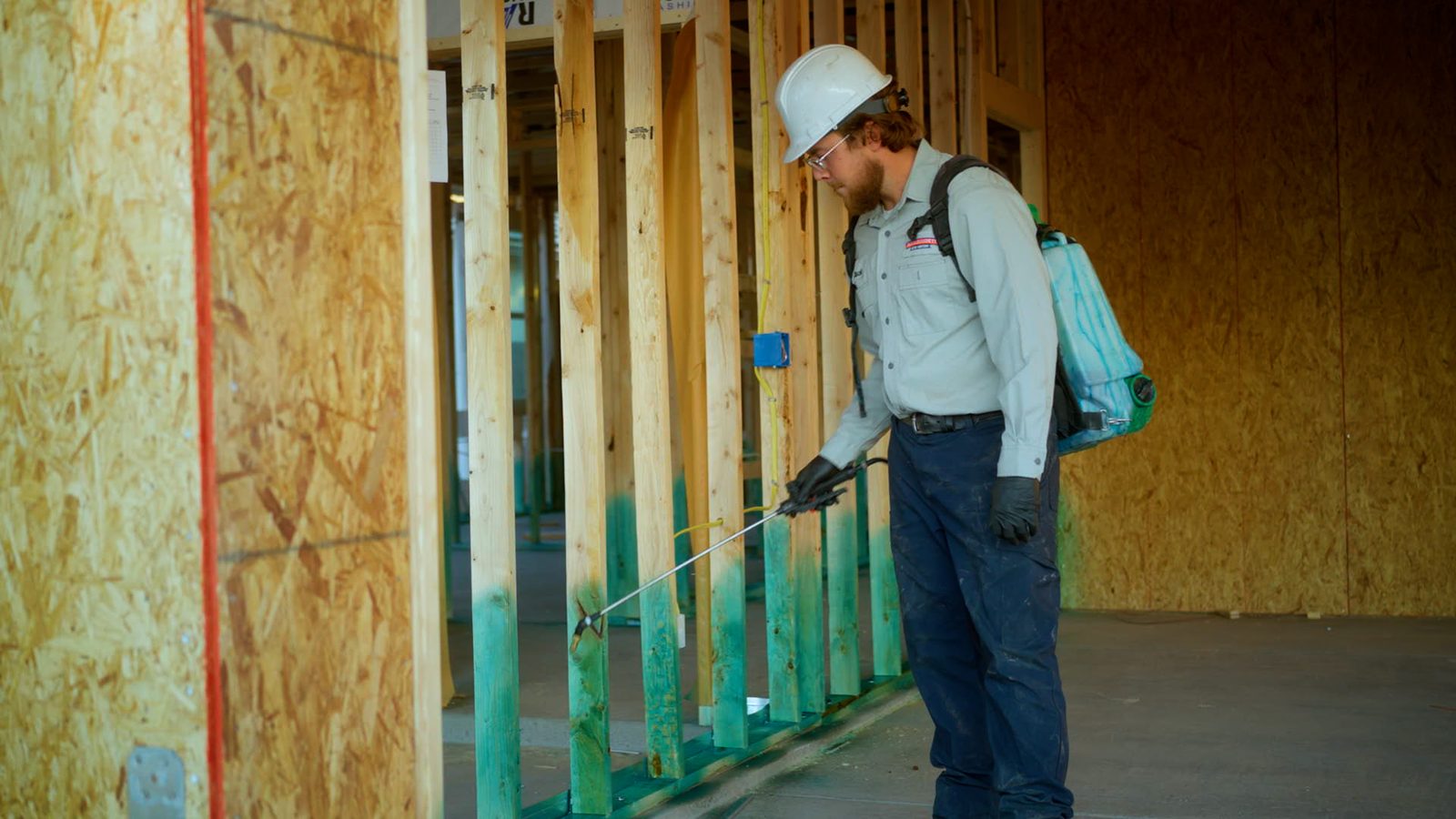
Step 3: Targeted Treatment. Based on species and colony locations, we deploy the appropriate combination of non-repellent perimeter products, targeted baits, mound treatments, and void applications. We do not blanket spray. Every product placement has a specific purpose tied to a specific colony or pathway.
Step 4: Interior Trail Treatment. Active indoor trails are treated with non-repellent product and gel bait placed at trail junctions and entry points. We address the trail, the entry point, and the colony — all three — because treating only one will not solve the problem in your Village at Litchfield Park home.
Step 5: Follow-Up Verification. We return in 2–3 weeks to verify colony elimination, re-treat any surviving colonies, and refresh the perimeter barrier. For severe infestations with multiple species, additional follow-up visits may be needed. Ongoing service maintains protection year-round across the 85340 area.
Reducing Ant Pressure Around Your Litchfield Park Property
After professional treatment, these practices maintain an ant-resistant environment around your home:
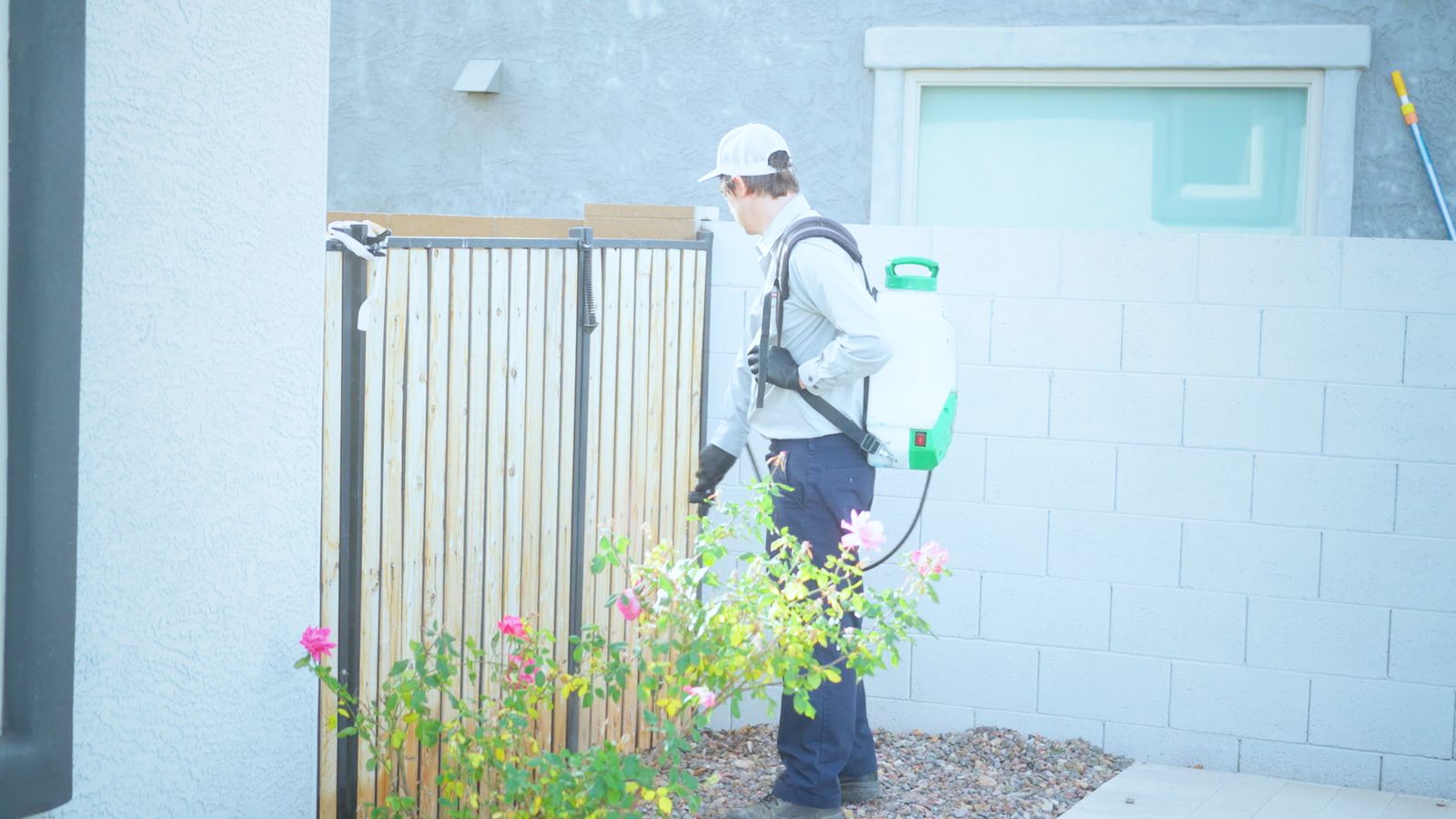
Maintain a clean perimeter. Trim vegetation, mulch, and ground cover back 12–18 inches from your foundation walls. Ants use plant material touching the house as bridges over treated zones. In Village at Litchfield Park, we frequently find ant trails running along landscape shrubs that contact exterior stucco — bypassing the perimeter barrier entirely.
Remove harborage items. Stacked firewood, stored lumber, cardboard boxes against exterior walls, and garden pots sitting directly on soil all provide shelter for ant colonies within striking distance of your home. Move all stored materials 24+ inches from the foundation and elevate them off the ground whenever possible.
Fix irrigation issues. Over-irrigated landscape beds near your foundation create the moist soil that ant colonies prefer. Adjust drip emitters away from the house, fix broken sprinkler heads spraying the foundation, and ensure drainage flows away from the structure across your 85340 area property.
Monitor for mounds. Fire ant mounds in your yard indicate active colonies within foraging distance of your home. Report new mounds to us between visits — we can spot-treat emerging colonies before they mature and establish trails into your living space near Litchfield Park downtown.
Keep your garage sealed. The garage is the number-one ant entry point for Litchfield Park homes. Install weather stripping on the bottom seal, caulk the frame-to-wall joint, and avoid storing food, pet food, or sugary liquids in the garage. Our Bucksworth technicians always treat the garage perimeter as part of our standard service.
What Litchfield Park Residents Near Litchfield Park downtown Should Know About Ants
Properties near Litchfield Park downtown sit at the boundary where urban landscaping meets natural ant habitat — and that proximity creates unique challenges for Village at Litchfield Park homeowners.
The native desert near Litchfield Park downtown supports dozens of ant species that naturally expand into irrigated residential areas. Fire ant colonies in particular thrive in the transition zone between desert and landscape, building mounds in gravel borders and along sidewalks throughout the 85340 area.
In Village at Litchfield Park and Litchfield Park Historic District, we see seasonal invasion patterns tied to desert conditions. When desert food and water sources diminish during pre-monsoon heat, foraging ants extend their range into residential yards — sometimes traveling 100+ feet from the colony to reach irrigated landscaping and the food sources associated with occupied homes.
Carpenter ants in this area tend to target mature trees first, then bridge into home structures via tree limbs touching rooflines or fences connecting to exterior walls. A regular pest inspection that includes checking these connection points prevents carpenter ants from establishing structural nests.
Our Litchfield Park technicians serving the 85340 area carry bait formulations for all four major pest ant species, along with non-repellent perimeter products and mound treatments. If we identify a new species during your service visit, we adjust the treatment on the spot — no need to reschedule.
As a locally owned company, our technicians live in the same Litchfield Park neighborhoods they serve. They understand the ant challenges specific to Village at Litchfield Park and the 85340 area because they deal with the same species at their own homes. That local knowledge — combined with professional-grade products and species-specific protocols — is what makes Bucksworth the trusted choice for ant control in Litchfield Park. Call (480) 422-8388 to schedule your service.
Why Litchfield Park Families Choose Bucksworth
Since 2013, Bucksworth Home Services has been the company Litchfield Park homeowners call when the job matters. Our founder, Jordan Moore, built this company on a simple principle: treat every home like it is your own.
Here is what sets us apart in Village at Litchfield Park and across Litchfield Park:
- Same-day service — When you need help, we show up. Our Litchfield Park trucks are dispatched daily from local routes, not a warehouse across town.
- Flat-rate pricing — We quote the job before we start. No hourly billing that incentivizes slow work.
- Real reviews from real neighbors — Check our Google reviews from homeowners in Village at Litchfield Park, Litchfield Park Historic District, and across the 85340 area.
- Multi-service convenience — Pest control, HVAC, plumbing, and weed control under one roof. One company that knows your home.
Ready to get started? Call (480) 422-8388 or book online today.
Frequently Asked Questions About Ant Control in Litchfield Park
Can I get rid of ants myself in Litchfield Park?
Consumer ant sprays kill ants on contact but do not reach the colony — and repellent sprays can trigger colony budding, splitting one colony into multiple satellite nests throughout your 85340 area home. Professional treatment uses non-repellent transfer products and targeted baits that spread through the colony via ant-to-ant contact, reaching and killing the queen. This colony-elimination approach is far more effective than surface spraying.
How do I know what kind of ants I have in Litchfield Park?
Size, color, behavior, and location help identify the species. Fire ants are small (1/8 inch), reddish, and build visible mounds. Carpenter ants are large (1/4–1/2 inch), black or bicolored, and found near wood. Crazy ants are small, brown, and move erratically in huge numbers. Pavement ants are small, dark brown, and push sand mounds through cracks. Our Bucksworth technicians identify the species during a free inspection of your Village at Litchfield Park home and recommend the appropriate treatment.
Do ants cause structural damage in Litchfield Park?
Carpenter ants absolutely cause structural damage. They tunnel into wood to create nesting galleries, weakening beams, posts, eaves, and framing. Unlike termites, they do not eat wood — they excavate it, leaving piles of sawdust-like frass. Fire ants can undermine concrete slabs and pavers by excavating soil beneath them. Crazy ants damage electrical equipment by nesting inside panels and junction boxes, causing short circuits. All three scenarios require professional treatment in the 85340 area.
Schedule Your Ant Control Service in Litchfield Park Today
Do not wait for the problem to get worse. Whether you are in Village at Litchfield Park, Litchfield Park Historic District, or anywhere in the 85340 zip code, Bucksworth Home Services is ready to help. Call us at (480) 422-8388 or visit our Litchfield Park ant control page to schedule your service today.
Related Services & Resources
- Termite Treatment in Litchfield Park
- Pest & Termite Control in Litchfield Park
- All Bucksworth Services in Litchfield Park
- Ant Removal Near Chase Field: Effective Solutions for Phoenix Properties
- How To Safely Prepare Your Home For A Professional Termite Treatment
- Getting Rid of Spiders in Apache Junction — A Superstition Foothills Homeowner's Complete Guide
- Termite Treatment in Queen Creek: Protecting Hastings Farms Homes from Silent Damage
- Florence Scorpion Prevention — What Every Anthem at Merrill Ranch Family Should Know
- Get a Free Instant Estimate