
Yes, scorpions are arachnids, not insects. They are in the same class as spiders, ticks and mites, with eight legs, two main body sections and no antennae or wings. That difference matters in Queen Creek, because the sprays and sticky traps made for insects often miss scorpions entirely. If you are finding scorpions around your home, call us at (480) 422-8388.

We field this question a lot from families in 85142 and 85140, usually right after a scorpion turns up in a garage or a kid's bedroom. This guide explains what makes a scorpion an arachnid, how to tell the Arizona bark scorpion from look-alikes, why the arachnid label changes how you control them, and what we do around Queen Creek homes. Our scorpion control in Queen Creek service is built around exactly these differences.
Are Scorpions Arachnids or Insects?
Scorpions are arachnids. Insects have six legs, three body sections and usually antennae and wings. Arachnids have eight legs, two body sections and no antennae. A scorpion fits the arachnid pattern on every point, along with a pair of pincers and a tail that curls over its back.
The scientific order is Scorpiones, and scorpions are one of the oldest land animals on earth, dating back hundreds of millions of years. Here in the Sonoran Desert, they are a normal part of the landscape. The trouble starts when they follow food and shade into our homes.
- Eight legs. Four on each side, which is the quickest way to rule out an insect.
- Two body sections. A front section that holds the head and legs, and a segmented abdomen that ends in the tail.
- Pincers. The pedipalps look like small claws and are used to grab prey.
- No wings, no antennae. Insects such as roaches and crickets have antennae. Scorpions do not.
How Can You Tell a Scorpion From an Insect or Another Arachnid?
Count the legs, then look for the tail and claws. A scorpion is the only common Arizona arachnid with both a curled, stinger-tipped tail and pincers. Spiders and solifugids ("sun spiders") are arachnids too, but they lack the tail.
| Creature | Class | Legs | Quick way to tell |
|---|---|---|---|
| Bark scorpion | Arachnid | 8 | Slim, pale tan, long thin tail and small pincers |
| Giant hairy scorpion | Arachnid | 8 | Much larger, thick pincers, rarely found indoors |
| Spider | Arachnid | 8 | No tail or pincers, spinnerets at the back |
| Sun spider (solifugid) | Arachnid | 8 | Fast, hairy, oversized jaws, no stinger |
| Cockroach or cricket | Insect | 6 | Antennae, three body sections |
Not sure what you found? Photograph it from a safe distance and send it to us. You will find more on the pest side in our guide to what a bark scorpion sting looks like.
What Kind of Scorpion Lives in Queen Creek?
The Arizona bark scorpion is the one you will meet in Queen Creek. It is small, about two to three inches long, pale yellow-tan, and slender. It is also the most venomous scorpion in North America, so it is the one worth taking seriously, especially around young children.
Bark scorpions climb. They scale stucco, block walls and tree trunks, and they can hang upside down from a ceiling. That is why people find them in sinks, bathtubs and light fixtures. Giant hairy scorpions live in Arizona too, but they stay on the ground and are rarely found in houses.
Why does the arachnid label matter for control?
Scorpions behave nothing like the insects most sprays are made for. They do not groom and swallow residue the way roaches and ants do, and they spend much of the day tucked in cracks, under rocks and inside wall voids. Because they hunt other pests, the food supply and the hiding places both have to be dealt with, not just the scorpion you see.
Do Scorpions Glow Under a Black Light?
Yes. Scorpions glow a bright blue-green under ultraviolet light, which is how our technicians find them after dark. Their outer shell contains compounds that fluoresce, so a UV flashlight turns a dark yard into a clear map of where they are.
You can do a simple check on your own. Wait until an hour or two after sunset, shine a UV flashlight along block walls, around the base of the house, along rock beds and near any water source, and note where you see a glow. Bring that list to us, since it shows us where to focus.
Why Are Scorpions So Common Around Queen Creek Homes?
Queen Creek sits at the edge of the desert and next to farmland, and both help scorpions. New construction on the east side along Ellsworth Road and out toward Hastings Farms and Sossaman Farms turns up soil that scorpions have lived in for years. The washes, irrigation lines and orchard edges near Schnepf Farms add moisture and the insects scorpions eat.
- Disturbed ground. Grading for new homes pushes scorpions toward the houses that follow.
- Block walls and rock yards. Gaps between blocks and under landscape rock give them cool daytime shelter.
- Irrigation and pet water. Moisture draws crickets and roaches, which scorpions hunt.
- Gaps at the house. Weatherstripping, garage door seals and utility penetrations let small scorpions in.
That is why a clean, well-kept home can still have them. Our post on scorpion control for Hastings Farms homeowners covers more about the east side of town.
How Do You Keep Scorpions Out of Your House?
Close the gaps, reduce the food and clear out the hiding spots. A scorpion that cannot get in, and finds nothing to eat, moves on. None of these steps work alone, but together they cut sightings.
- Seal entry points. Replace worn door sweeps, caulk gaps around pipes and cables, and check garage door seals.
- Cut back vegetation. Trim branches that touch the roof or walls, since bark scorpions climb them.
- Move woodpiles and rocks away from the house, and lift stored items off the garage floor.
- Control the insects. Fewer crickets and roaches means less to hunt.
- Shake out shoes and towels that sat on the floor or outside.
A home treatment works best on top of these basics. See how it plays out in San Tan Valley, our neighbors to the south or in Gilbert during bark scorpion season.
What Should You Do If a Scorpion Stings You?
Wash the area with soap and water, apply a cool compress and call Poison Control at 1-800-222-1222. A bark scorpion sting burns at once and can cause numbness or tingling. Call 911 for trouble breathing, muscle twitching or any reaction in a young child or older adult. This is general safety information, not medical advice, so follow what Poison Control or your doctor tells you.
What Do We Do About Scorpions Around Queen Creek?
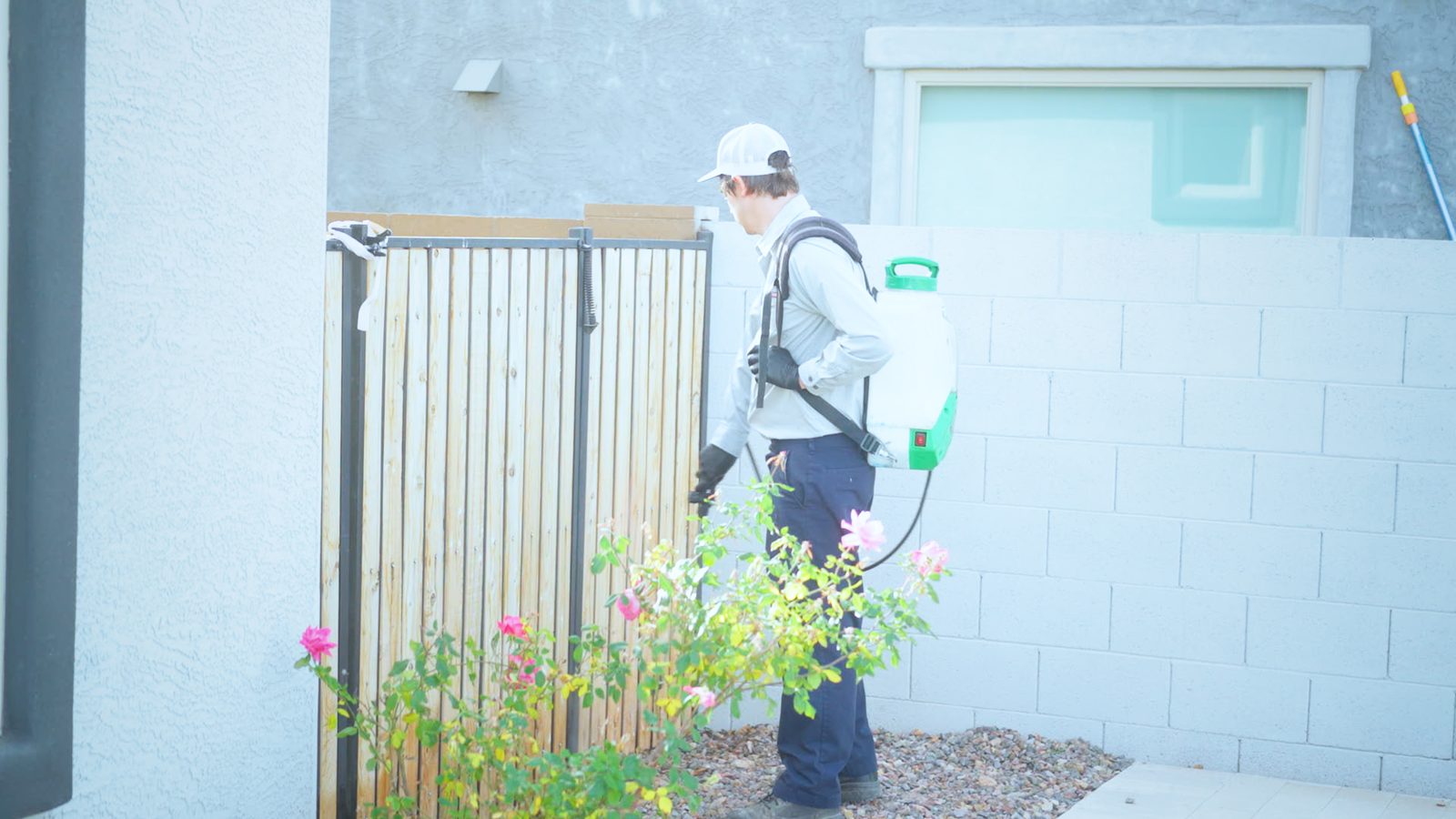
We inspect first, then treat the house perimeter, entry points and the harborage areas where scorpions rest. Bucksworth Home Services has served Arizona homeowners since 2013, and our technicians treat the exterior, around block walls and in the places a scorpion would enter. We then come back to the same spots to check on results.
Our work does not stop at the scorpions themselves. We also look at the insects that feed them, because that is what keeps them coming back. You can see everything we offer on our pest control in Queen Creek page, and the Queen Creek home services page lists the rest.
Do We Treat Scorpions Near Queen Creek Too?
Yes. Our crews also serve scorpion control in San Tan Valley, scorpion control in Gilbert, pest control in Mesa, scorpion control in Chandler and Apache Junction. For a look at how Mesa handles it, read about what scorpions eat in Mesa.
Finding scorpions in your home? Request service online or call (480) 422-8388 and a technician will walk your yard and block walls with you.
Frequently Asked Questions
Are scorpions arachnids or insects?
Scorpions are arachnids. They have eight legs and two body sections, with no wings or antennae. Insects have six legs and three body sections.
Are scorpions related to spiders?
Yes. Scorpions and spiders are both arachnids and share a common ancestor. They differ in body shape: scorpions have pincers and a segmented tail, spiders do not.
How many legs does a scorpion have?
Eight. A scorpion also has two pincers, called pedipalps, which are not counted as legs.
Are bark scorpions dangerous in Queen Creek?
The bark scorpion is the most venomous scorpion in North America. Most stings in healthy adults are painful but pass, while children and older adults are at higher risk. Call Poison Control at 1-800-222-1222 after a sting.
Why do I keep finding scorpions in my Queen Creek home?
Most often it is a mix of gaps at the house, hiding places like block walls and rock, and a supply of insects to eat. Fixing only one usually does not stop them.
Can you get rid of scorpions around my Queen Creek home?
Yes. Call us at (480) 422-8388 or request service online and we will schedule an inspection.