
You can spot a Bermuda grass problem from the street. That bright green runner creeping across otherwise clean desert rock. The tufts pushing up through the crack between your driveway and garage slab. The grass that somehow grew back three weeks after you pulled it out completely. Cooper Commons homeowners in Chandler fight this battle from March through November, and most are losing because Bermuda grass spreads through both stolons (above ground) and rhizomes (below ground), meaning surface removal is pointless. Our team attacks the root system directly with selective herbicides that kill Bermuda without harming your desirable landscaping.
Bermuda Grass and HOA Compliance in Chandler
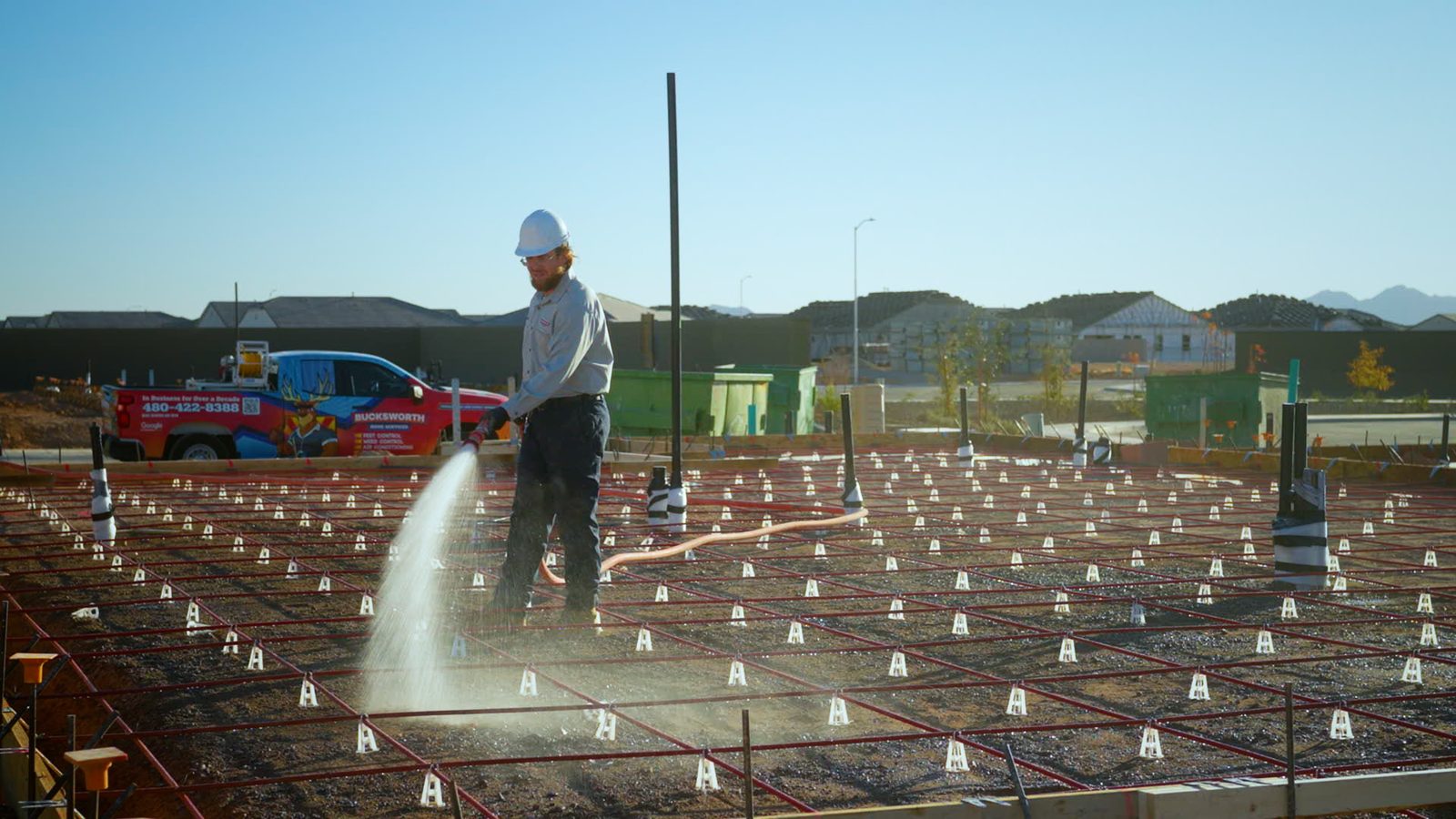
If you live in a community with an HOA — and many Cooper Commons subdivisions have active associations — Bermuda grass can become a compliance issue with financial consequences.
HOA landscape standards in 85226 communities typically require maintained, weed-free desert landscaping. Bermuda grass growing through gravel violates these standards, triggering warning letters and eventually fines. We have worked with homeowners who received $25-$100 monthly fines for persistent Bermuda grass they could not eliminate on their own.
Professional treatment typically resolves the issue within one treatment cycle (4-6 weeks). We provide documentation for homeowners to submit to their HOA showing active remediation. For properties with ongoing reinvasion from community areas, we provide a treatment letter explaining the source and our management plan.
If your HOA has notified you about Bermuda grass, call us at (480) 422-8388. We can often schedule treatment within the week to demonstrate compliance before your next inspection date.
Why Bermuda Grass Dominates Chandler Yards
Bermuda grass (Cynodon dactylon) is one of the most aggressive grass species in the Sonoran Desert, and 85226 properties offer everything it needs. Understanding why it grows so aggressively in Cooper Commons helps explain why casual removal attempts consistently fail.
Bermuda grass spreads through three mechanisms simultaneously: seeds (which remain viable in soil for years), stolons (above-ground runners that root at each node), and rhizomes (underground stems that extend horizontally and sprout new plants). This triple-threat growth strategy means killing the visible plant does nothing — the rhizome network underground continues producing new growth from every surviving node.
In Chandler, Bermuda grass actively grows from March through October when soil temperatures exceed 65 degrees. It goes dormant (turns brown) in winter but does not die. The root system survives through freezing temperatures and drought, regenerating rapidly when conditions improve. A single plant can colonize a 20-foot radius in one growing season. Our Chandler Bermuda grass treatments target all three propagation methods.
The Bermuda Grass Treatment Process for Cooper Commons Homes
Our Bermuda grass elimination protocol has been refined over 13+ years of treating Chandler properties. It works in three phases:
- Assessment and mapping — Our technician walks your property and maps all active growth, noting invasion paths from neighboring properties, irrigation exposure, and rhizome network extent based on growth patterns.
- Systemic herbicide application — We apply professional-grade systemic herbicides that the plant absorbs through its leaves and translocates to the root system. This kills the rhizomes underground, not just the visible growth. Timing matters — we apply during active growth phases when translocation is highest.
- Follow-up treatment — A single treatment kills 80-90% of the network. Follow-up treatment 3-4 weeks later targets surviving nodes that regrow, pushing elimination rates above 95%.
Between treatments, we advise 85226 homeowners to monitor for regrowth and report new shoots so we can spot-treat before they reestablish. Most properties achieve full control within two treatment cycles.
DIY Bermuda Grass Removal: Why It Keeps Coming Back
We get this question from Chandler homeowners every week: "I pulled all the Bermuda grass — why is it back?" The answer lies in the biology of the plant.
Manual pulling removes the above-ground plant and some surface roots. But Bermuda grass rhizomes extend 6-12 inches below the surface in typical Cooper Commons soil. Unless you excavate the entire root network, fragments remain and regenerate within 2-3 weeks.
Common DIY approaches and why they fail:
- Vinegar/salt solutions — Burns leaf tissue on contact but does not reach roots. The plant regrows within days. Also kills soil biology.
- Landscape fabric — Bermuda grass pushes through seams, tears through lightweight fabric, and grows around edges.
- Boiling water — Kills surface growth but heat does not penetrate deep enough to reach the rhizome network.
- Retail herbicides (Roundup) — Partially effective but requires multiple applications at precise concentrations.
- Solarization (plastic sheeting) — Can work over 6-8 weeks in Arizona summer heat but impractical for large areas.
Professional treatment works because we use systemic herbicides at proper concentrations during optimal growth windows. The product moves through the plant's vascular system to kill roots you cannot reach by hand.
Bermuda Grass Control Costs in Chandler
Here is what Cooper Commons homeowners can expect for professional Bermuda grass treatment:
| Service | Typical Cost | What Is Included |
|---|---|---|
| Initial Treatment (up to 5,000 sq ft) | $99 - $199 | Full property mapping, systemic herbicide application, post-treatment guide |
| Follow-Up Treatment | $79 - $149 | Spot treatment of surviving growth, new invasion assessment |
| Monthly Weed Program | $49 - $89/month | Bermuda grass + all weed species, pre-emergent + post-emergent rotation |
| Annual Pre-Emergent Program | $199 - $399/year | Two pre-emergent applications (fall + spring) to prevent germination |
Most 85226 homeowners start with the initial treatment + one follow-up, then transition to a monthly or quarterly program to prevent reinvasion. Get a custom quote for your Chandler property.
How Pre-Emergent Herbicides Prevent Bermuda Grass in 85226
The most cost-effective long-term strategy for Chandler homeowners is preventing Bermuda grass from establishing in the first place. Pre-emergent herbicides create a chemical barrier in the top inch of soil that prevents seed germination.
For Cooper Commons properties, we apply pre-emergent twice per year:
- Fall application (September-October) — Targets winter annual weeds and early Bermuda grass germination as soil temperatures drop below 85 degrees.
- Spring application (February-March) — Catches Bermuda grass seeds that germinate when soil temperatures rise above 65 degrees.
Pre-emergent does not kill existing Bermuda grass — it only prevents new plants from seeds. That is why we always eliminate existing growth first, then establish the pre-emergent barrier. For 85226 properties where neighboring lawns are a source of rhizome invasion, we combine pre-emergent with a root barrier strategy at the property line.
The key to effectiveness is timing and watering in. The product needs activation by irrigation or rain within 14 days. Our technicians coordinate with your irrigation schedule. Learn more about our Chandler weed prevention program.
Bermuda Grass vs. Your Desert Landscape: Protecting Cooper Commons Plantings
One of the biggest concerns Chandler homeowners express is whether Bermuda grass treatment will harm their desirable plants — cacti, trees, shrubs, and ornamental grasses. The answer depends entirely on the herbicide and application method used.
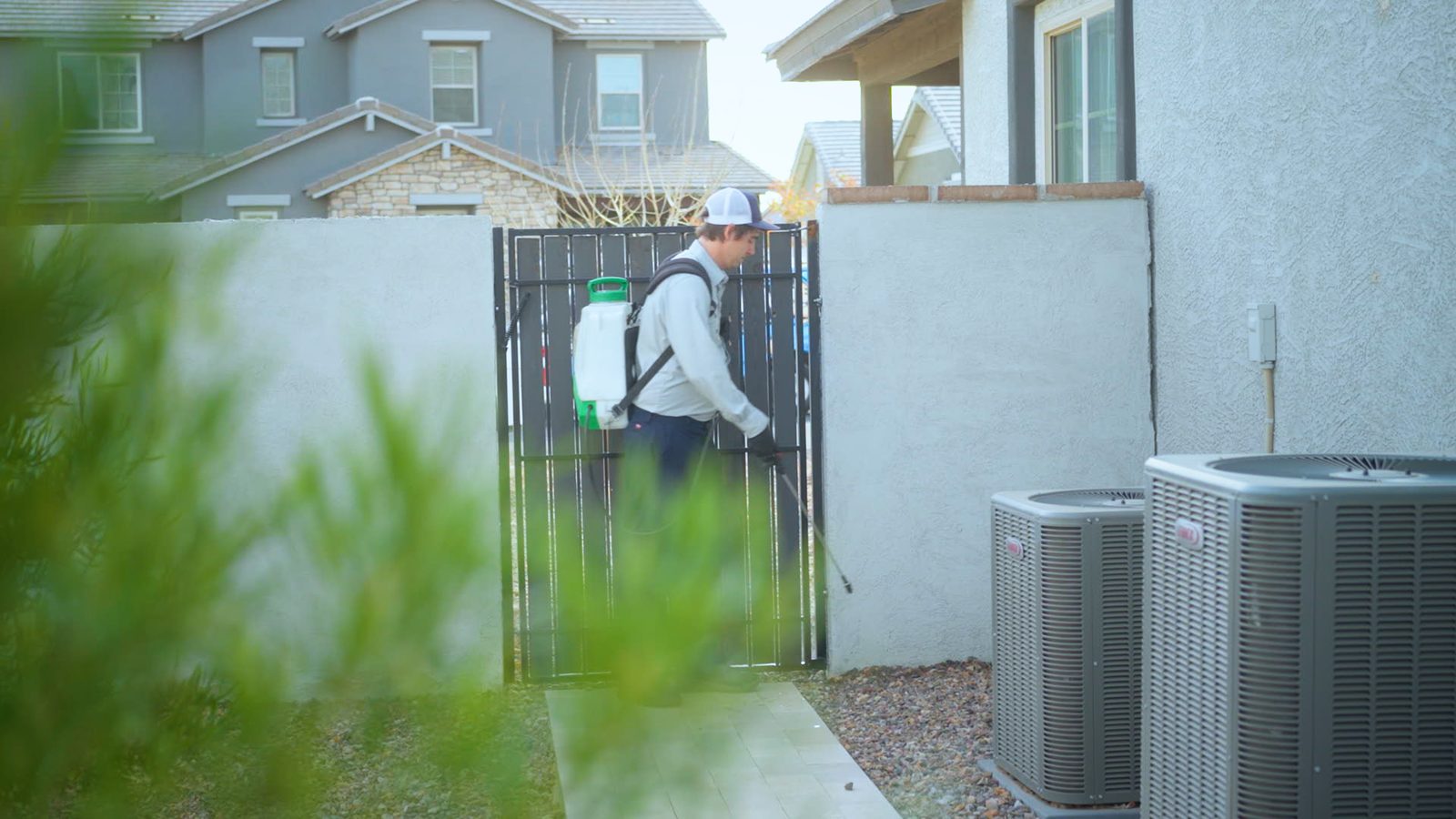
Non-selective herbicides kill any plant they contact. We use these in open gravel areas where Bermuda grass is the only vegetation. For beds with desirable plants, we use selective herbicides that target grass species specifically while leaving broadleaf plants unharmed, or we apply non-selective products with precision spray equipment and physical shielding.
Our technicians identify every plant species on your 85226 property before spraying. If Bermuda grass is growing through a cactus garden, we hand-apply herbicide to the grass leaves with a sponge applicator rather than spraying. If it has infiltrated a groundcover bed, we use selective grass-specific products that leave the groundcover untouched.
Protecting your landscape investment is part of our job. We treat thousands of Chandler properties and understand the specific plant communities common to Cooper Commons yards.
Follow us for more lawn transformations: YouTube | Instagram | Facebook
We Also Service These Nearby Areas
Bucksworth Home Services proudly serves Chandler and the surrounding communities. If you are in Gilbert, Mesa, Tempe, Ahwatukee, we have technicians in your area ready to help. Request your free estimate today.
Read more from our blog: Related: bermuda grass control in gilbert solutions for power ranch h | Related: how to stop bermuda grass from taking over your gold canyon | Related: professional bermuda grass control near mcdowell mountain re
Related services in Chandler: Pre Emergent Weed Control | Post Emergent Weed Treatment
Frequently Asked Questions (FAQ)
When is the best time to treat Bermuda grass in Chandler?
May through August is the optimal treatment window because Bermuda grass is actively growing and translocates herbicide to roots most efficiently. We can treat year-round, but summer applications produce the fastest and most complete results.
Can pre-emergent herbicide prevent Bermuda grass?
Pre-emergent prevents Bermuda grass from seeds but does not stop rhizome spread from neighboring properties. For complete prevention, combine pre-emergent applications (spring and fall) with post-emergent treatment of any rhizome-driven growth.
How long does it take to kill Bermuda grass completely?
Complete elimination typically requires two treatment cycles over 4-6 weeks. The first treatment kills 80-90% of the root system. A follow-up treatment 3-4 weeks later targets surviving nodes. Chandler properties with heavy infestations from neighboring irrigated lawns may need a third application.
Will Bermuda grass treatment kill my other plants?
It depends on the application method. In open gravel areas, we use systemic herbicides that kill all vegetation they contact. Near desirable plants, we use selective grass-specific herbicides or precision application techniques (sponge applicators, shielding) to protect your landscaping.
Why does Bermuda grass keep coming back after I pull it?
Bermuda grass spreads through underground rhizomes that extend 6-12 inches below the surface. Manual pulling removes above-ground growth but leaves the root network intact. Each surviving root node can regenerate a new plant within 2-3 weeks. Only systemic herbicides that translocate to the roots provide lasting control.
Schedule Your Bermuda Grass Control Service in Chandler Today
Do not wait for the problem to get worse. Whether you are in Cooper Commons, near Tumbleweed Park, or anywhere in the 85226 zip code, Bucksworth Home Services is ready to help. Call us at (480) 422-8388 or visit our Chandler Bermuda Grass Control page to schedule your service today.