
"White ants" in a Phoenix house are termites, not ants. Pale, soft-bodied insects in your walls, mud tubes on the foundation, or small piles of discarded wings near a window are the classic signs of subterranean termite activity. If you are seeing any of them, call us at (480) 422-8388 for an inspection through our termite treatment in Phoenix service.

We hear the phrase "white ants" from homeowners in 85016, 85018, 85024, 85028, 85032 and 85044, usually after they find something odd on a patio, in a garage or along a baseboard. The name is old-fashioned, but the worry behind it is real: termites are the one household pest that can quietly damage a structure for years before anyone sees it. This guide walks through what to look for, what is harmless, and what to do in the first 24 hours.
What Are White Ants, and Are They Really Termites?
"White ant" is a common name for termites. Termites are not ants at all. They belong to a different insect group, they live on wood and plant material, and they are pale and soft because they spend nearly their whole lives hidden inside soil, mud tubes and wood. In the Phoenix area the culprit is almost always the subterranean termite, which nests in the ground and travels up into the house.
Three body features separate a termite from an ant:
- Waist: an ant has a pinched, narrow waist. A termite's body is thick and straight from chest to tail.
- Antennae: ant antennae are bent like an elbow. Termite antennae are straight and bead-like.
- Wings: a winged ant has a front pair of wings bigger than the back pair. A winged termite has four wings of about equal length, which break off easily.
What Are the Signs of White Ants in a House?
The most common signs of termites in a Phoenix home are mud tubes along the foundation or garage walls, swarmers and shed wings near windows and doors, hollow-sounding wood, and tiny pellets or blistered paint. You may see one sign or several. Any one of them is worth an inspection, because the insects themselves are rarely visible.
| Sign | Where you will notice it | What it usually means |
|---|---|---|
| Pencil-width mud tubes | Stem wall, garage wall, slab edge, block wall | Subterranean termites traveling from soil to wood |
| Piles of paper-thin wings | Window sills, door tracks, light fixtures | A swarm came out, possibly from inside the structure |
| Hollow or papery wood | Baseboards, door frames, window casings | Wood eaten from the inside |
| Bubbling or peeling paint | Walls near the slab or around windows | Moisture and tunneling behind the surface |
| Doors or windows that suddenly stick | Older block homes and additions | Warping from tunneling or moisture |
| Tiny pale insects in soil or wood | Mulch beds, wood scraps, fence posts | Worker termites, often just outside the home |
Is a Flying White Insect in My House a Termite or a Flying Ant?
If the flying insect has a thick, straight body, straight antennae and four equal-length wings, it is a termite swarmer. A flying ant has a pinched waist, elbowed antennae and unequal wings. Swarming termites often drop their wings within minutes, so a pile of wings on a sill is the best clue after the swarm has passed.
Seeing swarmers outside near a tree stump or block wall is a warning, but seeing them inside your house is more urgent, because it suggests the colony is already in or under the structure. Save a few wings or a few insects in a sealed container or on a piece of clear tape. That gives a technician something to identify on the spot.
When Do White Ants Show Up in Phoenix?
Termite swarms in the Phoenix area are tied to moisture and warmth. Many homeowners notice them after monsoon storms from July through September, but swarms can also appear in spring and after heavy irrigation or a plumbing leak. Termite activity inside the walls does not follow the calendar, so the absence of a swarm does not mean a home is clear.
Here is how the seasons tend to look for Phoenix homeowners:
- Spring: warming soil can bring the first swarms, especially after winter rain.
- Summer monsoon: humidity and storms trigger the most reported swarms and shed wings.
- Fall and winter: fewer swarms, but workers keep feeding in protected soil and walls, and mud tubes are easier to spot when you walk the foundation.
Why Are Phoenix Homes at Risk From Termites?
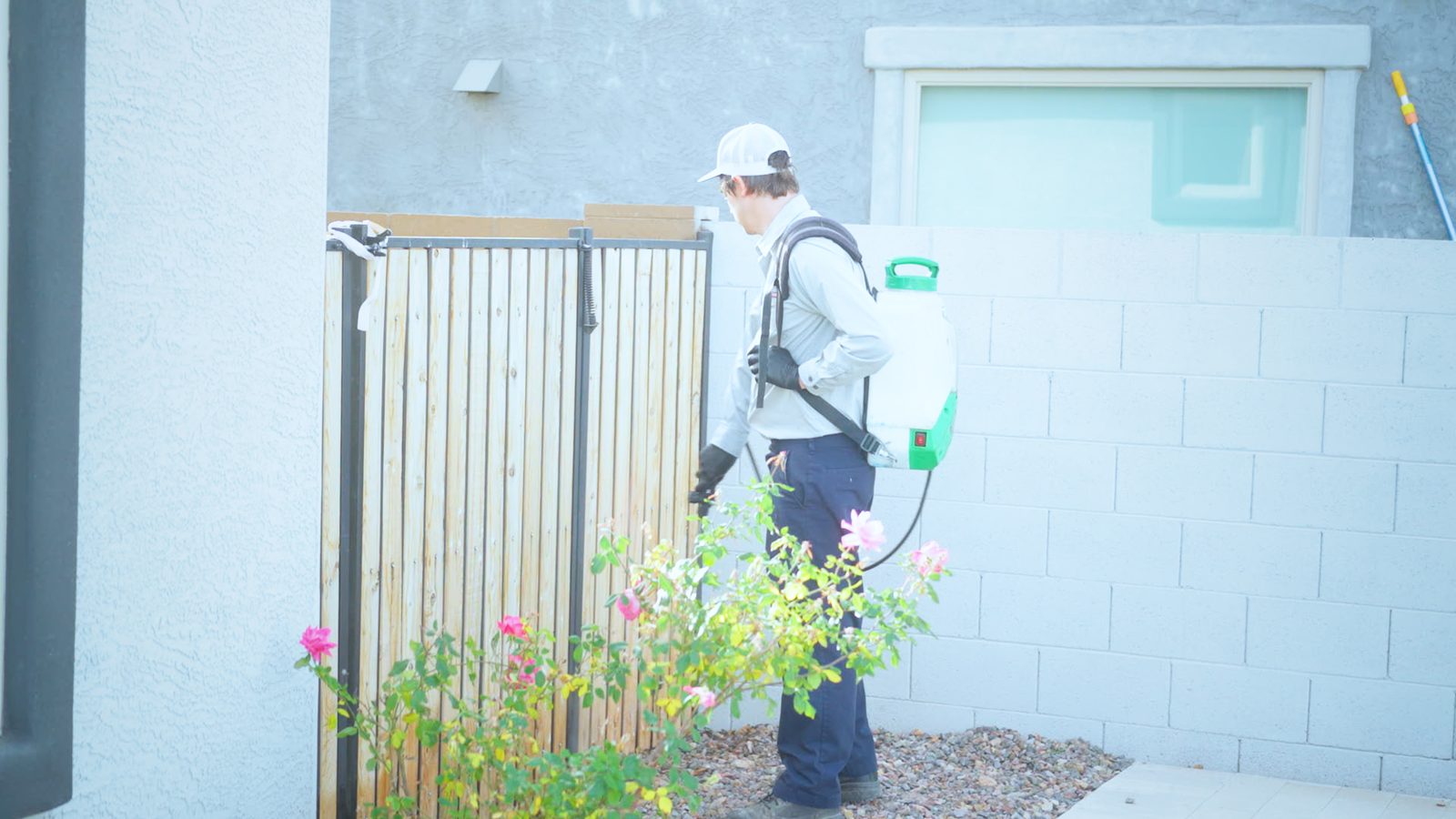
Phoenix is dry, but a house changes the soil around it. Irrigation lines, drip emitters, swamp coolers, planter beds against the stucco and roof run-off all create steady moisture next to the foundation, and subterranean termites follow moisture. Block and stucco construction also hides the slab edge, so a mud tube can run behind a stucco weep screed for a long way before it shows.
Older Phoenix neighborhoods such as Arcadia, Biltmore, Encanto and Maryvale have mature landscaping and wood trim that have had decades to settle against the soil. Newer areas in north Phoenix and Ahwatukee often have fresh fill dirt, new irrigation and raised planters that bring moisture close to the structure. Both kinds of home deserve a look.
What Is Harmless and What Is Not?
Not every pale insect is a termite. Here is a quick way to sort out the common look-alikes before you panic:
- Flying ants: a nuisance, not wood eaters. They leave wings too, but with a pinched waist.
- Carpenter ants and carpenter bees: they excavate wood but do not eat it, and they leave coarse sawdust or round holes. See our guide on wood-boring bees in eaves and patio covers.
- Booklice and other pale pantry pests: tiny and pale, found in damp books or cupboards, not in walls.
- Termites: straight body, straight antennae, mud tubes, hollow wood. These need treatment.
If you cannot tell, take a clear photo with a coin for scale and send it to us. You can also read our guide to signs of termites in an Ahwatukee home, or our broader Phoenix termite company overview to see how an inspection and treatment are structured.
What Should I Do if I Find White Ants in My House?
Do not spray store-bought insecticide on the insects and do not knock down mud tubes yet. Spray can scatter the colony and make it harder to find where it enters. Instead, follow these steps in order:
- Take photos of the insects, wings and any tubes, with a coin for scale.
- Save a few specimens in a sealed container.
- Leave mud tubes in place so the technician can trace them.
- Note any recent water leaks, irrigation changes or wood stored against the house.
- Call us at (480) 422-8388 or request service online.
When we inspect, we check the slab perimeter, garage, attic access, window and door frames, and every spot where soil, stucco or wood meet. We will tell you plainly what we find and what we recommend, including when the answer is that you do not have termites.
How Do We Treat Termites in Phoenix?
Treatment depends on what the inspection shows. For subterranean termites we typically treat the soil around the structure to create a protective zone, and we address active activity in or near the walls. The goal is to stop the colony and block the way back in. We build the plan around your house, not a one-size recipe, and we explain each step before we start. The details live on our termite treatment in Phoenix page.
How Can I Prevent Termites Around My Phoenix Home?
You cannot make a house termite-proof, but you can remove what draws termites close:
- Keep irrigation heads and drip lines from spraying directly on stucco or the slab edge.
- Fix leaking hose bibs, downspouts and cooler drains right away.
- Keep wood, cardboard and firewood off the ground and away from the foundation.
- Keep planter beds and mulch a few inches below the stucco weep screed line.
- Walk your foundation twice a year and look for fresh mud tubes.
A yearly inspection is the single best habit, especially for homes that have never been treated or whose records you do not have.
Do You Serve the Cities Around Phoenix?
Yes. Bucksworth Home Services is locally owned and has served Arizona families since 2013. Beyond Phoenix we handle pest and termite service in Glendale, Chandler, Scottsdale, Tempe and Mesa. If you are in Tempe, see our termite treatment in Tempe page, and for East Valley homes check pest and termite control in Mesa. You can browse everything we do for the metro at pest and termite control in Phoenix.
Frequently Asked Questions About White Ants in Phoenix Homes
Are white ants the same as termites?
Yes. "White ant" is an old name for termites. They are not ants, and they eat wood and other plant material instead of food scraps.
What do white ants look like in a house?
Workers are small, pale and soft-bodied with a thick, straight body. Swarmers are darker, winged and have four wings of equal length that drop off after they land.
Can I tell if I have termites by seeing wings on my window sill?
Shed wings are a strong sign that a swarm happened nearby. It does not prove the colony is inside the house, so an inspection is the only way to know.
Do termites swarm in the Phoenix winter?
Swarms are most common in spring and during the summer monsoon, but hidden feeding continues year round. Check your foundation for mud tubes in any season.
Should I kill the white ants myself?
We advise against it. Over-the-counter sprays can scatter a colony and hide the entry points. Take photos, leave the evidence in place and call a licensed pest professional.
Do you offer termite inspections in Phoenix?
Yes. We serve Phoenix ZIP codes including 85016, 85018, 85024, 85028, 85032 and 85044. Call (480) 422-8388 or request service online.