
To get rid of wood-boring bees in Tempe, first confirm they are carpenter bees by looking for round, half-inch holes in bare wood with sawdust underneath, then treat the gallery, plug the hole after the bees are gone and paint or stain the wood so they do not return. They do not eat wood, but a nest reused for years can weaken fascia, rafters and pergola beams. If you would rather not work from a ladder near a nest, call us at (480) 422-8388 and we will inspect it through our bee and wasp removal in Tempe service.
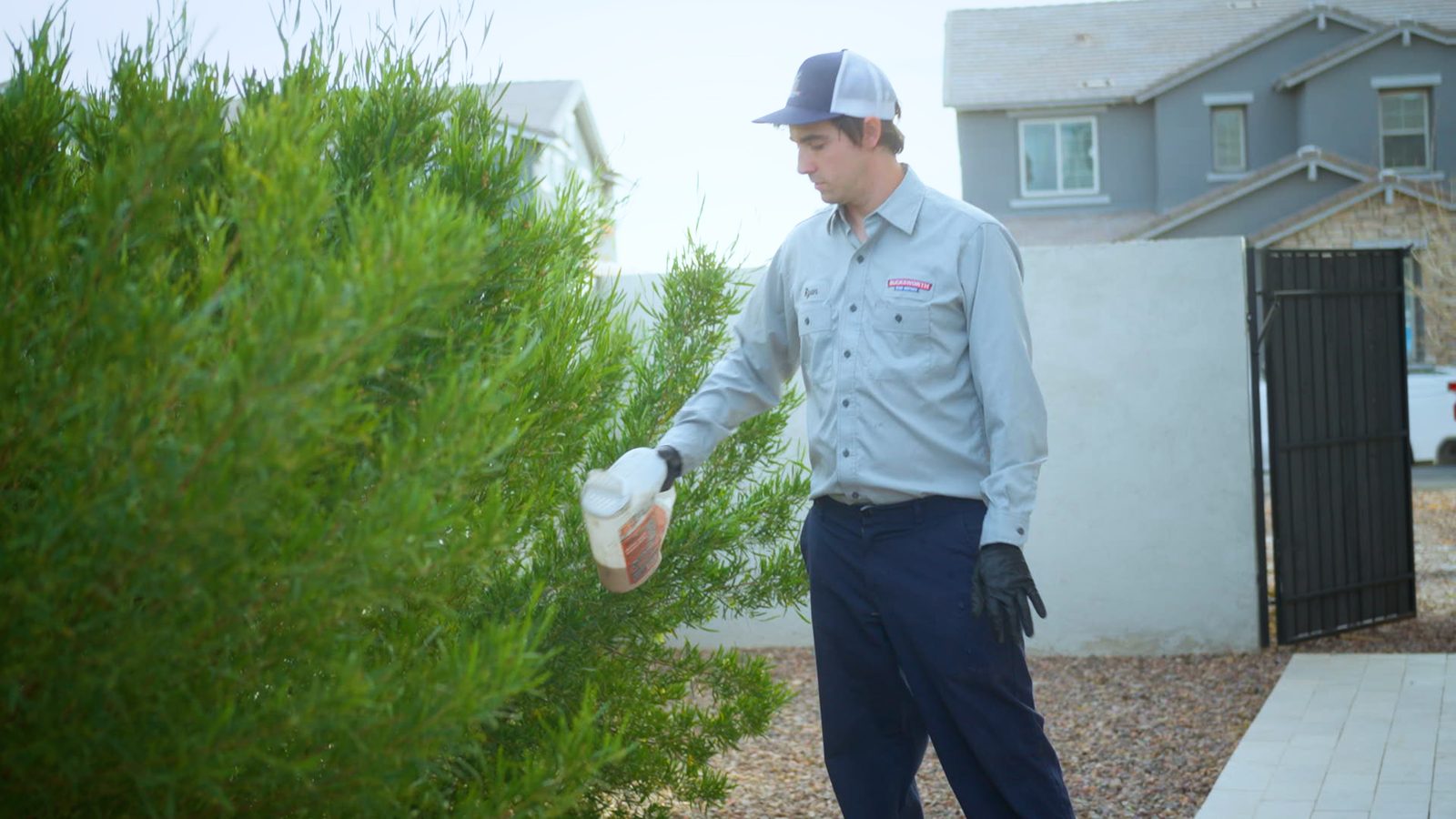
We hear this question from homeowners across 85281, 85282, 85283 and 85284, from the older ranch homes near Mill Avenue and Tempe Town Lake to the newer patios and pergolas on the south side near Papago Park. The pattern is the same everywhere: a big, shiny, bumble-bee-looking insect hovers near the eaves in spring, and a few weeks later there is a tidy round hole and a little pile of sawdust on the patio table.
What Are Wood-Boring Bees in Arizona?
Wood-boring bees are carpenter bees: large, solitary bees that chew a tunnel into dry wood to raise their young. In the Phoenix metro the Valley carpenter bee is the one most homeowners see. Unlike termites, they do not eat the wood. They chew it out, push the sawdust away and lay eggs in side chambers.
A few facts help you tell them apart from other bees:
- Size and look. Carpenter bees are large and robust, often about an inch long. Females are typically dark and shiny, and males in our area are often golden-brown and fuzzy.
- Bare abdomen. A bumble bee has a fuzzy, hairy back end. A carpenter bee usually has a smooth, shiny one.
- Solitary habits. There is no big colony or paper nest. Each female digs her own tunnel, though several may use the same stretch of wood.
- Hovering males. Males guard the nest area and dart at anything that moves. They have no stinger, so the dive-bombing is mostly bluff.
How Do You Know It Is a Carpenter Bee and Not Termites or Honey Bees?
Look at the hole and the debris. A carpenter bee entrance is a clean, perfectly round hole about half an inch across, usually on the underside or face of bare wood, with coarse, sawdust-like frass below it. Termites leave mud tubes or tiny pellets, and honey bees live in a wax comb inside a wall or tree cavity, not in a drilled tunnel.
| Sign | Carpenter bee | Termites | Honey bees |
|---|---|---|---|
| Entry point | Round hole, about 1/2 inch, drilled into bare wood | No clean hole; mud tubes or tiny pinholes | Gap or crack in a wall, soffit or tree |
| Debris | Coarse sawdust and yellow-brown streaks below the hole | Small pellets or discarded wings | Wax, honey stains, bees in a steady stream |
| Sound | Faint chewing or buzzing in the wood | Quiet, or soft clicking in walls | Loud steady hum inside a wall |
| Activity | Mostly spring through summer | Year-round, often hidden | Warm months, very active in heat |
| Who to call | Bee removal | Termite inspection | Bee removal |
If the signs point toward termites instead, that is a different problem with a different fix, and we cover it in our pest and termite control in Tempe service.
Where Do Carpenter Bees Nest on Tempe Homes?
Carpenter bees go for dry, bare, softer wood. Painted and sealed surfaces are far less attractive to them. On Tempe homes the usual spots are:
- Fascia boards and eaves, especially on the sunny south and west sides
- Patio covers, ramadas and pergola beams
- Unpainted fence rails and posts
- Wooden gates, sheds and swing sets
- Dead palm trunks and old agave flower stalks in the yard
Tempe has plenty of mid-century and 1980s-era homes where the wood trim has gone years between paint jobs, and Arizona sun dries and cracks that wood fast. Bare, weathered wood is exactly what a female is looking for.
Do Carpenter Bees Sting, and Are They Dangerous?
Males cannot sting at all. Females can, but they rarely do unless you grab one or trap it against your skin. A sting hurts, and anyone with a known bee allergy should treat any bee encounter seriously and get medical help for a reaction. Compared with Africanized honey bees, which defend a hive aggressively, carpenter bees are mostly a property problem, not a safety one.
The real damage comes from repetition. The same tunnel gets reused and lengthened year after year, and each new female adds galleries. Over several seasons that can weaken a fascia board or a pergola beam. Woodpeckers sometimes tear at the wood to reach the larvae, which makes the damage worse.
How Do You Get Rid of Wood-Boring Bees?
The reliable approach has four steps, and the order matters:
- Find every entrance. Walk the eaves, fascia, patio cover and fence line. Fresh sawdust tells you which holes are active.
- Treat the gallery. A labeled insecticide dust applied into each active hole reaches the female and the larvae inside. Always follow the product label and wear eye and hand protection.
- Wait, then plug. Do not seal a hole the same day. Wait until the adults and developing young are gone, then fill the hole with wood filler or dowel so a new female cannot move in.
- Finish the wood. Paint, stain or seal the surface. Bare wood invites bees, and a coated surface usually does not.
Sealing too early is the most common mistake we see. A plugged hole with live bees inside can send them chewing a new exit, sometimes through the interior side of the same board.
Do Home Remedies for Carpenter Bees Work?
Some help a little and most do not solve it. Here is what we tell Tempe homeowners:
- Citrus or almond oil sprays. They may irritate bees for a day or two, but they do not reach the larvae deep in the tunnel.
- Fake wasp nests. The evidence for them is weak. Carpenter bees are solitary and are not territorial about wasps.
- Vibration and noise. Bees nesting in a quiet eave rarely care.
- Traps. Wooden carpenter bee traps catch some adults, but they do not clear existing galleries.
- Paint and stain. This is the one that works long term, as prevention after treatment.
When Should You Call a Professional?
Call when the nest is high, over a patio you use, in a structural beam, or when you cannot tell whether you have carpenter bees, honey bees or termites. Getting that identification wrong is the expensive part, because the treatment for each is different. A technician can identify the insect, treat the gallery safely and tell you whether any wood needs repair.
Our team also handles wasp nests and honey bee hives, so if you find more than one kind of stinging insect around the house, one visit can cover it. See our Tempe wasp nest safety guide for the wasp side, and our guide to bumble, carpenter and honey bees if you are still sorting out which bee you have.
What About Carpenter Bees in Nearby Cities?
The same bees and the same wood problems show up across the East Valley and Phoenix. We service Mesa, Chandler, Gilbert, Scottsdale, Phoenix and Ahwatukee as well as Tempe, and our local guides cover each area. See our Mesa bee removal guide, Gilbert bee and wasp guide and Ahwatukee bee and wasp guide. For the full list of what we handle around the home, see our Mesa pest and termite control and Phoenix pest and termite control pages.
How Do You Keep Carpenter Bees From Coming Back?
Carpenter bees become active in the Valley as spring warms and stay busy through summer, so the cooler months are the time to get ahead of them. If you are reading this in the fall or winter, inspect your fascia and patio cover now and coat any bare wood before the next season.
- Paint or seal all exposed wood, including the underside of eaves and the ends of beams.
- Choose hardwood, vinyl or metal where you are rebuilding trim.
- Fill old holes after the bees are gone so nothing re-nests in them.
- Remove dead palm trunks and agave stalks you do not need.
- Check the same spots every spring.
If you want a technician to look at it, request service online or call (480) 422-8388.
Frequently Asked Questions About Wood-Boring Bees in Tempe
What are wood-boring bees?
They are carpenter bees, large solitary bees that drill round tunnels in dry wood to nest. In Tempe, they most often use fascia boards, eaves, patio covers and fence rails.
Do wood-boring bees eat wood like termites?
No. Carpenter bees chew wood to make a tunnel but do not digest it. Termites eat the cellulose in wood, which is a separate and often more serious problem.
Can carpenter bees damage my house?
Yes, over time. One hole is minor, but tunnels reused and extended for several years can weaken trim and beams, and woodpeckers may tear at the wood to reach the larvae.
Should I plug the holes right away?
No. Treat the gallery first and wait until the adults and young are gone. Sealing too early can trap live bees, which may chew a new way out.
Will painting my wood keep carpenter bees away?
It helps a lot. They prefer bare, weathered wood, and a good coat of paint or stain makes it far less attractive.
Do you remove carpenter bees in Tempe?
Yes. We serve 85281, 85282, 85283 and 85284. Call (480) 422-8388 or request service online.