
Goatheads are the spiny burrs of puncturevine (Tribulus terrestris), a low summer weed that spreads in flat mats across gravel, dirt and thin lawn. The spines flatten bike tires and stab feet and paws. In San Tan Valley the vines die with frost, but the burrs and seeds stay in the rock. Call (480) 422-8388 for help.
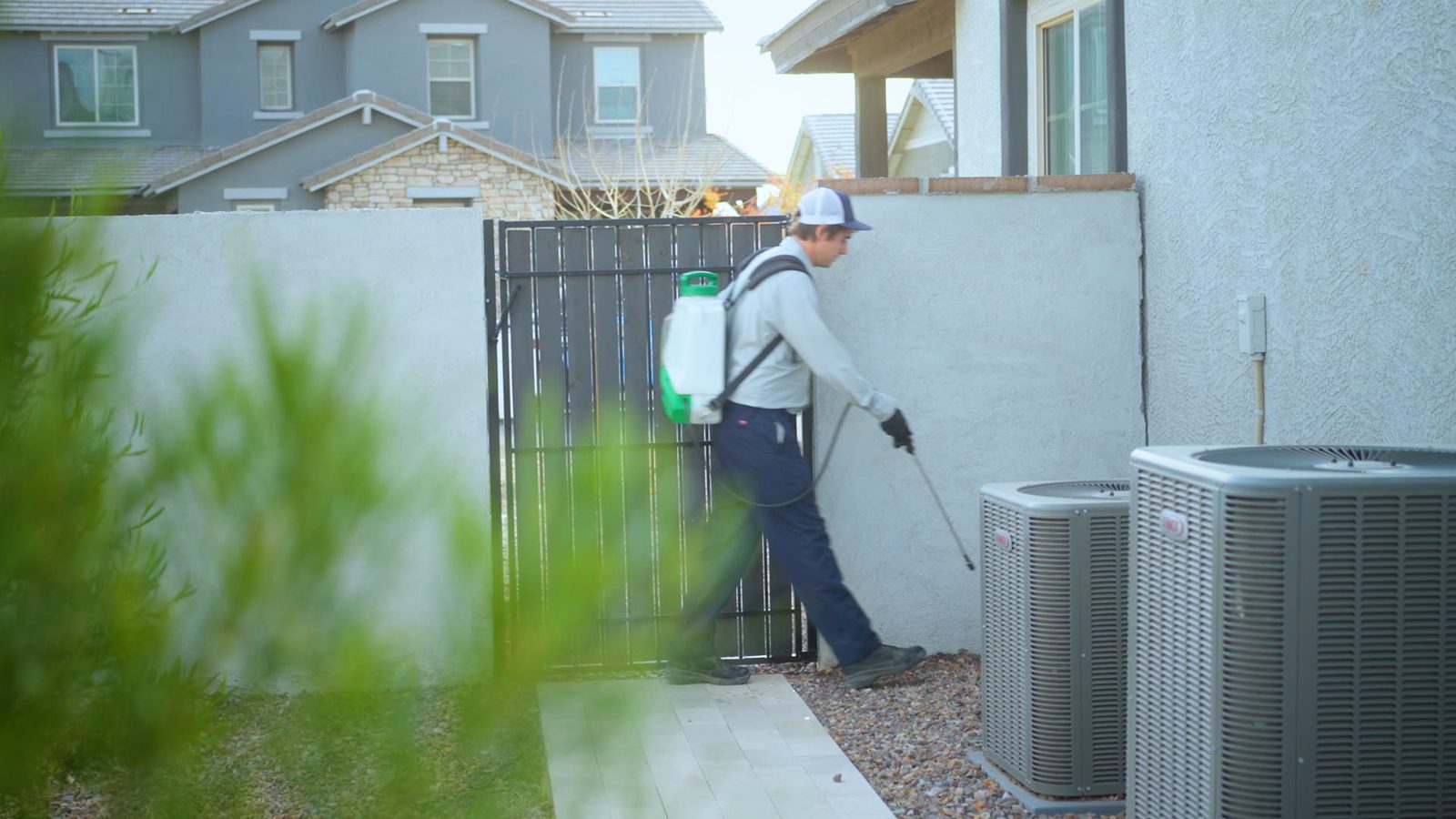
If you live in Johnson Ranch, Pecan Creek or Bella Via, you probably found goatheads the hard way: a flat bike tire, a dog limping in from the backyard, or a burr stuck in the sole of a flip-flop. Puncturevine thrives in exactly the kind of yard most San Tan Valley homes have, with decomposed granite, compacted dirt along the block wall and a strip of Bermuda that never quite fills in. This guide covers what goatheads are, how to identify the plant before it seeds, when it grows in Arizona, and what actually gets rid of it. If you'd rather have a technician handle it, our weed control in San Tan Valley treats puncturevine along with the spurge, Bermuda grass and winter weeds that share the same gravel.
What Are Goatheads?
"Goathead" is the common name for the burr, and often the whole plant, of puncturevine. You'll also hear it called goat head weed or Mexican sandbur. It's a summer annual broadleaf weed. It grows from a single deep taproot and sends trailing stems out flat along the ground, and University of California IPM describes mats reaching 2 to 5 feet across.
The plant itself is easy to overlook. The burrs are the problem. Each yellow flower turns into a seedpod that breaks into five hard, flat sections, and each section carries sharp spines. When the burrs dry they turn gray or tan and blend right into decomposed granite. According to UC IPM Pest Notes: Puncturevine (Publication 74128), each burr section holds up to five seeds and one plant can produce 200 to 5,000 seeds in a season.
How Do You Identify Goathead Weeds in a San Tan Valley Yard?
Catching puncturevine before it flowers is the single biggest thing you can do, so it pays to know the plant, not just the burr. Look for these features:
- Growth habit: flat, ground-hugging mats radiating from one center point. The stems don't root where they touch the ground, so the whole mat lifts when you pull the center.
- Leaves: small, hairy leaves split into 4 to 8 pairs of oval leaflets along each stem, which gives the plant a fern-like look up close.
- Flowers: small yellow flowers, up to about half an inch wide, with five petals. They sit where the leaves meet the stem.
- Burrs: green at first, then hard and tan or gray, each with sharp spines pointing in different directions so one always faces up.
- Location: the hottest, most compacted ground in the yard, such as the gravel strip along the block wall, beside the driveway, at the edge of the sidewalk and in the open lot or wash behind the house.
UC IPM notes that flowering can start within about three weeks of germination. That's why a small mat you ignore in early summer can already be dropping burrs by the time you notice it again.
Why Are Goatheads So Common in San Tan Valley Gravel Yards?
San Tan Valley grew fast, and most of its neighborhoods have newer homes with desert landscaping: decomposed granite front yards, a gravel side yard, and a backyard that is part rock and part Bermuda. Puncturevine is built for that setup. Its deep taproot reaches moisture other weeds can't, and once it's established it tolerates dry soil. Compacted, sunny ground with little competition is where it does best.
A few things make it worse here:
- Open land nearby: homes along the edges of Johnson Ranch, Bella Via and the Ironwood Drive corridor sit near open desert, washes and vacant lots where puncturevine grows unchecked and seeds blow or wash in.
- Burrs travel: burrs stick to shoes, bike and stroller tires, wheelbarrow wheels and pet fur. A single trip to a trailhead near San Tan Mountain Regional Park or a dirt lot can bring seeds home.
- Drip irrigation leaks: a slow drip line in the gravel creates the warm, moist patch puncturevine seeds need to sprout.
- A long seed bank: UC IPM says puncturevine seeds can stay viable in the soil for up to five years, and most seeds don't sprout in their first season. Pulling this year's plants doesn't clear the seeds already in your gravel.
When Do Goatheads Grow in Arizona?
Puncturevine sprouts in spring and summer once the soil is warm and moist, keeps flowering through summer, and can't survive a freeze. In practice, San Tan Valley yards see a spring flush as the soil warms and another round after monsoon rains. Right now in late November most mats are dried and tan, but the burrs they dropped are sitting in your rock waiting for spring.
Arizona search demand tracks this. Live Google search volume for "goatheads" in Arizona from DataForSEO (pulled November 22, 2026) never drops much below 500 a month, and "goat heads" peaked at 1,300 in March:
| Month | "goatheads" (AZ searches) | "goat heads" (AZ searches) | What's happening in the yard |
|---|---|---|---|
| Nov 2025 | 720 | 1,000 | Dead mats, burrs left in gravel |
| Jan 2026 | 590 | 1,000 | Seeds waiting in the soil |
| Mar 2026 | 880 | 1,300 | Soil warming; pre-emergent window closing |
| May 2026 | 590 | 880 | Spring plants flowering and setting burrs |
| Jun 2026 | 480 | 720 | Established mats in the hottest ground |
| Aug 2026 | 720 | 880 | Monsoon flush sprouting |
| Oct 2026 | 720 | 880 | Late plants still dropping burrs |
The takeaway: the time to prevent goatheads is late winter, months before you see a single plant.
Goatheads vs. Other Prickly Weeds: How Can You Tell Them Apart?
Several low, spreading weeds in Arizona yards get called "stickers." They don't all respond to the same treatment, so it helps to know which one you have.
| Weed | How it grows | What pokes you | Key ID clue |
|---|---|---|---|
| Puncturevine (goatheads) | Flat mats from one taproot; summer annual | Hard burrs with sharp spines | Yellow five-petal flowers, paired leaflets |
| Spotted spurge | Flat mats; summer annual | Nothing; no burrs | Milky sap when a stem breaks, tiny leaves often with a red spot |
| Field sandbur | Grass that sprawls or stands upright | Round spiny burs on grass stems | Grass blades, not leaflets |
| Bermuda grass | Spreads by runners into gravel and beds | Nothing | Grass runners that root at every joint |
If it's spurge or Bermuda, our guide to why weeds keep coming back in San Tan Valley covers how those are handled.
How Do You Get Rid of Goatheads Without Spreading the Burrs?
The goal is to kill the plants before they set seed and to clear burrs already on the ground, then repeat for a few seasons until the seed bank runs out. UC IPM's recommendations line up with what we see in East Valley yards.
Pull or hoe the plant at the taproot
- Wear gloves and closed shoes.
- Find the center of the mat and grip the stems right at the base.
- Pull or hoe to cut the taproot below the crown. Leaving it can let the plant regrow.
- Bag the plant if it has any green or tan burrs. Don't drop it in a compost pile or leave it on the gravel.
- Start before flowering and check the same spots every week or two through summer.
Clear the burrs that already fell
- Rake or sweep gravel and pavers into a dustpan.
- UC IPM suggests patting the ground with an old piece of carpet. The burrs stick to it and you can bag them.
- Check pet paws, shoe soles and tires before going back inside so you don't carry burrs to clean areas.
What doesn't work well
- Mowing: the plant grows too flat for a mower to reach.
- Deep tilling: UC IPM warns it can bury seeds, which then keep sprouting for years.
- Vinegar and salt mixes: they may burn the top growth, but the taproot survives. Our DIY weed killer guide for Apache Junction explains why these mixes fall short on deep-rooted weeds.
Does Pre-Emergent Stop Goatheads?
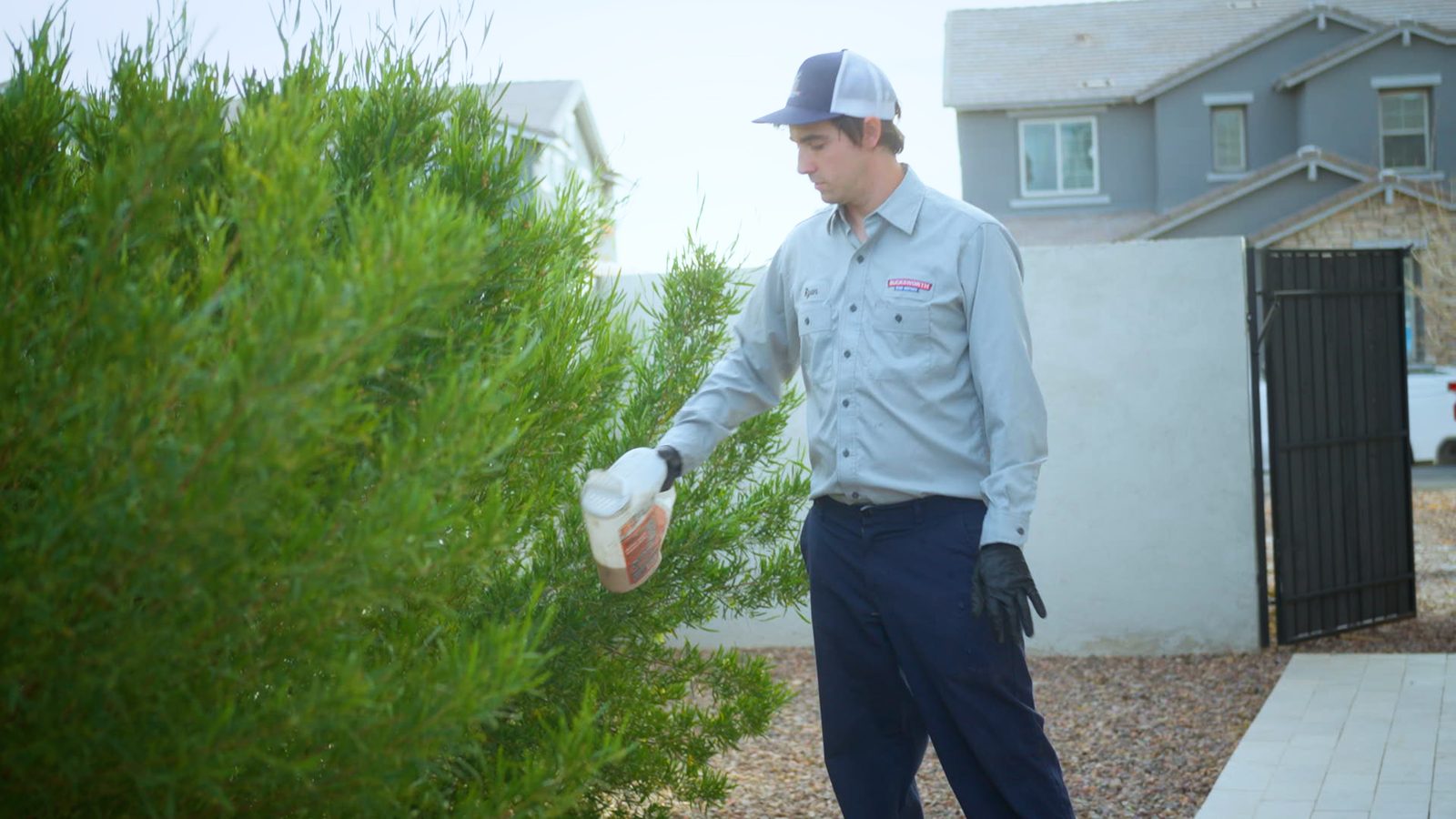
Pre-emergent helps, but it isn't a cure on its own. UC IPM lists pre-emergent herbicides as giving partial control of puncturevine when applied in late winter to mid-spring, before seeds sprout. Small plants that do come up are easier to kill with a post-emergent product applied directly to the weed. Because the seed bank lasts for years, the best results come from both: a pre-emergent barrier timed before the spring flush, then spot treatment of anything that breaks through, including the second round after monsoon rain.
That's the approach behind our pre-emergent weed control in San Tan Valley and post-emergent weed treatment in San Tan Valley. Timing matters more than product here. Our Pecan Creek guide to pre-emergent timing walks through the calendar in more detail.
A few cautions if you treat it yourself:
- Read and follow the label. It's the law, and it tells you which weeds the product controls, where you can use it and when people and pets can go back on the area.
- Broadleaf herbicides that are safe for Bermuda lawns can still injure trees, shrubs and garden plants, so keep drift off your landscaping.
- Non-selective products kill almost anything green they touch. Use them only as spot treatments in gravel.
If you're comparing products, our guide to the best weed killer for Mesa yards breaks down selective and non-selective options for desert weeds.
Are Goatheads Dangerous to Dogs, Kids and Bike Tires?
Goatheads aren't poisonous to touch, but the burrs cause real problems. UC IPM lists the burrs as a hazard to people and pets, and the plant is toxic to sheep and other grazing animals. Around San Tan Valley homes, the usual issues are:
- Dogs: burrs lodge between paw pads and in fur. If your dog suddenly limps after being in the yard, check the paws first.
- Kids and bare feet: the spines go through thin sandals and are painful to step on.
- Bikes: goatheads are a well-known cause of flat tires on bikes, strollers and wheelbarrows.
If pets are part of the reason you're asking, our Queen Creek guide to weed killer and pets covers how to keep them off a treated area and what the label requires.
When Should You Call a Weed Control Company?
Pulling a few mats is a reasonable weekend job. It's time to bring in help when:
- Goatheads come back every spring in the same gravel, which means the seed bank is large.
- Mats are spreading from a wash, open lot or neighbor's yard faster than you can pull them.
- Puncturevine is mixed with Bermuda grass or spurge across a large rock yard.
- Your HOA has sent a weed notice and you need the yard cleaned up and kept that way.
We treat gravel yards and lawns across San Tan Valley in 85140, 85142 and 85143. Our technicians apply pre-emergent before the spring flush and spot-treat breakthrough weeds through the season. We also cover nearby cities. Our weed control in Queen Creek team handles Hastings Farms and Sossaman Estates, and our Apache Junction weed control works out of our local office. We also serve Florence, Gilbert and Coolidge. You can see everything we do locally on our San Tan Valley service page.
Frequently Asked Questions About Goatheads
What is the fastest way to get rid of goatheads?
Pull or hoe the plants at the taproot before they flower, bag any plants with burrs, and pick up fallen burrs with a rake or a piece of old carpet. Then use a pre-emergent in late winter so fewer seeds sprout the next spring.
Do goatheads die in winter in Arizona?
The plants do. Puncturevine can't survive a freeze, so most mats in San Tan Valley turn brown by winter. The burrs and the seeds inside them survive, and UC IPM says the seeds can stay viable in soil for up to five years.
When should I put down pre-emergent for goatheads?
Late winter to mid-spring, before the soil warms and seeds sprout. In the East Valley that usually means February or early March. Treat any summer plants that come up after monsoon rains before they set burrs.
Will goatheads grow in my Bermuda lawn?
They can, especially in thin or compacted spots. A thick, healthy lawn leaves less room for puncturevine. UC IPM notes that some broadleaf herbicides can be used on lawns without harming the grass when the label allows it.
Can goatheads hurt my dog?
Yes. The burrs get stuck between paw pads and in fur and can be painful. Check your dog's paws after time in the yard and remove the plants before they produce burrs.
Who removes goatheads in San Tan Valley, AZ?
Bucksworth Home Services treats puncturevine and other weeds in gravel yards and lawns across San Tan Valley. Call our Phoenix-area team at (480) 422-8388 or request service online for a free estimate.