
Termites are small, soft-bodied insects: workers are pale cream-white and about 1/8 inch long, soldiers have a larger orange-brown head, and swarmers (the winged ones) are dark brown to black with two equal-length, milky wings. If you are seeing winged insects indoors in Mesa, the quickest check is the waist and wings: termites have a thick, straight body and wings of equal length, while flying ants are pinched at the waist. Call us at (480) 422-8388 or read about our termite treatment in Mesa if you are not sure what you found.

What Do Termites Look Like Up Close?
A colony has three kinds of termites, and each one looks different. Most people only ever see one of them, which is why the same insect gets described so many ways. In the Mesa homes we inspect, the type you find tells us a lot about where the colony is and what stage it is in.
What Does a Worker Termite Look Like?
Workers are the ones that do the damage, and they stay hidden. They are creamy white to pale tan, about 1/8 to 1/4 inch long, with no wings, no obvious waist and a soft, almost translucent body. You usually see them only when a mud tube or a piece of wood is broken open.
What Does a Soldier Termite Look Like?
Soldiers look like workers with a bigger, harder head, usually orange to brown, and jaw-like mandibles. They guard the colony, so they show up at the front when a tube or gallery is opened. They are a good sign you are looking at termites and not ants.
What Does a Swarmer (Winged Termite) Look Like?
Swarmers are the reproductive termites that leave to start new colonies. They are darker, roughly 3/8 to 1/2 inch long, with a thick waist, straight beaded antennae and two pairs of wings of equal size that are longer than the body. The wings drop off quickly, so a small pile of shed wings on a windowsill is often the first thing a homeowner sees.
Termite vs. Flying Ant: What Is the Difference?
| Feature | Termite swarmer | Flying ant |
|---|---|---|
| Waist | Thick, straight body | Pinched, narrow waist |
| Antennae | Straight, beaded | Bent (elbowed) |
| Wings | Four wings, all the same length | Front wings longer than the back wings |
| Wing color | Milky, translucent | Often clearer, with visible veins |
| Color | Dark brown to black | Black, brown or reddish |
| Where you find them | Near windows, light fixtures, with shed wings | Near kitchens, trash, outdoor trails |
What Do Termites Look Like in Arizona Specifically?
In Mesa, the termites we deal with most are subterranean termites that live in the soil and travel to your house through the ground, plus drywood termites that live inside the wood itself. Both are small and pale, but they leave different evidence. Subterranean termites leave mud tubes; drywood termites leave tiny pellets.
- Subterranean termites: pencil-width mud tubes on foundation walls, block walls, stucco weep screeds and slab edges.
- Drywood termites: small, hard, six-sided pellets (frass) that look like coarse sand or coffee grounds, often piled under a window or a piece of trim.
- Swarmers: winged termites that come out of the ground or the wood, often after a rain and in the warmer months.
We do not make guesses from a description. A technician identifies the species on site, because the treatment is different for each.
Where Do Termites Hide in a Mesa Home?
Termites avoid light and dry air, so you rarely see the insects themselves. You see where they have been: mud tubes, pellets, shed wings and damaged wood. In Mesa we look first at the places where soil, moisture and wood meet.
| Where we look | What it can show |
|---|---|
| Foundation and block walls | Mud tubes running up from the soil |
| Garage walls and slab edges | Tubes at the base, or hollow-sounding wood trim |
| Window sills and door frames | Shed wings, pellets, small blistered spots in paint |
| Irrigation valves and hose bibs | Moisture that draws subterranean termites close to the house |
| Attic and eave wood | Pellets from drywood termites |
| Wood fences, sheds and patio posts | Early signs in untreated wood touching the ground |
Which Mesa Neighborhoods See This Most?
Older homes in Downtown Mesa (85201 and 85210) and established areas like Alta Mesa (85204) and Dobson Ranch (85202) give termites decades of time to find a way in. Newer master-planned areas like Eastmark (85212) are not exempt, since soil disturbed during construction and irrigation can bring termites close to the slab. Homes near the desert preserve in Las Sendas (85207) and Red Mountain also see plenty of activity from all kinds of pests, so we keep termite checks on the list during every visit.
How Do I Tell If It Is Termites or Something Else?
Start with the evidence, not the insect. A few clues separate termites from the look-alikes people confuse them with.
- Mud tubes vs. dirt trails: termite tubes are enclosed and stay attached when brushed; ant trails are open and scatter.
- Pellets vs. dust: drywood termite pellets are uniform and six-sided; wood dust from other insects is fine and powdery.
- Hollow wood: tap a suspect board with a screwdriver handle. A papery, hollow sound is a reason to call.
- Winged insects at a window: use the waist, antennae and wing test from the table above.
What Should I Photograph for a Technician?
- Place a coin next to the insect, tube or pellets so we can see the size.
- Take one wide photo of the area and one close-up with the flash on.
- Save a few of the insects in a sealed bag or a piece of clear tape if you can.
- Do not spray them. Spraying scatters the colony and makes the inspection harder.
What Should I Do If I Think I Found Termites?
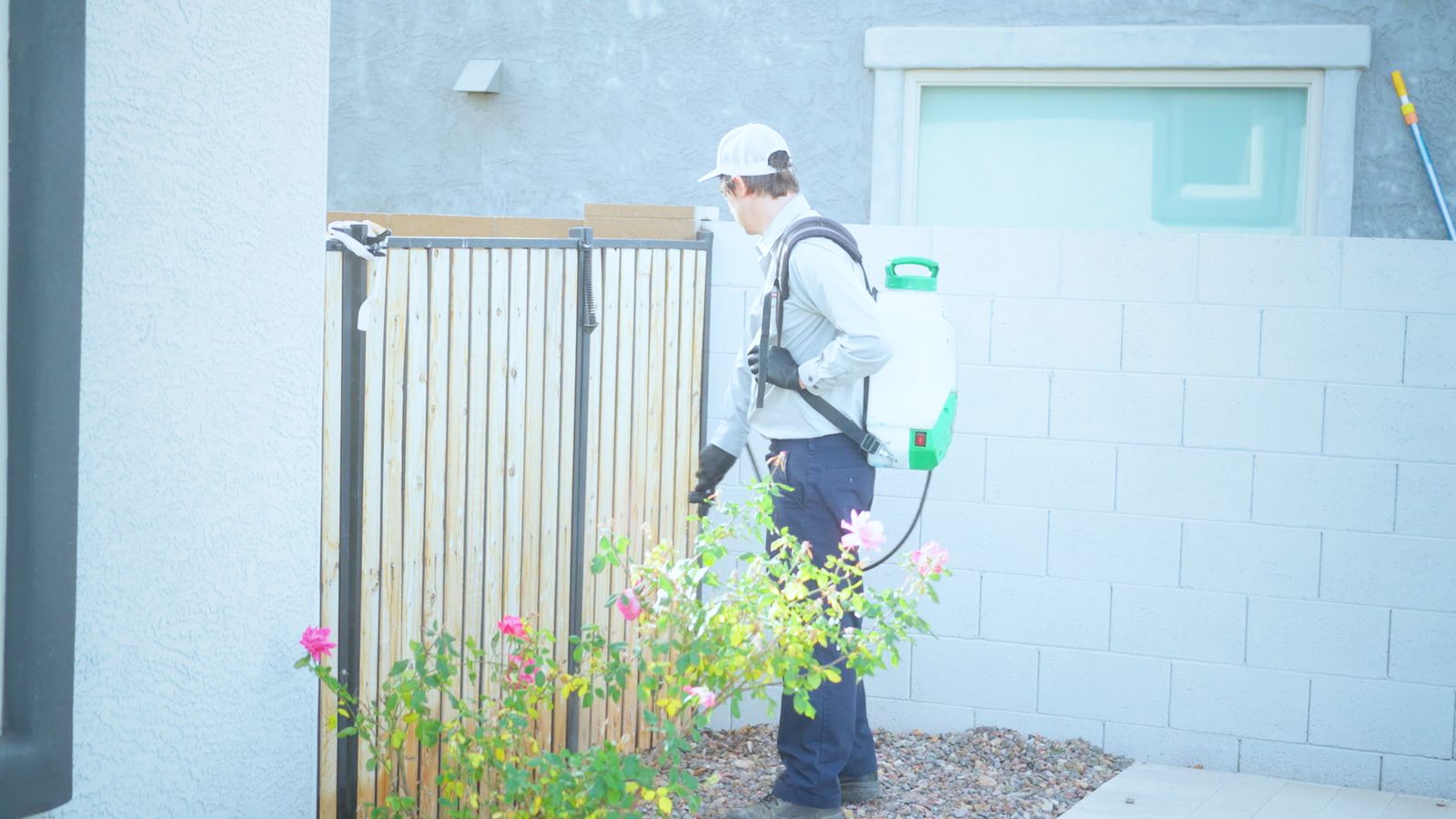
Stop, take photos and book an inspection. Do not disturb the tubes or treat the area yourself; a store-bought spray usually drives termites a few feet and leaves the colony alive. Our technicians check the whole structure, identify the species and explain what we find in plain terms, with no pressure.
Our signs of termites guide for Mesa homes covers the damage side of this, and our overview of pest control in Mesa lists everything else we treat. If the winged insects turn out to be ants, our ant control in Mesa service and the Mesa ant elimination guide are the right place to start.
When Are You Most Likely to See Termites in Mesa?
You are most likely to see termites after rain or irrigation soaks the ground, because that is when swarmers tend to come out. In Mesa that often means the summer monsoon, but a leaking hose bib or a heavily watered planting bed can set off activity at any time of year. Workers stay active underground all year, which is why we recommend an inspection no matter the season.
| Time of year | What homeowners tend to notice | What to do |
|---|---|---|
| Spring | New mud tubes after warm days, softened wood near irrigation | Walk the foundation and check hose bibs |
| Summer monsoon | Winged swarmers at windows and lights after storms | Save a few insects and shed wings for ID |
| Fall | Piles of pellets, or tubes revealed while cleaning out garages | Photograph with a coin for scale |
| Winter | Quiet, but damage keeps going out of sight | Good time to schedule a full inspection |
None of this replaces an inspection. A termite problem can run for a long time before anything shows up inside, so the earlier a technician looks, the more options you have.
Do Termites Look the Same in Nearby Cities?
Yes, the insect looks the same across the Valley; what changes is the soil, the age of the homes and how close they sit to desert. We also work in Gilbert, Chandler, Queen Creek, San Tan Valley and Apache Junction. These local guides cover termite treatment near you:
- Termite treatment in Gilbert, plus our guide to the best termite company in Gilbert
- Expert termite treatment for Chandler homes
- Termite company guide for Apache Junction, where we are based, and our pest control in Apache Junction page
You can see everything we do on our Mesa page, or request service online. Bucksworth Home Services has been locally owned since 2013 by Jordan and Taylor Moore, and you can watch how we work on our YouTube channel.
Frequently Asked Questions
What do termites look like to the naked eye?
Workers are tiny, creamy-white and soft-bodied, about 1/8 inch long. Swarmers are dark with long, milky wings. Most of the time you see the damage or mud tubes instead of the insect.
What do termite droppings look like?
Drywood termite droppings are small, hard, six-sided pellets about the size of a grain of sand, usually in a little pile under the spot where they were pushed out of the wood.
Do termites look like ants?
They can at a glance, but termites have a thick waist, straight antennae and wings of equal length. Ants have a pinched waist, bent antennae and unequal wings.
What do termite mud tubes look like?
They are narrow, pencil-width tunnels of dirt on foundation walls, block walls and slab edges. Termites use them to travel from the soil to wood without drying out.
Are termites visible in the daytime?
Rarely. Workers and soldiers stay hidden inside wood, soil and tubes. Swarmers are the exception and can appear at windows and lights.
Who do I call if I find termites in Mesa?
Call Bucksworth at (480) 422-8388 and send us photos. We will inspect, identify the species and explain the options.