
Stinknet is an invasive winter weed from South Africa, also called globe chamomile. It has finely cut, carrot-like leaves, smells like turpentine when crushed, and grows bright yellow ball-shaped flowers in spring. In Queen Creek it sprouts after fall and winter rains, so now is the time to stop it. Call (480) 422-8388 for help.
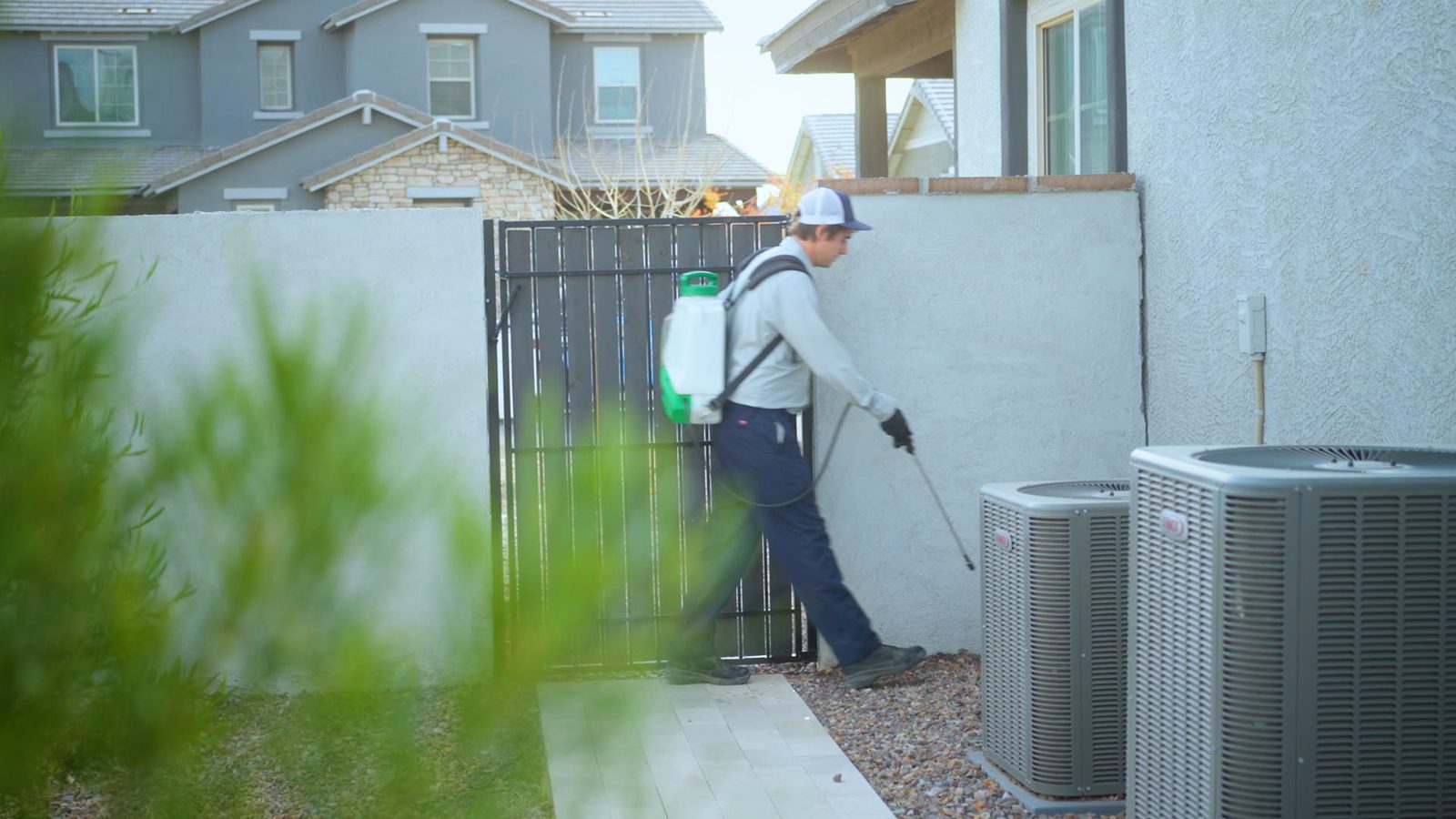
If you've lived in Queen Creek for a few springs, you've probably seen it: a carpet of yellow pom-poms along the road shoulder, in the empty lot down the street, or suddenly in your own gravel yard. That's stinknet. It is easy to ignore in December, when it's just a few small green rosettes, and hard to ignore in March, when it's knee high and smells up the whole side yard. This guide covers what stinknet is, how to recognize it early, why it matters, and the timing that actually stops it. If you'd rather have a technician handle it, our pre-emergent weed control in Queen Creek is built around exactly this window.
What Is Stinknet?
Stinknet (Oncosiphon pilulifer, often listed as Oncosiphon piluliferum) is a cool-season annual in the sunflower family. It is native to South Africa. According to the University of Arizona Cooperative Extension publication AZ1827, "Stinknet: a Weed Advancing in Southern Arizona", the first Arizona herbarium collection was made in the spring of 1997, and by 2019 the plant had become a conspicuous public problem.
Other names you'll hear:
- Globe chamomile, after the round flower heads (it is not the herbal chamomile used for tea)
- Globe daisy
- Stink net or "that yellow ball weed"
In early 2020 the Arizona Department of Agriculture added stinknet to the state's Noxious Weed List as a Class B noxious weed. That listing is one reason you see so many city, county and HOA notices about it each spring.
Is Stinknet in Queen Creek?
Yes. AZ1827 describes stinknet as common in the Phoenix metro area and across much of Maricopa County, and spreading south along the I-10 corridor to become well established in Pinal County. Queen Creek sits right on the Maricopa–Pinal county line, so the town is surrounded by it on both sides.
The extension publication says stinknet grows mostly on disturbed soil: residential areas, vacant lots, soil piles, roadsides and cracks in pavement. Queen Creek has a lot of that ground. Here is where we see it come up:
- New construction and graded lots: around Queen Creek Crossing and other growth areas, bare, freshly moved soil is the perfect seedbed.
- Semi-rural and horse properties: in Sossaman Estates, open dirt around horse areas, fence lines and driveways gives seeds room to sprout.
- Former farm ground: in Hastings Farms and other neighborhoods with agricultural roots, disturbed edges along fences and walls fill in each winter.
- Desert-edge homes: near Queen Creek Wash and San Tan Mountain Regional Park, seed moves in on wind, water and foot traffic from open land.
How Do You Identify Stinknet?
You can identify stinknet before it ever flowers. Look for a low rosette of deep green, deeply lobed, almost lacy leaves that look like carrot tops. Crush a leaf and smell it. The odor is the giveaway: AZ1827 compares it to turpentine. Once the plant sends up stems, it's confirmed long before the yellow balls appear.
What does stinknet look like at each stage?
- Seedling (late fall to winter): small rosettes of finely divided green leaves hugging the ground.
- Bolting (about 2 months in): stems grow out sideways and upward, especially where plants are crowded.
- Flowering (late winter to spring): bright yellow spheres with no petals, each one made of many tiny flowers. Plants can reach 2 feet or more.
- Seed (April to May): the yellow balls fade to tan and the plant dries out and dies, holding its seed heads on the dead stems.
What plants look like stinknet?
Flowering stinknet is hard to confuse with any Arizona native plant. AZ1827 notes there are no North American members of its genus. Two other non-native plants come closest:
| Plant | Flower head | How to tell it apart |
|---|---|---|
| Stinknet | Bright yellow, round ball, no petals | Strong turpentine smell; grows in thick drifts on disturbed ground |
| Pineappleweed | Greenish-yellow, cone shaped, no petals | Crushed leaves smell sweet, like pineapple, not like turpentine |
| Australian waterbuttons | Small, flat, button-like yellow heads | Much smaller and flatter heads; far less common in Arizona |
| Native winter wildflower seedlings | Varies | Seedlings can look similar; use the smell test, or wait for stems before pulling |
Why Is Stinknet a Problem?
Stinknet is more than an eyesore. It causes four real problems for Queen Creek homeowners:
- It spreads fast. Each yellow sphere is made of many tiny flowers, and each one can form a seed. Neighboring plants flower and seed at the same time, so one missed patch can become a yard full the next winter.
- The seed bank lasts. AZ1827 cites Australian data showing the seeds can stay viable in soil for at least five years. Clearing one spring's plants doesn't empty the soil.
- It's a fire fuel once it dries. Dead, dry stinknet is described as a "flash fuel" that ignites easily and can carry fire into shrubs and trees. The plant has been linked to 2020 brush fires in the Cave Creek area. Green plants have not been noted as a fire hazard.
- It irritates some people. Stinknet has been implicated in cases of respiratory distress, and there are reports of allergic skin reactions from contact. Wear gloves and long sleeves when you handle it, and talk to your doctor if you have a reaction.
It also crowds out the spring wildflowers many desert-edge homeowners like to see.
When Does Stinknet Grow in Arizona?
Stinknet follows the cool-season rain. Seeds germinate with fall and winter storms, starting as early as late October or November, and more seeds keep sprouting if moisture continues through winter. Plants flower in late winter and spring, set seed from early to mid-April into May, and die when the heat arrives.
| Months | What stinknet is doing | What to do in your Queen Creek yard |
|---|---|---|
| Late Oct – Nov | First seeds germinate after rain | Apply pre-emergent before or right as the rains start |
| Dec – Jan | Rosettes growing; more seedlings after each storm | Spot-treat or pull young plants; consider a second pre-emergent |
| Feb – Mar | Bolting and flowering | Remove plants before seed matures |
| Apr – May | Seed heads turn tan; plants dry and die | Bag dead plants carefully; don't spray them |
| Jun – Sep | Seeds wait in the soil | Plan fall pre-emergent timing |
Arizona search data tells the same story. Our live DataForSEO pull of Google search volume for "stinknet" in Arizona shows interest climbing through winter and peaking when the yellow balls show up:
| Month | Arizona Google searches for "stinknet" |
|---|---|
| November 2025 | 590 |
| December 2025 | 880 |
| January 2026 | 1,300 |
| February 2026 | 3,600 |
| March 2026 | 3,600 |
| April 2026 | 2,400 |
| May 2026 | 1,000 |
| June – October 2026 | 320 to 480 a month |
Most people start searching in February and March, when the plants are already flowering. By then the easiest window has passed. The time to act is now, while the plants are seedlings or haven't sprouted yet.
When Should You Put Down Pre-Emergent for Stinknet?
Apply pre-emergent just before the late fall and early winter rains, before the seeds germinate. AZ1827 recommends exactly that timing, and adds that because stinknet keeps germinating through the winter, a second application may be needed. Rain or irrigation has to water the product in so it reaches the shallow zone where the seeds sprout.
A few things to know about pre-emergent and stinknet:
- Pre-emergent stops seedlings as they emerge. It does nothing to plants that are already up.
- Most pre-emergent products aren't species specific. They can also stop desert wildflower seeds, so choose the product and the areas carefully.
- Products with a longer active period in the soil can suppress stinknet through the whole cool season.
- Always follow the product label, including how long kids and pets should stay off the area. Our Queen Creek guide to weed killer and pets covers what to ask.
If you want the background on how these products work, read what a pre-emergent herbicide is and how it stops desert weeds. For local timing on other winter weeds, see why pre-emergent timing matters in Queen Creek and the pre-emergent window most Mesa homeowners miss.
How Do You Get Rid of Stinknet That's Already Growing?
The goal is simple: don't let it go to seed. How you get there depends on the stage.
Young plants and rosettes
A post-emergent herbicide works best on small, actively growing plants. Avoid spraying during very cold snaps or on drought-stressed plants. AZ1827 notes that glyphosate is commonly used but can be slow in cold weather, and that a faster-acting product may work better late in the season. Most of these products also kill other plants they touch, so spot-treat. Our post-emergent weed treatment in Queen Creek handles this stage.
Bolting or flowering plants
- Pull them. In moist or loose soil the whole plant comes up, and it doesn't resprout from root pieces.
- Cut them at the base before seeds form. According to AZ1827, severed flower heads won't mature into seed. The base may regrow, so check again in a few weeks.
- Protect yourself. Wear gloves and long sleeves. Breaking the plant releases the odor that can irritate sensitive people.
Dead, tan plants with seed heads
Don't spray them. The plants are already dead or dying, and herbicide won't kill seeds sitting on the stems. Bag them carefully so seeds don't scatter, and clean seeds off tools, shoes, clothes and tires. Then plan for pre-emergent next fall.
How long does it take to clear a yard of stinknet?
Plan on more than one season. Because seeds can survive in the soil for years, and new seed blows in from vacant lots and road shoulders, AZ1827 says repeated treatment over multiple years will probably be needed.
Can You Handle Stinknet Yourself or Should You Hire a Pro?
A few plants along a wall are a reasonable weekend job. Larger patches are different. AZ1827 suggests homeowners consider hiring a licensed herbicide applicator, especially for difficult situations, and notes that larger infestations need a long-term plan.
| Situation | DIY makes sense | Call a technician |
|---|---|---|
| A handful of plants | Pull with gloves before flowering | Not needed |
| Thick patches across gravel | Hard to keep up with by hand | Pre-emergent plus spot post-emergent |
| Comes back every winter | Large seed bank in the soil | Timed treatments over several seasons |
| Allergies or asthma in the home | Handling may cause irritation | Let a technician do the treatment |
What Does Bucksworth Do About Stinknet in Queen Creek?
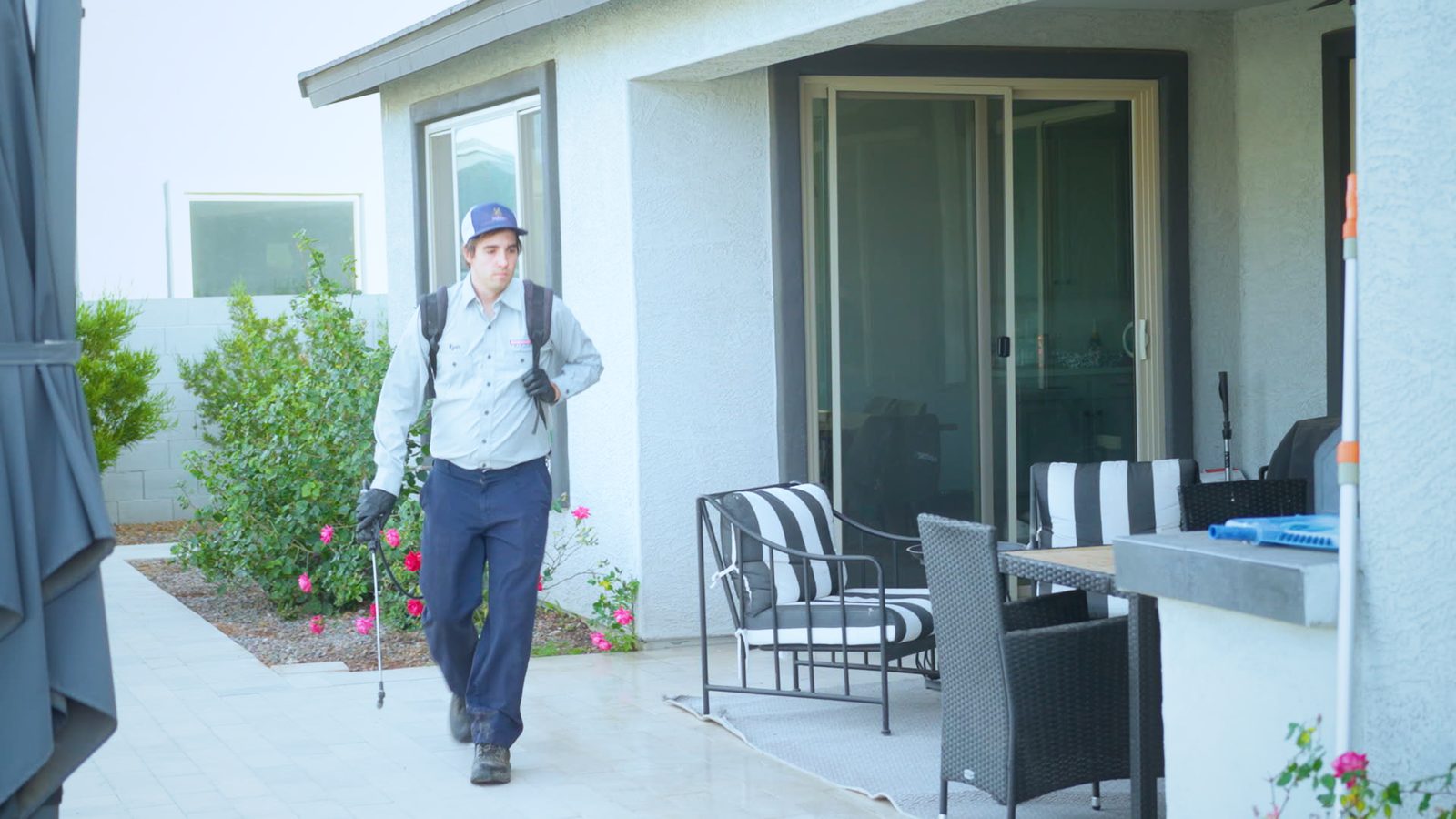
We're a weed treatment company. Our technicians apply pre-emergent to gravel yards, side yards and lawn edges before the winter flush, then come back to spot-treat stinknet and other weeds that break through. Pulling and hauling away dead plants is done by the homeowner or their yard crew, not by us. Pre-emergent also helps with the other weeds that share the same gravel, like the goatheads San Tan Valley homeowners fight each summer. For Bermuda lawns, our weed and feed program in Queen Creek pairs weed control with fertilization.
We cover Queen Creek in 85140 and 85142, and nearby cities too. Our pre-emergent weed control in San Tan Valley covers homes next door in Pinal County, and our Mesa weed control team covers East Mesa. We also serve Gilbert, Apache Junction and Florence. See everything we offer locally on our Queen Creek service page, or request service online.
Frequently Asked Questions About Stinknet
Is stinknet poisonous to touch?
It isn't known as a poison, but it can irritate. AZ1827 reports cases of respiratory distress and allergic skin reactions linked to stinknet. Wear gloves and long sleeves, and see a doctor if you or a family member reacts.
Is stinknet the same as chamomile?
No. "Globe chamomile" is just a common name for its round flowers. The University of Arizona notes that stinknet has been sold at farmers' markets as "wild chamomile." Don't use it as an herbal tea.
When does stinknet bloom in Arizona?
Usually late winter through spring, after about two months of growth from a winter rosette. Seed matures from early to mid-April into May, then the plants dry out and die with the early summer heat.
What kills stinknet?
Pre-emergent applied before fall and winter rains stops new seedlings. Post-emergent herbicide works on young, actively growing plants. Pulling or cutting flowering plants before seed forms also works. Always follow the product label.
Should I report stinknet?
A University of Arizona stinknet page urges people to "report it or pull it." Stinknet is a Class B noxious weed in Arizona. Check with your city or HOA for local reporting.
Who treats stinknet in Queen Creek, AZ?
Bucksworth Home Services applies pre-emergent and post-emergent treatments for stinknet across Queen Creek. Call our Phoenix-area team at (480) 422-8388 or request service online for a free estimate.