
Crabgrass is a summer annual weed with wide, light-green blades that grows in sprawling clumps and dies off when cold nights arrive, while Bermuda grass is a perennial with narrow, darker blades that spreads by runners and roots and comes back every spring. In Maricopa that difference decides the fix: crabgrass is stopped with a well-timed pre-emergent, and Bermuda where you do not want it needs repeated treatments through our Bermuda grass control in Maricopa. Call (480) 422-8388 if you are not sure which one you have.
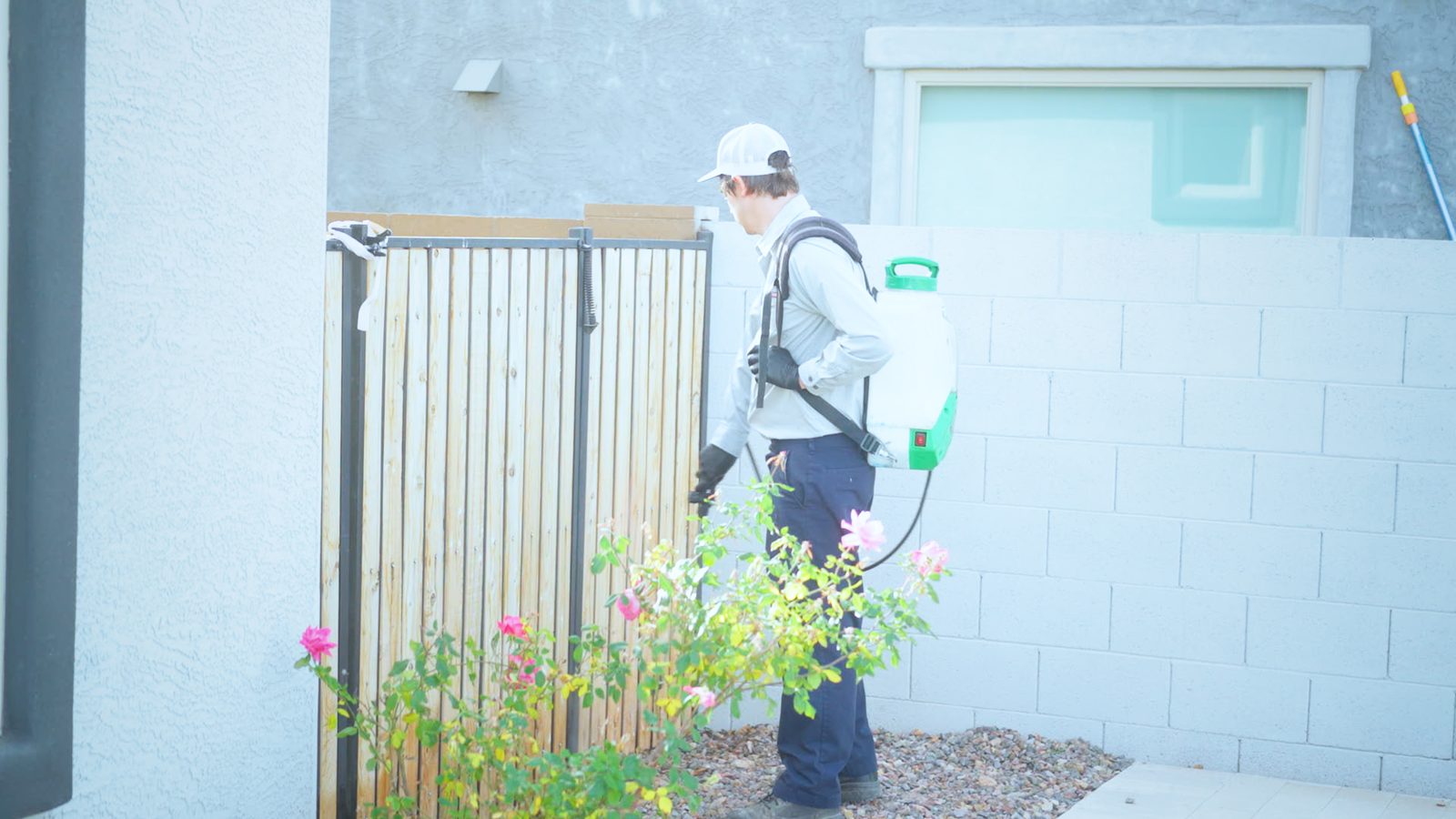
We get this question from homeowners all over Maricopa, in ZIP codes 85138 and 85139, usually in late summer. A Bermuda lawn in Rancho El Dorado suddenly has coarse, pale patches. A backyard in Tortosa or Alterra has grass creeping out of the turf and into the gravel. A Province homeowner sees "grass" pushing up through rock in a front yard that was never supposed to have any. Some of it is crabgrass and some of it is Bermuda, and the two need opposite plans. This guide shows you how to tell them apart in a few minutes and what actually works on each one in Pinal County's heat.
What Is the Difference Between Crabgrass and Bermuda Grass?
The short answer: crabgrass lives one season and returns from seed, while Bermuda lives for years and returns from its own runners and roots. Crabgrass is a weed in any lawn. Bermuda is the most common lawn grass in the low desert, and it only becomes a weed when it spreads into gravel, flower beds or a neighbor's yard where nobody wants it.
- Crabgrass (Digitaria species, mainly large and smooth crabgrass) is a warm-season annual. Each plant sprouts from seed in spring or summer, sets thousands of new seeds and dies when the cold arrives.
- Bermuda grass (Cynodon dactylon) is a warm-season perennial. It spreads above ground by stolons (runners) and below ground by rhizomes, so one plant can travel several feet in a single summer.
Because one is an annual and the other is a perennial, the same treatment will not handle both. A pre-emergent that stops crabgrass seed does almost nothing to a Bermuda rhizome already in the ground.
How Do You Tell Crabgrass From Bermuda Grass?
Look at four things: blade width, growth shape, the spot where the blade meets the stem, and the seed head. Crabgrass blades are wide and flat and the plant grows outward from one center like the legs of a crab. Bermuda blades are thin, the turf forms a tight mat, and its runners root at every joint as they spread.
| Feature | Crabgrass | Bermuda grass |
|---|---|---|
| Life cycle | Annual, returns from seed | Perennial, returns from runners and rhizomes |
| Blade width | Wide and flat, roughly a quarter inch or more | Narrow, about an eighth of an inch or less |
| Color | Pale or yellow-green, stands out in a lawn | Medium to deep green in summer |
| Growth shape | Low clump spreading out from one center | Dense mat of runners rooting at each joint |
| Where blade meets stem | Thin papery collar (ligule), no hair ring | Small fringe of hairs |
| Seed head | Finger-like spikes, often spaced slightly apart near the stem tip | 3 to 7 finger-like spikes fanning out from a single point |
| Winter look in Maricopa | Dies and leaves bare spots | Goes dormant and tan, greens up in spring |
| Best prevention | Pre-emergent before soil warms | Edging barriers plus repeated post-emergent treatment |
Is the pull test a reliable way to check?
Yes, it is the quickest field check our technicians use. Grab the plant at the base and pull. Crabgrass usually lifts out as one clump with a shallow, fibrous root ball and nothing trailing behind it. Bermuda tears, and you will see a runner or a white underground stem snapping off and heading somewhere else. If it fights you and keeps going, it is Bermuda.
Why do the seed heads look so alike?
Both grasses grow finger-shaped seed spikes, which is why so many people mix them up in August. On Bermuda the fingers all fan out from one point at the top of the stem, like the spokes of a small umbrella. On crabgrass they tend to be longer and are often staggered a little along the stem tip. Check the blade width and the growth shape too before you decide.
Why Does Crabgrass Show Up in Maricopa Bermuda Lawns?
Crabgrass moves into thin spots. When a Bermuda lawn has bare patches, frequent light watering and full sun on the soil surface, crabgrass seed has everything it needs. Maricopa yards check all three boxes for much of the year.
- Thin turf after winter. Bermuda is still waking up from dormancy when crabgrass begins to sprout, so the weed gets a head start in any gap.
- Short, frequent irrigation cycles. Daily shallow watering keeps the top inch of soil moist, which favors shallow-rooted crabgrass over deep-rooted Bermuda.
- Monsoon moisture. Summer storms from July through September bring new flushes of summer weeds into lawns and gravel alike.
- Seed from nearby open ground. Many Maricopa neighborhoods sit next to open desert, farm fields or vacant lots, and seed blows or washes in from the edges.
Why Does Bermuda Grass Keep Spreading Into Gravel?
Bermuda spreads into rock because its runners and rhizomes travel under borders and through landscape fabric seams, and the irrigation that keeps your lawn green also feeds the runners that escape it. Removing what you see above the gravel leaves the rhizomes alive, so it grows back within weeks.
This is the most common call we take from Maricopa homeowners with mixed yards: a small Bermuda lawn in the backyard and desert rock everywhere else. The fix is to treat the escaped Bermuda while it is actively growing, usually several times across the warm season, and to set up a clean edge so the lawn stops feeding new runners into the rock. Our guide to why Bermuda grass is so hard to kill explains the root system in more detail.
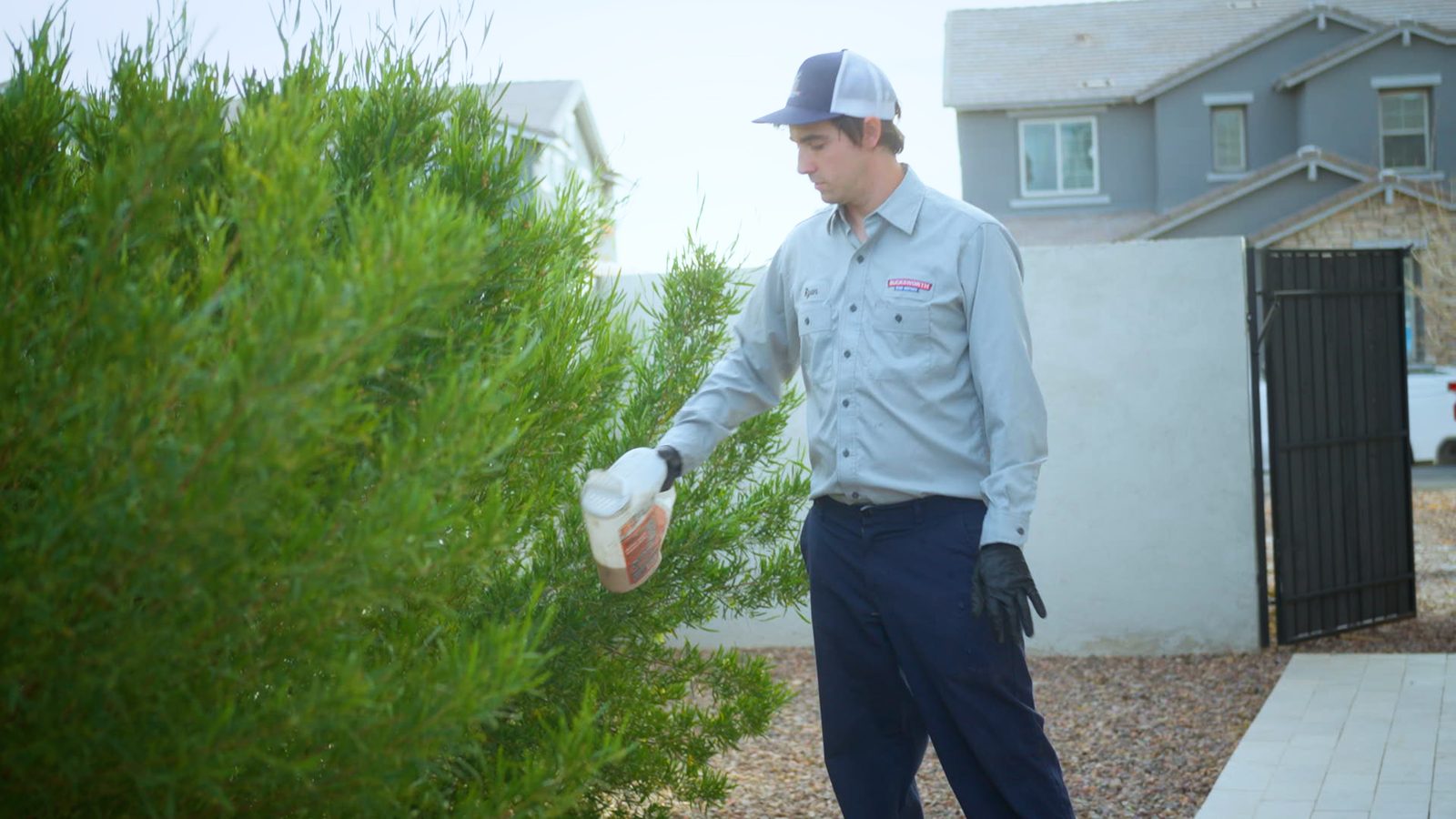
How Do You Get Rid of Crabgrass in a Bermuda Lawn?
Prevent the seed from sprouting, then remove the few that get through. A pre-emergent applied before soil temperatures reach the mid-50s Fahrenheit stops most crabgrass, and in the low desert that usually means a February application. Anything that sprouts later can be pulled while small or treated with a selective product labeled for crabgrass in Bermuda.
- Time the pre-emergent. It has to be in place before germination. Our pre-emergent weed control in Maricopa is scheduled around soil temperature, not the calendar alone. For the basics, see what a pre-emergent herbicide does.
- Pull or spot-treat young plants. A few small clumps can be pulled by hand because crabgrass has no runners to leave behind. Larger outbreaks call for a selective post-emergent that spares the Bermuda.
- Thicken the Bermuda. Dense, well-fed turf shades the soil and leaves crabgrass nowhere to start.
- Water deeper and less often. Longer, less frequent cycles push Bermuda roots down and dry the surface where crabgrass seed sprouts.
Does pre-emergent hurt winter ryegrass?
It can. Many Maricopa lawns are overseeded with ryegrass in fall, and a pre-emergent put down at the wrong time will block the rye seed the same way it blocks weed seed. We plan the two together so the fall seed has room to establish and the spring pre-emergent goes down on schedule. If you overseed, read when to seed Bermuda grass before you set your calendar.
How Do You Get Rid of Bermuda Grass Where You Don't Want It?
Treat it during active summer growth, repeat the treatment as it regrows, and cut off its supply line from the lawn. Bermuda stores energy in rhizomes, so one application rarely finishes it. Expect a series of treatments across the warm season, with the biggest results when temperatures are high and the grass is green.
- In gravel and rock: treatments that target everything green in the bed, applied carefully away from plants you want to keep.
- In flower and shrub beds: selective grass treatments that leave broadleaf plants alone.
- At the lawn edge: a physical edge or barrier deep enough to slow runners, plus regular treatment of anything that crosses it.
Our team handles the same problem in other Pinal County cities. See how we approach Bermuda grass removal in Casa Grande and Bermuda grass invasion in Sahuarita.
When Do Crabgrass and Bermuda Grass Grow in Maricopa?
Both are warm-season grasses, so their busy months overlap, but their winter behavior is opposite. Use this calendar to match your treatment to what each plant is doing.
| Months | Crabgrass | Bermuda grass | What we focus on |
|---|---|---|---|
| Jan to Feb | Seed waiting in the soil | Dormant, tan | Spring pre-emergent before soil warms |
| Mar to May | First seedlings in thin spots | Green-up, runners start moving | Spot treatment, edge checks |
| Jun to Sep | Peak growth, seed heads, monsoon flushes | Peak growth and spread | Repeat Bermuda treatment in gravel and beds |
| Oct to Dec | Dies with cold nights, seed left behind | Slows, heads into dormancy | Overseeding plans, map bare spots for spring |
What Does Professional Weed Control in Maricopa Include?
We start by identifying what is actually growing, because a crabgrass plan and a Bermuda plan look nothing alike. From there we combine pre-emergent and post-emergent treatments on a schedule built for low-desert soil temperatures and for whether you overseed in winter. We are a weed control and lawn treatment company, so our visits focus on the weeds and the turf's health.
Bucksworth Home Services has been locally owned since 2013 by Jordan and Taylor Moore and is based in Apache Junction. Our technicians work in Maricopa neighborhoods such as Rancho El Dorado, Province, Tortosa, Alterra, Glennwilde and Cobblestone Farms, from the homes near Copper Sky Recreation Complex out to the farm-edge streets by the Maricopa Agricultural Center. We also serve nearby Bermuda grass control in Casa Grande, as well as San Tan Valley, Laveen, Chandler and Coolidge. You can watch our crews at work on the Bucksworth YouTube channel.
Maricopa homeowners often ask about bugs while we are on the property, since the same irrigation and desert edges draw scorpions and ants. Our pest control in Maricopa covers those. When you are ready for weed help, call (480) 422-8388 or request service online.
Frequently Asked Questions About Crabgrass and Bermuda Grass
Is crabgrass the same as Bermuda grass?
No. Crabgrass is an annual weed with wide, pale blades that dies each winter. Bermuda is a perennial turfgrass with narrow blades that spreads by runners and rhizomes and returns every spring.
Does crabgrass die in the winter in Arizona?
Yes. Crabgrass dies when cold nights arrive in late fall, but it leaves seed in the soil that sprouts the next spring. That is why a spring pre-emergent matters even after the plants are gone.
Will a pre-emergent stop Bermuda grass?
Not established Bermuda. A pre-emergent only blocks seeds from sprouting, and spreading Bermuda grows from runners and rhizomes. It needs post-emergent treatment during active growth.
Can crabgrass take over a Bermuda lawn?
It can fill thin, overwatered areas fast in summer. A dense Bermuda lawn with deep, infrequent watering and a timed pre-emergent keeps crabgrass in check.
Why is there grass growing in my gravel yard?
In Maricopa it is usually Bermuda escaping from a nearby lawn, or crabgrass and other summer weeds sprouting after monsoon rain. The pull test tells you which.
Do you treat crabgrass and Bermuda grass in Maricopa?
Yes. We serve 85138 and 85139 with pre-emergent and post-emergent weed control. Call (480) 422-8388 to schedule a visit.