
Kissing bugs are dark, cone-headed insects, ½ to over 1 inch long, that feed on blood, live in pack rat nests and fly to porch lights from May through July. In Gold Canyon, Chagas disease from Arizona kissing bugs is rare; the real risks are itchy bites and allergic reactions. To have nearby nests checked, call (480) 422-8388.
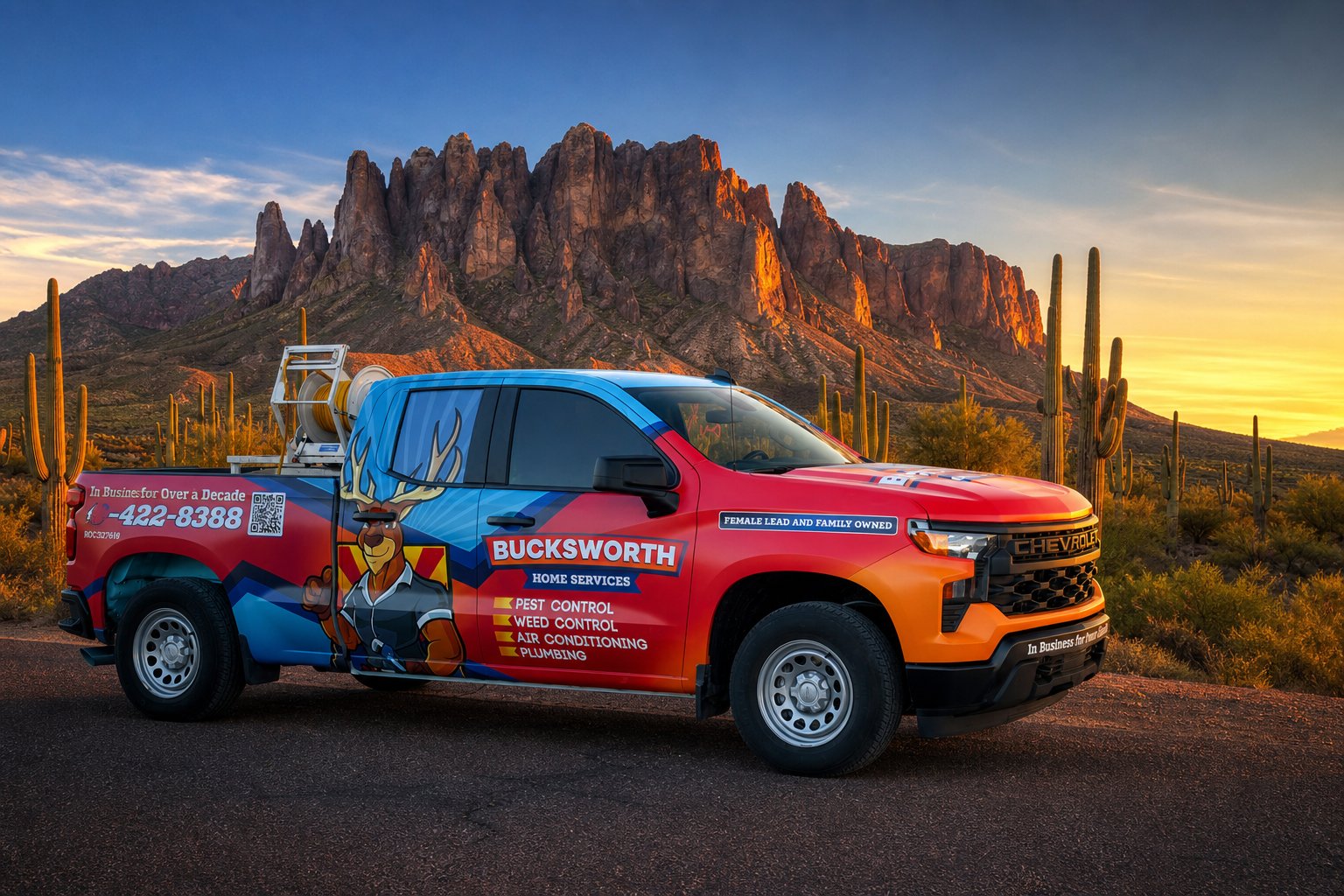
Gold Canyon homeowners usually find their first kissing bug in early summer, on a patio wall under the porch light, in the garage, or on the bedroom floor. Most Gold Canyon lots back onto the Superstition Wilderness, with cholla, prickly pear and boulders at the edge of the yard, and that's exactly where pack rats build their stick nests. Where there are pack rat nests, there are kissing bugs. This guide covers how to identify a kissing bug, what a bite looks like, how worried you should be about Chagas disease, and what actually keeps them out of a house in 85118. If pack rats are already nesting near your home, our pest control in Gold Canyon deals with the bugs and the nests they come from.
What Are Kissing Bugs?
Kissing bugs (also called conenose bugs or triatomines) are true bugs that feed on the blood of mammals, mostly at night. They get the nickname because they often bite exposed skin on the face while people sleep. According to the University of Arizona Cooperative Extension, seven species are found in Arizona, and three are the ones most likely to show up around homes.
- Western bloodsucking conenose (Triatoma rubida): the most common species in the foothills around Phoenix and Tucson, which includes the Superstition foothills. It has reddish or brownish-red markings along the edges of the abdomen.
- Triatoma protracta: smaller and darker, more common in Madera Canyon and Pima and Coconino counties.
- Triatoma recurva: the largest of the three, with a uniformly dark shield behind the head and up-curved edges on a wide abdomen.
Outdoors, kissing bugs live in the nests of woodrats (pack rats) and other wildlife, and also in doghouse bedding and chicken coops. They come inside by accident. Adults fly well, follow porch lights after dark, and then walk in through door gaps, torn screens or on pets.
What Does a Kissing Bug Look Like in Arizona?
An adult kissing bug is dark brown to black, ½ inch to just over 1 inch long, with a narrow cone-shaped head, thin antennae and a flat body. Wings fold flat over the back, and many Arizona specimens show a row of reddish or orange marks along the sides of the abdomen. Young bugs (nymphs) look like smaller, wingless adults.
Several harmless insects get mistaken for kissing bugs. Here's how to tell them apart:
| Insect | Head shape | Body and markings | Bites people? |
|---|---|---|---|
| Kissing bug (conenose) | Long, narrow cone; beak tucked under the head | Flat, dark, ½–1+ inch; reddish or orange marks on abdomen edges | Yes, feeds on blood at night |
| Leaf-footed bug | Small, not cone-shaped | Brown, with flattened leaf-like flares on the back legs | No, feeds on plants and fruit |
| Wheel bug and other assassin bugs | Narrow but with a thicker beak that curves forward | Wheel bug has a raised, cog-like crest on its back | Rarely, only if handled |
| Squash bug | Small, rounded | Gray-brown, mottled, about ⅝ inch | No, feeds on squash and melon plants |
| Bed bug | Short and rounded | Reddish-brown, oval, apple-seed size, no working wings | Yes, but lives indoors near beds, not in rodent nests |
If you can't tell, don't crush it with your bare hand. Scoop it into a jar or zip bag with a piece of paper, and keep it. A clear photo or the bug itself helps a doctor, and it helps our technician confirm what you're dealing with.
Why Do Gold Canyon Homes Get Kissing Bugs?
Gold Canyon gets kissing bugs because the town is built right into prime pack rat country. The white-throated woodrat builds its stick-and-cactus nests at the base of cholla, prickly pear and boulder piles, and Gold Canyon has all three at the edge of nearly every lot. Kissing bugs live in those nests and feed on the rats. When adults disperse in late spring, the nearest bright light is often a Gold Canyon porch.
The same pattern shows up in the Gold Canyon neighborhoods our technicians drive through on the way out US 60:
- Homes near Peralta Trailhead and the Superstition Wilderness have open desert on one or more sides, so nests can sit within a few yards of the back wall.
- Gold Canyon Ranch and Mountainbrook Village mix desert landscaping with natural washes that pack rats use as travel corridors.
- Golf course edges and common areas keep native cover between homes, which gives rodents somewhere to build.
- Garages, sheds and parked vehicles attract pack rats themselves, and a nest in an engine compartment or storage corner brings kissing bugs closer to the house.
Apache Junction homes along the Superstition foothills see the same thing, and so do the desert edges of Queen Creek, San Tan Valley and east Mesa. Our pest control in Apache Junction works these foothill properties every week.
When Are Kissing Bugs Most Active in Arizona?
Kissing bugs are most active in Arizona from May through July, when adults leave the nests and fly at night looking for new hosts. Adults survive into mid- to late fall, so you can still find one in October or November, but sightings drop off sharply in winter. Nymphs stay in the nest year-round.
Search data shows the same seasonal curve. Here's how often Arizonans searched "kissing bug" on Google over the last 12 months (DataForSEO, Google Ads data for Arizona, pulled November 20, 2026):
| Month | Arizona searches for "kissing bug" | What's happening |
|---|---|---|
| December 2025 – February 2026 | 2,400 – 3,600 / month | Quiet season; occasional indoor finds |
| March – April 2026 | 5,400 / month | Warm nights return; early fliers |
| May 2026 | 8,100 (peak) | Dispersal flights begin; porch-light season |
| June 2026 | 6,600 | Peak dispersal |
| July – August 2026 | 4,400 / month | Dispersal tapers; monsoon nights |
| September – October 2026 | 3,600 / month | Adults still around; fewer new sightings |
That spring jump is the time to get ahead of them. Sealing doors and swapping porch bulbs in March or April works better than reacting in June.
What Does a Kissing Bug Bite Look Like?
A kissing bug bite usually happens at night on exposed skin: the face, neck, arms or legs. It doesn't hurt at first, because the bug's saliva numbs the skin. Later it can itch, swell and turn into a raised welt that lasts several days. Bites can look a lot like mosquito or bed bug bites, so finding the bug is the best clue. If you're trying to sort out bites in general, our guide to bed bug bites vs. mosquito bites walks through the patterns.
The University of Arizona Extension says the biggest health risk from Arizona kissing bugs is an allergic reaction, not disease. Some people become more sensitive after repeated bites. Their advice:
- Wash the bite with soap and water.
- For itching, ask your pharmacist or doctor about an oral antihistamine.
- Save the bug in a sealed container to show your healthcare provider.
- Call 911 for trouble breathing, swelling of the face or throat, dizziness or a racing heart. Those are signs of a severe allergic reaction.
We're a pest control company, not a medical provider. If a bite worries you, talk to your doctor.
Can Kissing Bugs in Arizona Give You Chagas Disease?
It's possible but rare. Kissing bugs can carry Trypanosoma cruzi, the parasite that causes Chagas disease, and the University of Arizona Extension cites research finding it in over 40% of kissing bugs collected around Tucson. But the parasite spreads through the bug's droppings, not the bite itself, and Arizona's species don't seem to pass it to people often. The same publication counts only 28 locally acquired U.S. cases documented from 1955 to 2015, with Arizona cases rare.
Extension guidance is that finding a kissing bug or being bitten by one doesn't by itself mean you need to be tested. See your healthcare provider if you develop symptoms or have other risk factors. You can read the full University of Arizona publication, What You Should Know About Kissing Bugs (AZ1992).
The same publication recommends keeping pets indoors at night. Kissing bugs feed on dogs and cats too, and they can ride into the house on a pet.
How Do You Keep Kissing Bugs Out of Your House?
You keep kissing bugs out by doing two things: removing the pack rat nests close to the house, and closing the gaps and lights that pull adults inside. Sprays alone don't solve it, because new adults keep flying in from nests in the desert.
Remove the source near the house
- Have pack rat nests near the home removed. Extension guidance is to remove nests close to buildings (within about 350 feet) and leave distant ones in the desert alone.
- Don't tear apart a nest bare-handed. Rodent nests can carry hantavirus, so they should be removed and disinfected properly. Our rodent exclusion in Gold Canyon covers pack rat trapping, removal, sanitizing and sealing.
- Clear lumber piles, firewood stacks and debris against walls. Those give rats and bugs cover.
Seal the house
- Put door sweeps and weather stripping on exterior doors, including the door from the garage.
- Repair torn window screens and screen attic and crawlspace vents.
- Caulk cracks around windows, pipes and wall penetrations.
Change the lights
- Swap porch and patio bulbs for LEDs that put out little UV light.
- Close drapes after dark, and keep indoor lamps away from doors and windows.
- Keep doors closed in the evening, especially May through July.
Check sleeping areas
From spring to fall, look under beds, between the mattress and box spring, and in closets now and then. Vacuum any bugs you find. Bring dogs and cats in at night, and keep pet bedding off the floor near exterior doors.
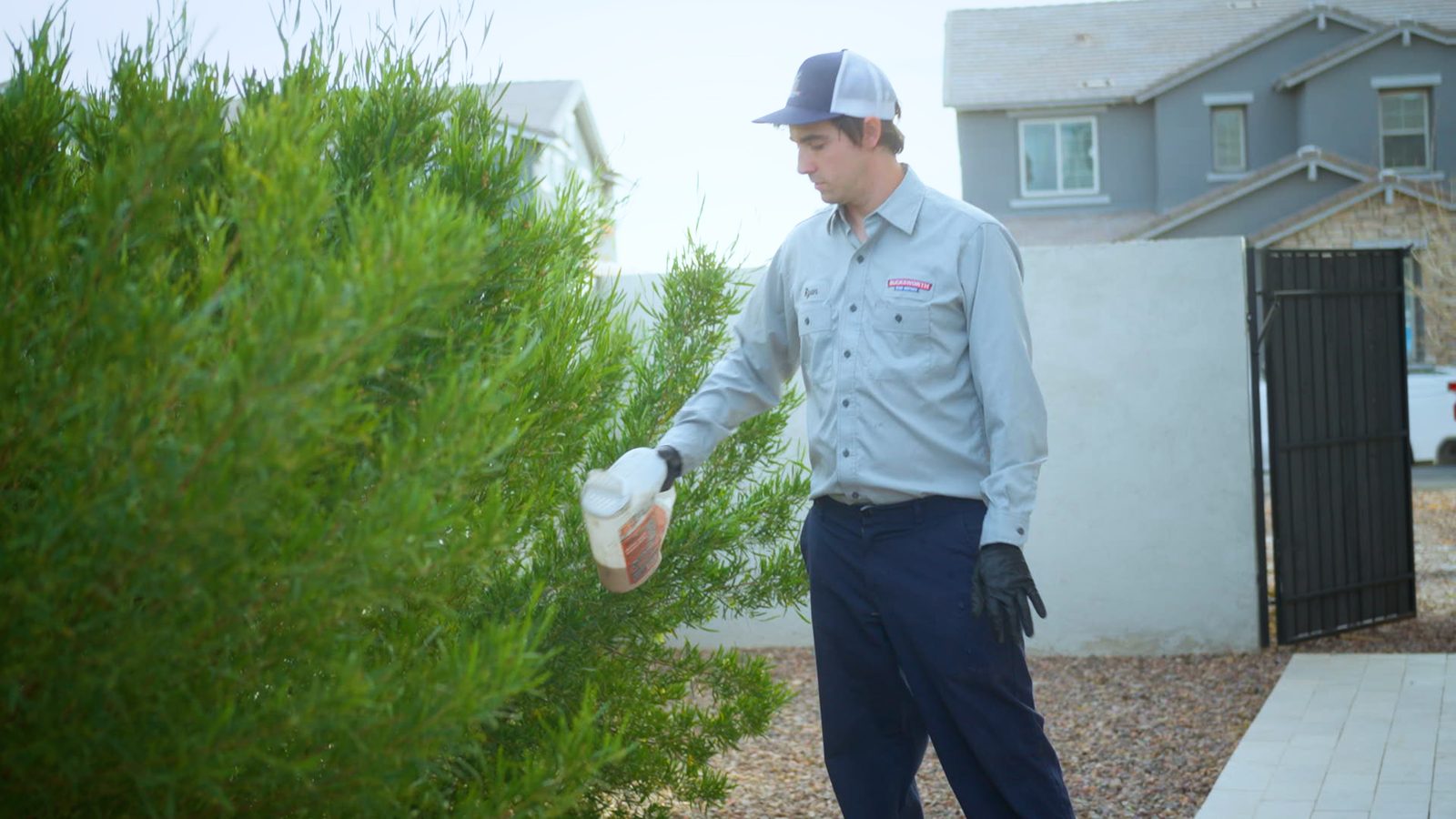
DIY vs. Professional Kissing Bug Control: What Works?
Most of the prevention list above is DIY, and it works. Where homeowners get stuck is the source: finding every pack rat nest near the house and removing them safely. Here's how the options compare.
| Approach | What it does | Limit |
|---|---|---|
| Vacuuming bugs you find | Removes the ones already inside | Doesn't stop the next adult that flies in |
| Over-the-counter bug spray | Kills a bug on contact | Little lasting effect on bugs coming from nests outdoors |
| LED porch bulbs and closed drapes | Fewer adults drawn to the house at night | Neighbors' lights still draw them into the area |
| Door sweeps, screens, caulk | Blocks the most common entry points | Garage and attic gaps are easy to miss |
| Pack rat nest removal and rodent exclusion | Removes the source near your house and keeps rats from moving back in | Hantavirus risk; best done with proper protection and disinfection |
| Professional perimeter pest treatment | Treats harborage around the foundation, walls and entry points | Works best combined with nest removal and sealing |
When kissing bugs turn up at a Gold Canyon home, the first thing our technicians look for is the pack rat nest they came from: a cholla stand off the back wall, a boulder pile, the shed or the space under a parked trailer. We deal with the rats, seal the house and treat the perimeter, and we'll tell you which nests are far enough out to leave alone.
What Other Pests Come With Pack Rats in Gold Canyon?
Pack rat nests support more than kissing bugs. The same cover attracts bark scorpions, black widows and other spiders that hunt the insects living there. If you're seeing kissing bugs, it's worth checking for those too. Our Gold Canyon scorpion control guide and our article on black widows and wolf spiders in Gold Canyon cover them. For the rats themselves, see why Gold Canyon homes near the Superstitions need rodent-proofing and our roof rat and pack rat management guide.
We serve all of Gold Canyon and the nearby East Valley and Pinal County towns, including Apache Junction, Queen Creek, San Tan Valley, Mesa and Florence. If you're in east Mesa near the Usery and Red Mountain foothills, our pest control in Mesa covers the same desert-edge pests. Our main Gold Canyon service page lists everything we do in 85118.
Frequently Asked Questions About Kissing Bugs
Are kissing bugs common in Arizona?
Yes. Seven species live in Arizona, and the western bloodsucking conenose is common in the foothills around Phoenix and Tucson, including the Superstition foothills around Gold Canyon. Most people see them from May through July, when adults fly to lights at night.
What attracts kissing bugs to a house?
Lights, warmth and the carbon dioxide people and pets breathe out. Porch lights draw flying adults to the house, and gaps under doors or torn screens let them in. Pack rat nests near the home are the biggest reason they're in the area at all.
Should I be tested for Chagas if a kissing bug bit me?
According to the University of Arizona Extension, a bite or finding a kissing bug doesn't by itself mean you need testing, because transmission from Arizona kissing bugs is rare. Talk to your healthcare provider if you develop symptoms or have other risk factors, and save the bug to show them.
Do kissing bugs live in beds like bed bugs?
Not usually. Kissing bugs live outdoors in rodent nests and wander inside, where they may hide under furniture, between mattresses or in closets. Bed bugs live and breed indoors near where people sleep. Finding several small bugs and shed skins along mattress seams points to bed bugs instead.
What should I do if I find a kissing bug in my home?
Don't crush it with your bare hands. Put it in a sealed jar or bag, wash any surface it touched, and check bedrooms and closets for more. Then look for pack rat nests near the house and the gaps the bug used to get in.
How do I get rid of kissing bugs in Gold Canyon, AZ?
Remove the pack rat nests near your house, seal doors, screens and vents, and switch to low-UV LED porch bulbs. If rats are nesting close to the home or the bugs keep showing up, call our Phoenix-area team at (480) 422-8388 or request service online. We'll find the nests, handle the rats and seal the house.