
A camel spider is a fast, tan, hairy desert arachnid, also called a sun spider, wind scorpion or solpugid. It is not a true spider and it has no venom or stinger. In Casa Grande camel spiders hunt insects at night and usually end up indoors by chasing crickets or by accident. For help, call (480) 422-8388.
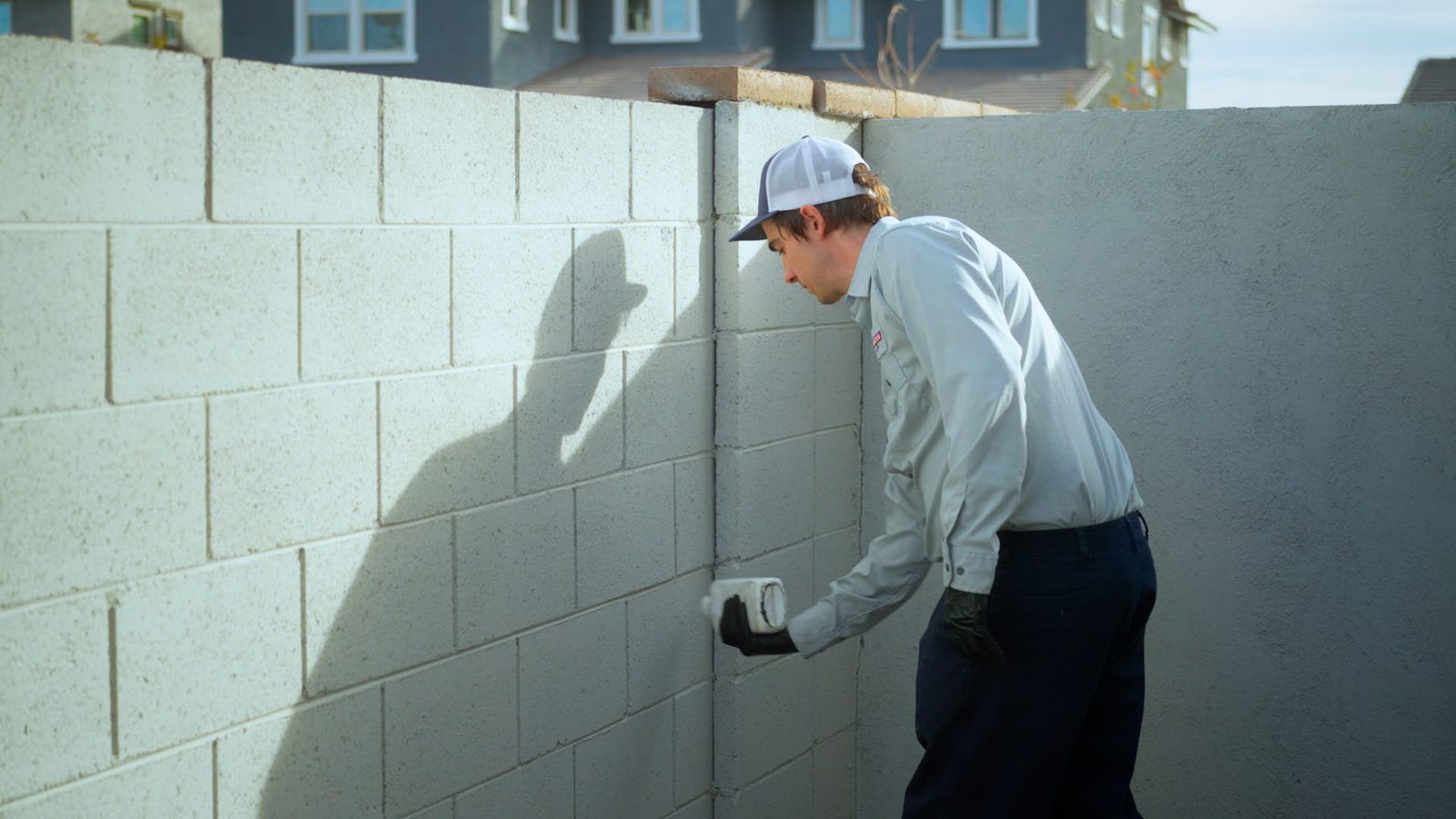
Few things make a Casa Grande homeowner jump like a two-inch, tan, leggy animal sprinting across the tile at 10 p.m. It moves faster than anything that size should, it seems to run straight at you, and it looks like a spider and a scorpion had an argument. Most people in Pinal County call it a camel spider. Others call it a sun spider or a wind scorpion, and the University of Arizona's extension office calls it a solpugid. Whatever you call it, the facts are less frightening than the internet stories. This guide covers what camel spiders really are, whether they can hurt you or your pets, why they show up in Casa Grande homes, and what actually keeps them outside. If you'd rather have a technician deal with the bugs that bring them in, our pest control in Casa Grande covers the crickets, roaches and scorpions that sun spiders follow.
What Is a Camel Spider?
Camel spiders belong to the arachnid order Solifugae. They are related to spiders and scorpions, but they are their own group. The University of Arizona Cooperative Extension's Backyard Gardener guide to solpugids lists the common names together: wind scorpion, sun spider and camel spider all describe the same group of animals. The name "wind scorpion" comes from how fast they run.
Here's how to recognize one in a Casa Grande garage or side yard:
- Color: light tan to brown, often with a darker abdomen, and covered in short hairs.
- Size: in the western U.S. they run about 5/8 inch to 1 3/4 inches long, according to the University of Arizona.
- Two body sections: a head section with two eyes and four pairs of legs, plus a segmented abdomen.
- What looks like a fifth pair of legs: these are pedipalps, blunt "arms" with sticky tips that grab prey. They often carry them raised while running, so the animal looks like it has ten legs.
- Big jaws: two pairs of large fangs (chelicerae) that stick forward from the mouth and work up and down like pliers.
- No stinger and no pincers: they can look like a scorpion without the claws or tail.
The southwestern U.S. has more than 50 solpugid species, and more than 120 have been described in North America. You don't need to know which one is in your hallway. The way you handle them is the same.
Are Camel Spiders Dangerous? Do They Have Venom?
No. The University of Arizona puts it plainly: none are known to have venom, and they do not have a stinger. That makes a camel spider very different from the bark scorpions we treat in Casa Grande, whose sting can send someone to urgent care.
That doesn't mean you should pick one up. Those forward-facing jaws are built to crush insects, and a large solpugid that is grabbed or trapped can give a sharp nip. If that happens, wash the spot with soap and water and keep an eye on it like any small scrape. Call your doctor if it gets red, swollen or warm over the next day or two.
For dogs and cats, a camel spider is mostly a chase toy. A curious pet might get pinched on the nose, but there's no venom to worry about. A pet that's stung by a scorpion is a different story, which is why it helps to know which one you saw.
What Are the Biggest Camel Spider Myths?
Most of what people "know" about camel spiders came from photos and stories that spread online in the early 2000s. Here's how those claims compare with what the University of Arizona says about the species that live here.
| Myth | What's actually true in Arizona |
|---|---|
| They grow as big as a dinner plate | Western U.S. solpugids run about 5/8 to 1 3/4 inches long. Close-up photos make them look much bigger. |
| Their bite injects venom that numbs or rots flesh | None are known to have venom. Their jaws can pinch, but there's no venom. |
| They chase people | They run from danger and toward shade. If you're the shadow in the room, it can look like they're coming at you. |
| They're a kind of spider | They're arachnids in their own order, Solifugae. They don't make silk webs. |
| Seeing one means an infestation | They wander. One indoors is usually following insect prey or looking for a way back out. |
| Spraying will get rid of them | The University of Arizona does not recommend pesticides for solpugids. Cutting off their food and sealing entry points works. |
Why Do Camel Spiders Get Into Casa Grande Homes?
Casa Grande sits between open Sonoran Desert and irrigated farm fields, and much of the city's newer housing in 85122 and 85194 was built right on that edge. Neighborhoods like Villago and Mission Royale have desert, washes or open lots close by. That's where camel spiders live and hunt, so seeing a few near the house is normal.
According to the University of Arizona, a solpugid indoors is doing one of two things:
- Following food. It came in after crickets, roaches or other insects that are already living in the house or garage.
- Lost. It wandered in through a gap and is trying to find its way back outside.
They can also ride in on firewood, boxes or anything you've stored in a shed or outbuilding. The pattern is predictable. When the monsoon brings out crickets and beetles, porch lights pull those insects to the house at night. The camel spiders follow the insects, and some slip under a garage door that doesn't seal or through a gap beside a sliding door.
If you're finding them inside regularly, that's the clue. The University of Arizona's advice is to look for insect pests living indoors that are giving the solpugids a steady food supply. In practice that usually means crickets in the garage. Our guide to getting rid of crickets in Florence walks through the same problem a few miles east.
When Are Camel Spiders Most Active in Arizona?
Camel spiders are mostly night hunters, though some are active during the day. That's where the name "sun spider" comes from. In southern Arizona you'll notice them from spring through early fall, when insect prey is plentiful. Arizona search interest follows the same pattern. Here's how many Google searches for "camel spider" came from Arizona each month, from DataForSEO's Google Ads data pulled November 23, 2026:
| Month | Arizona searches for "camel spider" | What's happening outside |
|---|---|---|
| Nov 2025 | 6,600 | Cooling nights, activity tapering |
| Dec 2025 – Feb 2026 | 4,400 per month | Winter low; few insects to hunt |
| Mar 2026 | 8,100 | Warm-up; insects return |
| Apr 2026 | 14,800 | Spring peak |
| May – Aug 2026 | 12,100 per month | Hot nights, monsoon insects, porch-light hunting |
| Sep 2026 | 14,800 | Late monsoon peak |
| Oct 2026 | 9,900 | Activity starts to drop |
That's close to 10,000 Arizona searches in an average month, which tells you how many people meet one of these and want to know what it was.
Camel Spider vs. Scorpion vs. Wolf Spider: How Can You Tell Them Apart?
When something tan and fast runs across the floor at night, the first question is whether it's dangerous. In Casa Grande the usual suspects look like this:
| Feature | Camel spider (sun spider) | Bark scorpion | Wolf spider |
|---|---|---|---|
| Body | Tan, hairy, big forward jaws | Slim, straw-yellow, pincers in front | Brown-gray, hairy, striped back |
| Tail | None | Thin curled tail with a stinger | None |
| Legs | Looks like 10 (8 legs plus raised pedipalps) | 8 legs plus 2 pincers | 8 |
| Movement | Very fast, zig-zag bursts | Slow to moderate, climbs walls | Fast runner along the floor |
| Venom | None known | Yes, medically important | Mild; rarely bites |
| What to do | Trap under a jar and release outside | Keep kids and pets away; call us | Trap and release, or reduce prey |
Camel spiders and scorpions are both arachnids, which is part of why people mix them up. Our Queen Creek guide to scorpions as arachnids explains the family resemblance. If what you found has a curled tail, treat it as a bark scorpion and keep everyone clear of it.
What Should You Do If You Find a Camel Spider in Your House?
Stay calm. It can't sting you. It's probably more interested in getting under the nearest piece of furniture than in you. The University of Arizona suggests the simplest fix:
- Trap it. Put a jar, bowl or plastic cup over it when it stops moving. They're fast, so wait for it to pause against a wall or baseboard.
- Slide a stiff card underneath. A piece of cardboard or a folded envelope works.
- Release it outside away from the house, ideally near open desert or a wash.
- Look at where you found it. Is the garage door seal torn? Are there crickets in the corners? That tells you how it got in and what it was after.
Outdoors, camel spiders are on your side. They eat insects, spiders and other arthropods, and the University of Arizona notes they may even kill an occasional scorpion or centipede. They've even been known to eat each other.
How Do You Keep Camel Spiders Out of Your Casa Grande Home?
You don't fix a camel spider problem by targeting camel spiders. You fix it by taking away their food and their way in. That's the approach the University of Arizona recommends, and it's the same work that keeps out scorpions, crickets and other desert pests:
- Check caulking and weather stripping around every window and door, including the slider to the backyard.
- Seal utility openings where water, electric and gas lines enter the house.
- Replace a worn garage door bottom seal. A gap under the garage door is one of the easiest ways for desert pests to get into a Casa Grande home.
- Switch porch and garage lights to yellow bulbs or motion lights so fewer insects gather at the doors after dark.
- Move firewood, lumber and stored boxes away from the house, and shake them out before bringing anything inside.
- Clear debris and rock piles from right against the foundation and block walls, where prey insects hide during the day.
- Deal with crickets and roaches indoors. If there's no food in the garage, there's no reason to come back.
The UA list of pests those same seals keep out includes ants, mice, woodrats, scorpions, centipedes and kissing bugs. Our Gold Canyon guide to kissing bugs covers that one, and it's a better reason to seal up than any camel spider.
Do You Need Pest Control for Camel Spiders?
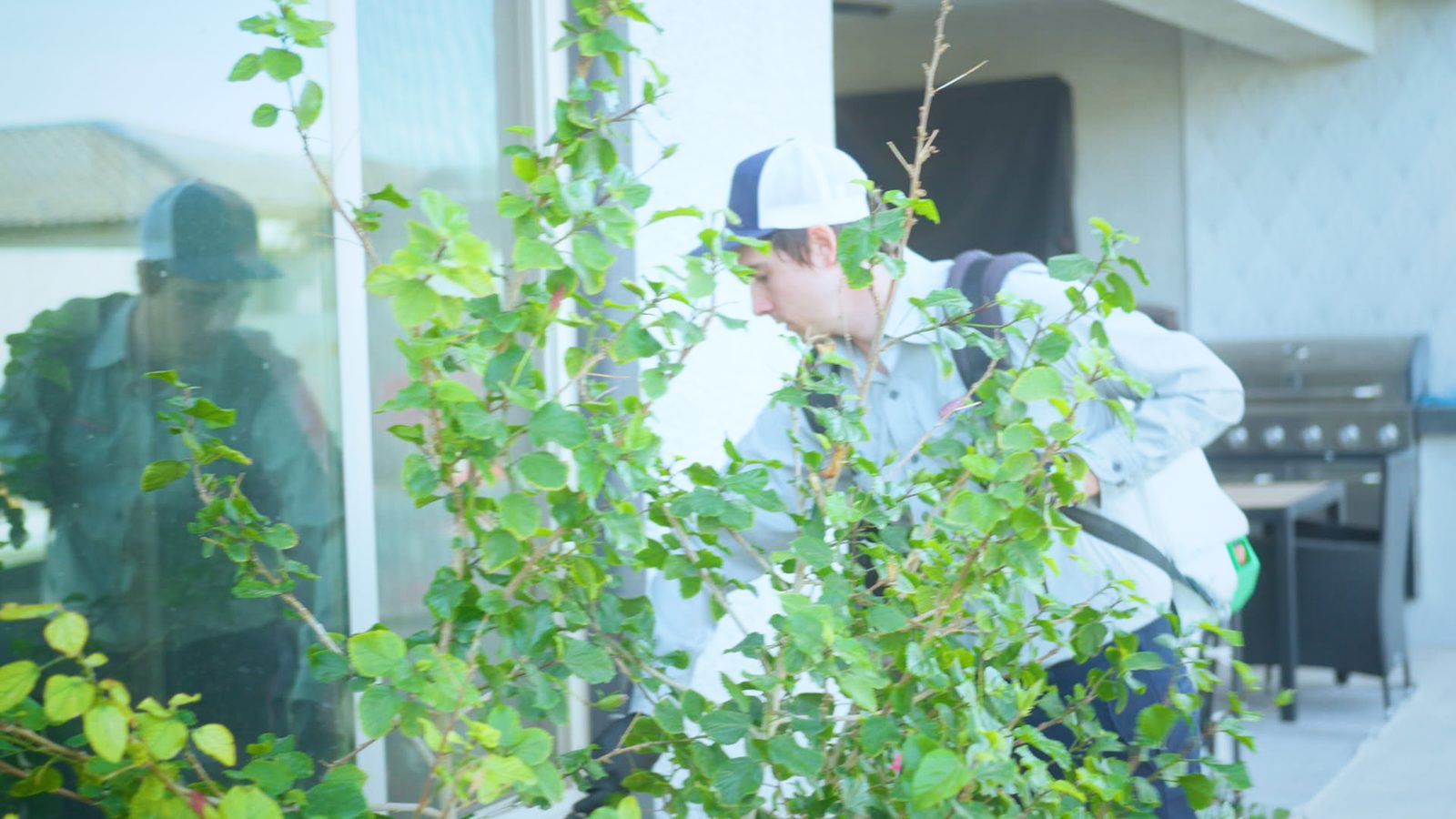
Not for the camel spiders themselves. The University of Arizona doesn't recommend pesticides for solpugids, and we won't sell you a treatment aimed at them. Where we help is with what's drawing them in. If you're seeing camel spiders indoors week after week, there's almost always a cricket, roach or scorpion problem underneath.
On a Casa Grande visit, our technicians:
- inspect the garage, door seals, weep screeds and block walls for entry points,
- look for the insect population feeding them (crickets and roaches are the usual answer),
- treat the perimeter and block walls for the crickets, roaches and scorpions that are there, and
- show you which gaps to seal so the house stays closed up between visits.
Our spider prevention in Casa Grande handles black widows and wolf spiders the same way, and our earlier post on why spiders love Casa Grande homes in 85194 goes deeper on the spiders that actually need treating. For a widow in the garage, read whether black widow spiders can kill you before you reach for a shoe.
Where else do camel spiders show up in Pinal County?
Anywhere new homes meet open desert. Sun spiders turn up in Maricopa, where our pest control in Maricopa covers Tortosa, Alterra and Rancho El Dorado. They show up in Florence too, where our Florence pest control team works Anthem at Merrill Ranch and Magic Ranch. Coolidge and San Tan Valley see them too, mostly on lots that back onto desert or farm fields. Our main Casa Grande service page lists everything we do in the city.
Frequently Asked Questions About Camel Spiders
Are camel spiders poisonous or venomous?
No. According to the University of Arizona Cooperative Extension, no solpugids are known to have venom, and they have no stinger. Their jaws can give a painful pinch if one is handled, but there's no venom involved.
Do camel spiders live in Arizona?
Yes. The southwestern U.S. has more than 50 solpugid species, and they're common across the Sonoran Desert, including Casa Grande, Maricopa, Florence and the rest of Pinal County.
How big do camel spiders get in Arizona?
The species in the western U.S. are about 5/8 inch to 1 3/4 inches long. The huge ones in viral photos are usually close-ups or forced perspective.
Why do camel spiders run at you?
They aren't attacking. They're fast, they head for shade and cover, and if you're standing in the way or casting the nearest shadow, it can look like they're chasing you.
What attracts camel spiders to a house?
Food. They follow crickets, roaches and other insects, which are often drawn to porch lights at night. Gaps under garage doors and around sliders let them follow that prey inside.
How do I get rid of camel spiders in Casa Grande, AZ?
Catch the one you see under a jar and release it outside. Then seal door and utility gaps, switch to yellow outdoor bulbs and get rid of the crickets and roaches they're hunting. If the insects keep coming back, call our Phoenix-area team at (480) 422-8388 or request service online. We'll find how they're getting in and treat the pests that are feeding them.