
A stink bug is a shield-shaped, plant-feeding insect that gives off a sharp odor when it's handled or crushed. Stink bugs don't bite people and don't damage houses. In Maricopa gardens, a common one is the small black-and-orange bagrada bug, which feeds on cabbage, kale, broccoli and mustard-family weeds. For help, call (480) 422-8388.
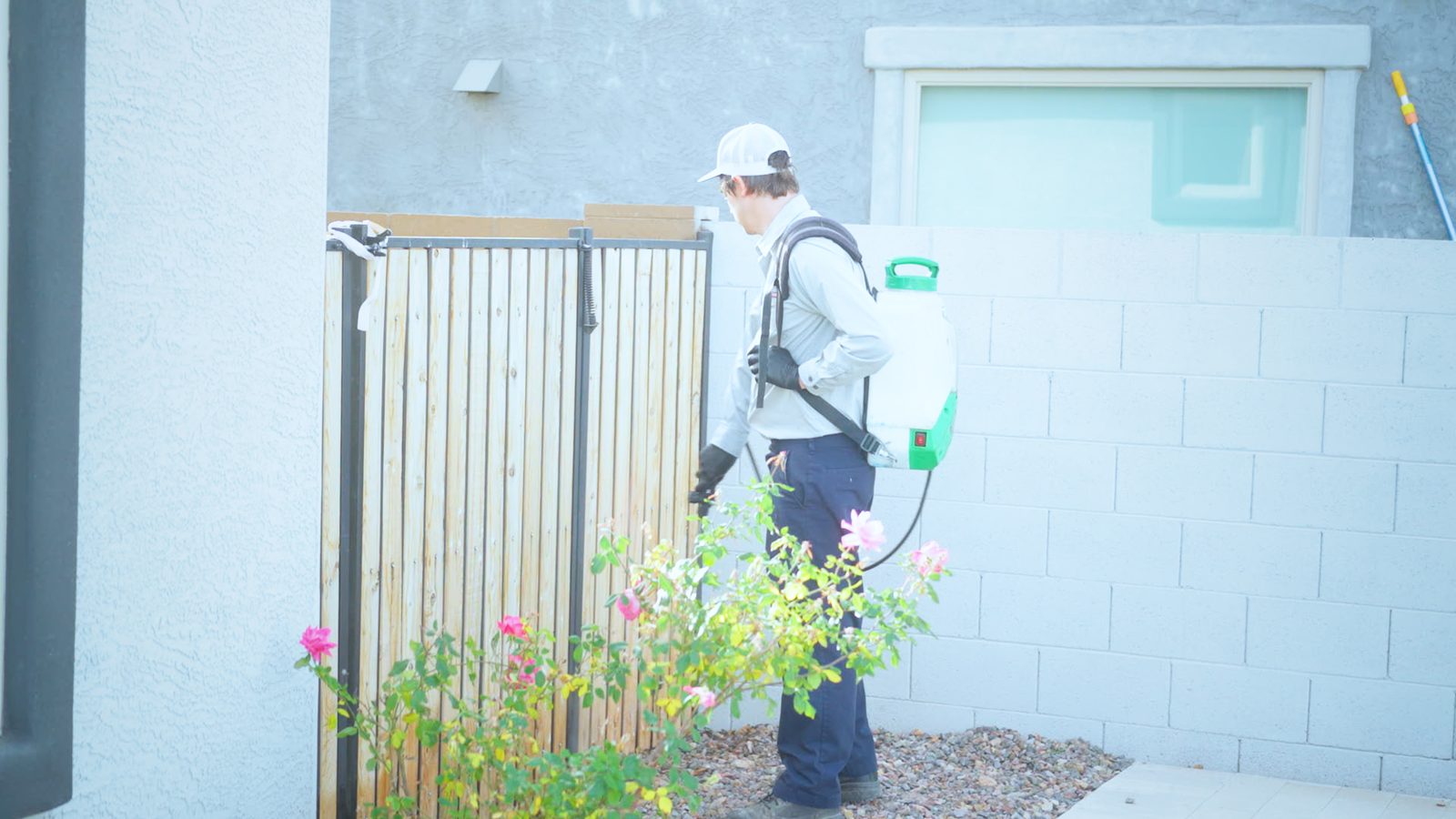
Most of what you'll read online about stink bugs was written for homeowners back East, where an invasive species, the brown marmorated stink bug, is known for moving into homes to spend the winter. Maricopa is a different story. Here the stink bugs people notice tend to be in the vegetable bed. It might be a cluster of tiny black-and-orange bugs on the broccoli in Rancho El Dorado, a green shield-shaped bug on a tomato in Tortosa, or a swarm on the mustard weeds in the gravel strip behind a home in Alterra. This guide covers what stink bugs are, which ones live in Pinal County, whether they can hurt you, your pets or your home, and what actually works to control them. If the bugs you're finding are inside the house instead of the garden, our pest control in Maricopa covers the gaps and the other insects that let them in.
What Is a Stink Bug?
Stink bugs are "true bugs" in the insect family Pentatomidae. They feed by piercing plants with straw-like mouthparts and sucking out the juices. The University of California Statewide IPM Program's stink bug guide, a standard reference for desert Southwest gardeners, describes the features they all share:
- A shield shape. Adults are wider than they are long, with a large triangular plate (the scutellum) covering the middle of the back.
- Barrel-shaped eggs laid in neat clusters, usually on the underside of leaves.
- Nymphs that look like smaller, rounder, wingless versions of the adults.
- A plant diet. Adults and nymphs feed on fruits, seeds, vegetables and weeds, not on people or pets.
The name comes from their defense. When a stink bug is disturbed, picked up or squashed, it releases a strong-smelling chemical. The smell is unpleasant, but it isn't poisonous.
Not every shield-shaped bug in your yard is a problem. UC IPM notes that some stink bugs, such as the rough stink bug and the spined soldier bug, are predators that eat other insects. If you see one hunting caterpillars on a plant, leave it alone.
What Do Stink Bugs Look Like in Arizona?
Size and color are the quickest way to tell the common species apart. These descriptions come from UC IPM and the University of Arizona Cooperative Extension:
| Stink bug | Adult size | Color and markings | What it usually feeds on |
|---|---|---|---|
| Bagrada bug (painted bug) | About 1/4 inch (5 to 7 mm) | Black with orange and white markings | Cabbage-family plants and mustard-family weeds |
| Harlequin bug | 1/3 inch or longer | Mostly black with orange, red and yellow; no white markings | Cabbage-family plants |
| Say stink bug | 2/5 to 2/3 inch | Bluish green | Seeds, fruits and vegetables |
| Southern green stink bug | About 1/2 inch | Bright green | Beans, tomatoes and other vegetables |
| Consperse stink bug | About 1/2 inch | Grayish brown to green, with black-speckled gray legs | Fruits and vegetables |
| Brown marmorated stink bug | About 5/8 inch | Mottled brown or gray, white band on the hind legs, banded antennae | Fruit, vegetables and ornamentals |
If the bug in your hand is long and narrow with a cone-shaped head instead of a broad shield, it may not be a stink bug at all. We cover that lookalike further down.
What Is the Bagrada Bug, the Stink Bug in Maricopa Gardens?
The bagrada bug (Bagrada hilaris), also called the painted bug, is the stink bug Maricopa vegetable gardeners are most likely to run into. It's an invasive species native to Africa and South Asia. According to the University of Arizona Cooperative Extension publication "Bagrada Bug: A New Pest for Arizona Gardeners" (AZ1588), it was first found in California in June 2008, was officially identified in Yuma in September 2009, and has since been confirmed in La Paz, Maricopa, Pima and Pinal counties. The city of Maricopa sits in Pinal County, between farm fields and the Ak-Chin Indian Community, with the University of Arizona's Maricopa Agricultural Center on the edge of town.
Here's what the University of Arizona says about it:
- Size and color: adults are 5 to 7 millimeters long, black with orange and white markings. They have wings but are seen walking more often than flying.
- Nymphs: newly hatched nymphs are orange-red and turn darker as they molt through five stages.
- Eggs: creamy white, turning orange as they develop. Most are laid in the soil, not on the plant.
- Numbers: one female can lay 100 eggs in two to three weeks, and the bugs feed in large clusters.
- Favorite plants: the cabbage family, including kale, mustard, cabbage, arugula, broccoli, cauliflower, radishes and Brussels sprouts. Sweet alyssum is also a known host.
- Damage: small tan or white dots (stippling) along the leaf edges that merge until the leaf wilts. When they feed on the growing tip of broccoli or cauliflower, the plant can produce no head at all, which growers call "blind head."
That last point matters in Maricopa because cool-season vegetables go into the ground in the fall. A homeowner in Province or The Villages at Rancho El Dorado can water and fertilize a broccoli bed for weeks and never get a crown.
Are Stink Bugs Harmful to People, Pets or Houses?
For people and pets, the answer is no. Stink bugs feed on plant juices. They don't feed on blood, and they don't sting. The worst most people experience is the smell on their fingers after picking one up, so wear gloves or use a tissue.
For houses, the answer is also no. Stink bugs don't chew wood, wiring or drywall the way termites and rodents in Maricopa can. A stink bug indoors is an accidental visitor that came in through a gap and will die without food.
The real damage is in the garden. UC IPM lists the signs:
- Dark pinprick marks on fruit, with white or brown pithy flesh underneath
- Distorted or misshapen fruit, such as tomatoes and peaches
- Ragged, tattered leaves on seedlings and leafy greens
- Small drops of dark excrement on the leaves
Established trees and shrubs usually handle stink bug feeding fine. Fruit trees, vegetable beds and young transplants are the ones that suffer.
When Are Stink Bugs Active in Maricopa?
Stink bugs spend the winter as adults hiding in leaf litter on the ground, then become active again in late winter and spring, according to UC IPM. The bagrada bug follows its own desert pattern. The University of Arizona reports two peaks a year, in fall (September to October) and spring (May to June), driven by warm temperatures around 85 to 90°F and by what host plants are available.
Search interest in Arizona follows the same rhythm. Here's the monthly Google search volume for "stink bug" in Arizona (DataForSEO, pulled November 2026):
| Month | Arizona searches for "stink bug" | What's happening in a Maricopa yard |
|---|---|---|
| November 2025 | 2,400 | Fall bagrada peak winding down; cool-season beds planted |
| December 2025 to February 2026 | 1,600 to 1,900 | Adults sheltering in leaf litter; winter mustard weeds sprouting |
| March 2026 | 2,900 | Adults becoming active; weeds flowering |
| April 2026 | 3,600 | Spring activity building in gardens |
| May to June 2026 | 2,400 to 2,900 | Spring bagrada peak |
| July to September 2026 | 2,400 to 2,900 | Summer heat; numbers climb again toward fall |
| October 2026 | 3,600 | Fall bagrada peak |
The practical takeaway is that fall and early spring are when to watch your vegetable beds most closely. In Maricopa, that's also when the cabbage-family crops are in the ground.
Stink Bug or Kissing Bug? How Do You Tell Them Apart?
People often mix these two up, and it's an easy mistake. Both are "true bugs" with piercing mouthparts, both can be brown or black with orange markings, and both turn up near desert homes. They are not the same animal.
- Body shape: a stink bug is a broad shield. A kissing bug is long and narrow, with a slim, cone-shaped head.
- Markings: kissing bugs usually have orange or red bands along the flattened outer edge of the abdomen. A bagrada bug is splashed with orange and white across its whole back.
- Diet: stink bugs feed on plants. Kissing bugs feed on blood and are often tied to pack rat nests.
- Where you find them: stink bugs are on vegetables and weeds. Kissing bugs show up near porch lights, in bedrooms and around rodent nests.
If you think you've found a kissing bug, read our guide to kissing bugs, conenose bites and pack rat nests. Earwigs are another bug people mix up with stink bugs when they find them in planters. Our post on earwigs and pincher bugs in patios and planters covers how to tell them apart.
How Do You Get Rid of Stink Bugs in a Garden?
Start without chemicals. Both university sources agree that sprays aren't the first answer for home gardens. UC IPM says insecticides are generally not recommended for stink bugs in gardens and landscapes, partly because the damage often shows up after the bugs have already moved on. The University of Arizona notes that most home gardeners ask for non-chemical methods and lists these steps for bagrada bugs:
- Check weekly. Look under leaves and at the soil surface for eggs and clusters of nymphs, especially on kale, broccoli, arugula and radishes.
- Hand-pick early. Knock adults and nymphs into a bucket of soapy water before the population builds. Wear gloves for the smell.
- Cultivate the soil surface. Bagrada eggs are mostly laid in the soil, so lightly working the top layer destroys them.
- Clear old crop debris once a bed is finished, so the bugs have nowhere to shelter.
- Remove mustard-family weeds. Wild mustards and other weeds in the cabbage family give bagrada bugs a place to breed between crops.
- Watch your sweet alyssum. It's a known host, so check it when you check the vegetables.
Soapy water sprayed on plants can wash young bagrada bugs off, but the University of Arizona points out that it's a short-term fix. The bugs come back once the plant dries.
Why do weeds matter so much?
UC IPM says stink bug infestations often start when adults fly in from nearby weedy areas, and that wet springs with late weed growth can lead to bigger, more damaging populations. It recommends removing weeds and groundcovers in early spring, before stink bugs build up and move to your plants. In a Maricopa yard, that usually means the winter weeds that sprout in gravel and along block walls after fall and winter rains. Our pre-emergent weed control in Maricopa stops many of those weeds from coming up, and post-emergent weed treatment in Maricopa handles the ones that already have.
How Do You Keep Stink Bugs Out of the House?
A stink bug or two indoors usually means a gap, not an infestation. They wander in from the garden through an opening, and they can't keep breeding indoors without plants to feed on. To keep them out:
- Seal the gaps. Caulk around window frames and utility penetrations, and add weatherstripping or a door sweep where you can see daylight.
- Repair window and door screens, especially on the side of the house facing the garden.
- Check potted plants for bugs and egg clusters before you bring them inside.
- Vacuum or scoop, don't crush. Squashing a stink bug indoors releases the odor. Drop it into soapy water or outside instead.
These same steps keep out crickets and roaches too. Those are the insects that bring scorpions to your door, so sealing up for one pest helps with the others. Our Florence guide on getting rid of crickets before they draw in scorpions explains how that chain works. If you're also seeing big brown bugs flying at the porch light, our Maricopa post on whether cockroaches can fly will help you sort out what you're seeing.
What Do We Do About Stink Bugs in Maricopa?
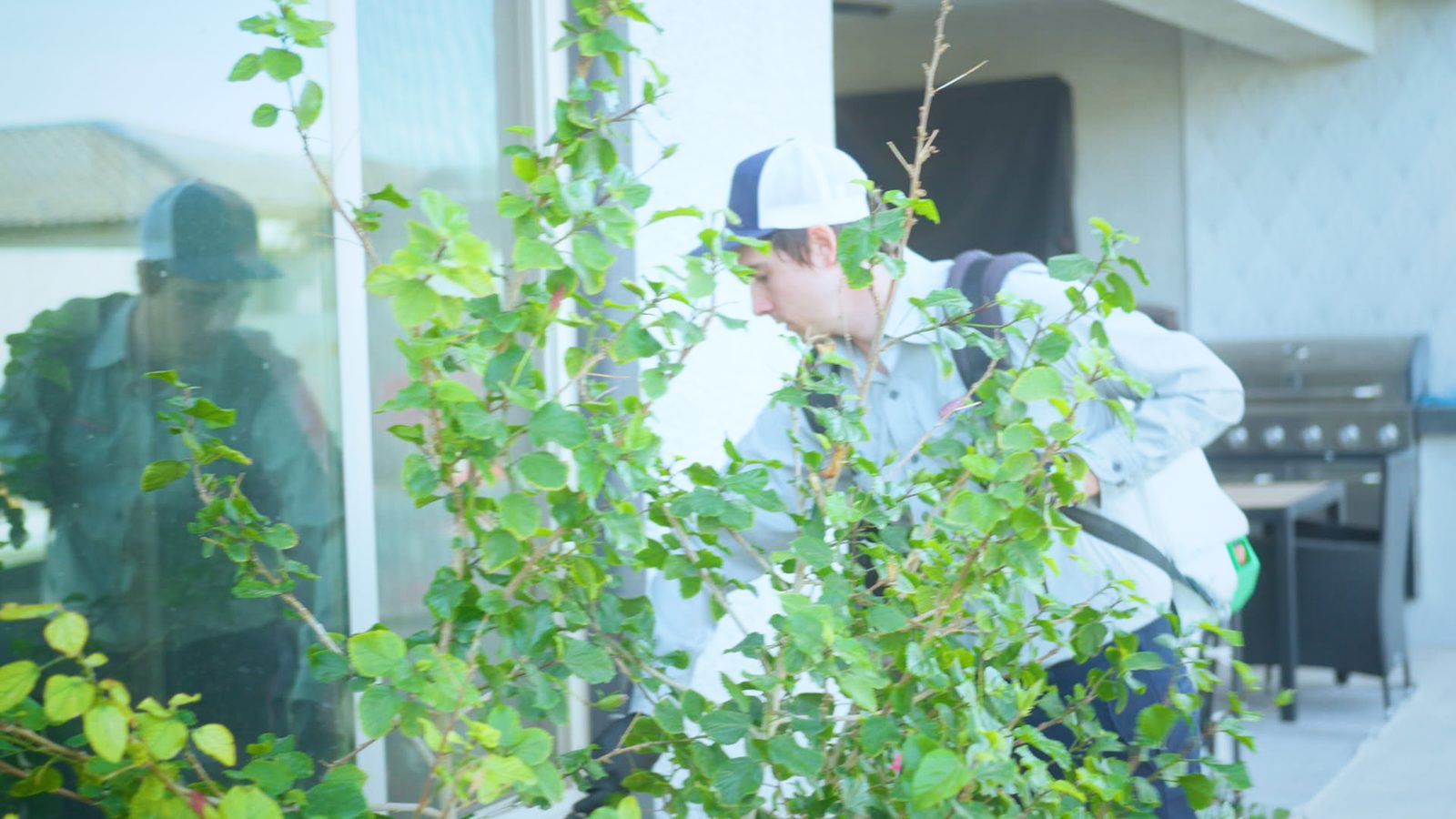
We want to be straight with you. We don't spray vegetable gardens for stink bugs. The university research says sprays usually aren't the right tool in a home garden, and the hand-picking, soil and weed steps above work better. Here's where our technicians actually help Maricopa homeowners:
- Keeping bugs out of the house. Our pest control service includes perimeter treatments and crack and crevice work around the entry points where occasional invaders like stink bugs, earwigs and crickets get in, and we'll point out the gaps worth sealing.
- Weed control around the garden. Fewer mustard-family weeds in the gravel means fewer places for bagrada bugs to breed between crops.
- Identifying the bug. If you aren't sure whether it's a stink bug or a kissing bug, our technician can look at it on the next visit.
We serve every Maricopa neighborhood in 85138 and 85139, from Tortosa and The Villages at Rancho El Dorado to Province and Alterra. Our main Maricopa service page lists everything we do in town.
Where else do stink bugs show up in Pinal County?
Anywhere homes sit next to farm fields or weedy lots. The University of Arizona has confirmed bagrada bugs across Pinal County, so they can turn up in Casa Grande, where our pest control in Casa Grande team works Mission Royale and Coyote Ranch. They can show up in Florence too, where our Florence pest control covers Anthem at Merrill Ranch and Magic Ranch. The same goes for Coolidge and San Tan Valley, where our San Tan Valley pest control serves Johnson Ranch and Pecan Creek. Homes with fall vegetable beds see them most.
Frequently Asked Questions About Stink Bugs
Do stink bugs bite?
No. Stink bugs feed on plant juices with straw-like mouthparts. They don't feed on blood and they have no stinger. A long, narrow bug with a cone-shaped head that bites at night is more likely a kissing bug.
Are stink bugs poisonous to dogs or cats?
Stink bugs aren't venomous, and their odor is a defense chemical meant to put off predators. If your pet eats one and then drools, vomits or seems unwell, call your veterinarian.
What is the black and orange stink bug in Arizona?
In Maricopa and the rest of Pinal County it's most likely the bagrada bug, also called the painted bug. Adults are about 1/4 inch long, black with orange and white markings, and feed on cabbage-family plants. The larger harlequin bug is also black with orange, red and yellow, but it has no white markings.
Why do stink bugs smell?
They release a strong-smelling chemical when they're disturbed, handled or crushed. It's a defense against predators. That's why it's better to scoop or vacuum them than to squash them indoors.
When are bagrada bugs worst in Maricopa?
The University of Arizona reports two peaks a year: fall (September to October) and spring (May to June). In Maricopa, the fall peak lines up with planting kale, broccoli and other cool-season crops, so check new transplants weekly.
How do I get rid of stink bugs in my Maricopa, AZ home?
Remove the ones you see with a vacuum or a cup of soapy water. Then seal the gaps around windows, doors and utility lines so more can't follow. If bugs keep getting in, call our Phoenix-area team at (480) 422-8388 or request service online. We'll find where they're getting in and treat the perimeter.